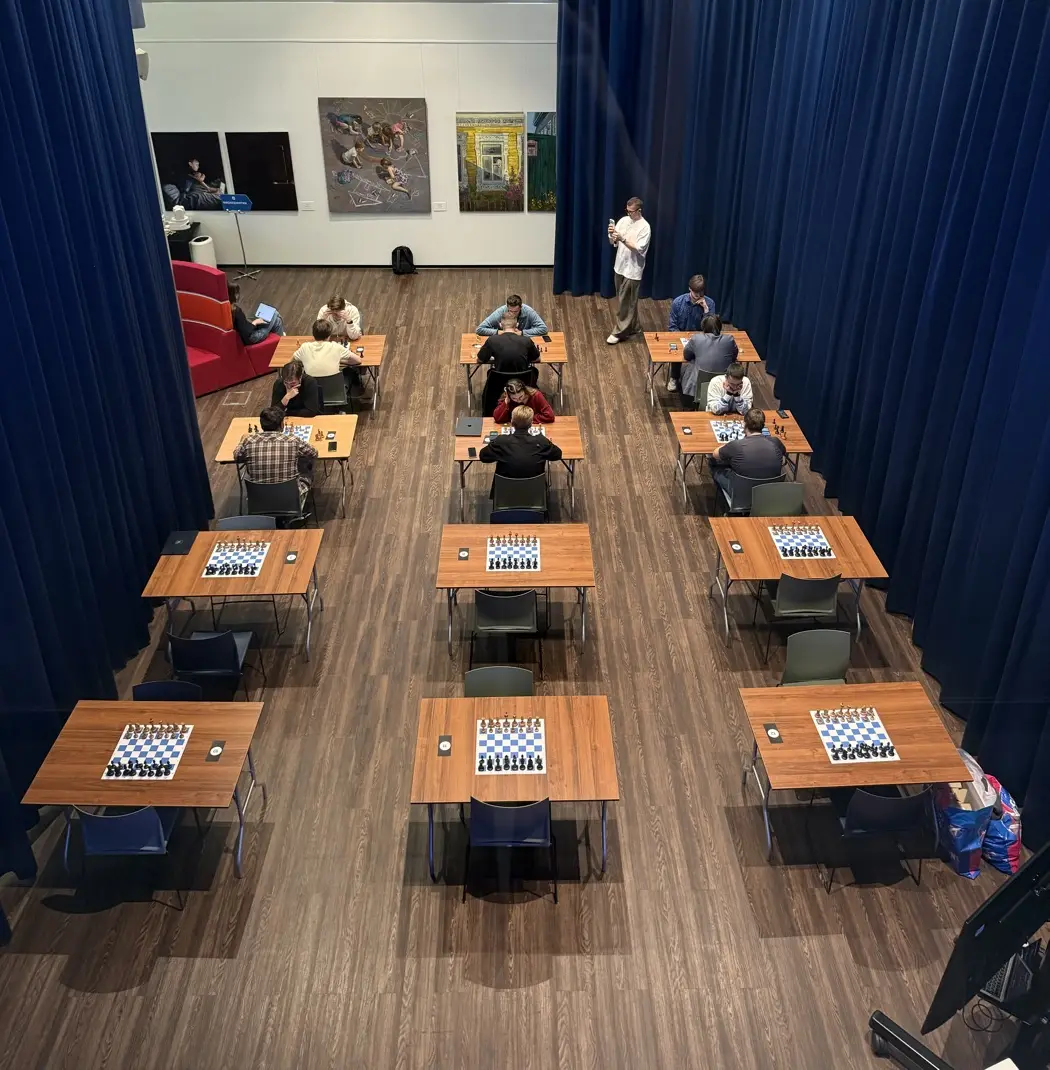
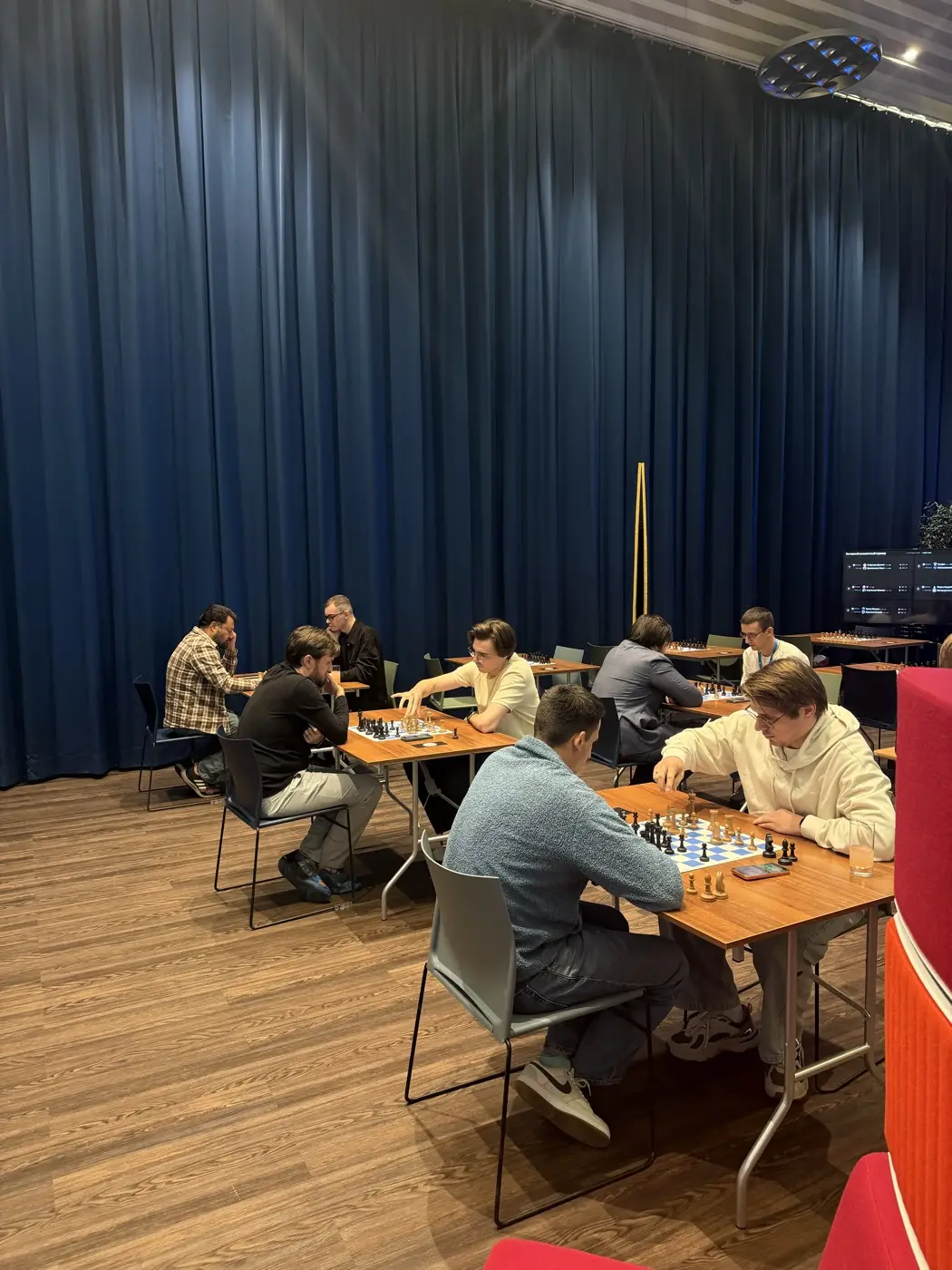
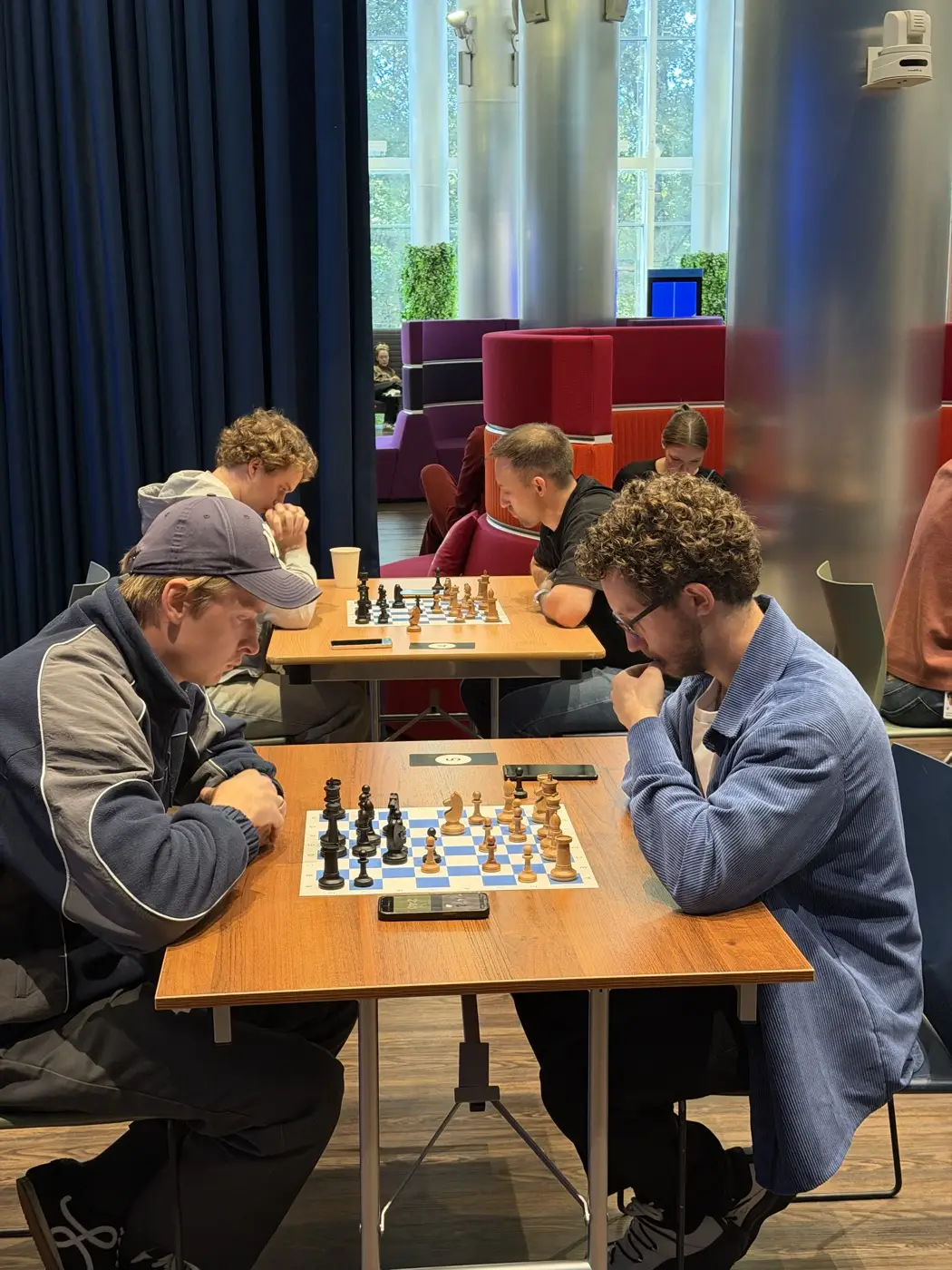
A chess tournament is a competition where the players play several games under rules announced in advance, and the winner is decided on the total points scored: a win is 1, a draw 0.5 and a loss 0. Everything else is variation: how many games, how the opponents are matched, how much time there is to think and who works out the result and how.
Tournaments are usually divided along several axes:
The more honestly you answer the question of which tournament you are running, the fewer problems you will have later. An evening in a bar and a club qualifying event call for different degrees of strictness: in the first case needless formality kills the mood, and in the second the lack of it leads to arguments.
Before you buy boards and send out announcements it is worth taking five decisions - all the others follow from them.
A separate crib sheet with every point of the preparation is in the organiser's checklist.
The system is the rule by which opponents are matched. It is what decides how many tournaments fit into an evening and how fair the outcome will be.
In the first round opponents are matched by starting number, and after that on the points scored: winners play winners and losers play losers. Nobody is eliminated, everyone plays the same number of rounds, and by the finish the leaders naturally meet one another.
Its main virtue is speed. To decide a winner fairly among 32 players by a round robin you would need 31 rounds. A Swiss manages it in 5-6. That is exactly why every big open in the world is played under the Swiss system. There is a detailed write-up in the article a chess tournament under the Swiss system.
The price of that speed is the difficulty of the calculation. The pairs cannot be made by eye: you have to take into account who has already played whom, what colour balance each player has and who has had a bye. Hence the requirement on the organiser to have pairing software.
Everyone plays everyone once. The number of rounds works itself out: with an even field it is N-1 rounds, and with an odd one N rounds, with one player resting each round. Eight people means seven rounds.
This is the fairest format: the outcome does not depend on who got a lucky draw. But it scales badly - at 12 players the tournament already stretches over a day. Up to 8-10 people is the sweet spot. The scoring details are in the article on the round robin and the Sonneborn-Berger score.
The knockout system: the loser is out. It is spectacular and fast, but half the players go home after the first game, which makes it a poor format for corporate events and family celebrations. It is sometimes used as a final stage: a Swiss first, then a play-off between the top four.
There is also an entirely free-form option: an event with no rounds and no pairing, where people play whoever they like and the organiser just keeps an eye on the boards. For a party in a bar that is often fairer than a tournament - the guests arrive and leave at different times.
For the Swiss system there is a simple rule: the number of rounds must be no less than the binary logarithm of the number of players, otherwise several players will finish on the same score and the winner will have to be decided on tie-breaks.
| Players | Rounds (Swiss) | Round robin |
|---|---|---|
| 8 | 3-4 | 7 rounds |
| 12 | 4-5 | 11 rounds |
| 16 | 4-5 | not recommended |
| 24 | 5-6 | not recommended |
| 32 | 5-6 | not recommended |
| 50+ | 6-7 | not recommended |
The length of a round is worked out like this: double the time control plus an allowance for seating people and entering results. At a control of 10 minutes a game, a round takes roughly 25-30 minutes including the organisational break. Five rounds is about two and a half hours of actual play, plus registration at the start and the prizegiving at the end.
Ready-made calculations for particular fields are in the write-ups for 8, 12, 16, 20 and 30 people.
The requirements for the room are modest, but they are worth checking in advance.
How many boards you need. One board per two players: 20 people means 10 boards. With fewer boards some pairs play in a second wave and the round takes twice as long. The standard tournament set is a board with 50-55 mm squares, a king 95 mm tall and weighted pieces.
Clocks. Mechanical or electronic - one pair per board. The good news: you do not have to buy them, and phones as clocks are the subject of the next section.
Presentation and seating. Table numbers on cards, the pairings printed by the entrance or a screen with the table, and a separate table for the organiser. A small thing that saves your nerves: the table number cards go out in advance, before the players arrive.
Where to hold it is a subject of its own. We have write-ups for a bar, an office, a school, a library, a camp, a workplace, a summer house and even the yard.
A time control is written as “minutes + increment per move”: 3+2 means three minutes for the game and two seconds for every move made. The usual choices for amateur tournaments:
A set of clocks costs several thousand roubles apiece, and for 10 boards that is a noticeable sum. So amateur tournaments moved to phones long ago: every player has a device that can be a chess clock every bit as well as a mechanical one. How that works is in the article a chess clock on your phone, and a ready free timer that works right in the browser is at vibechess.ru/clock.
In the Vibe Chess app the clock is built right into the tournament: the time control is set when the event is created, and a player opens the timer from their own game card - there is nothing to agree on or set up separately. That gives you a link that ordinary clocks do not have: the app knows who is playing at which table, with which colours and at what time control.
Registration solves three problems: knowing how many people will come, collecting the data for the pairing and losing nobody at the door.
What to collect.For a friendly tournament a name and a contact are enough. For a rated one you need surname, first name, year of birth, rank or title, rating, federation code and FIDE ID. For a children's event you also need a parent's details and the school or class.
Registering in advance is essential. Without it you do not know how many boards you need, and the first round starts half an hour late. Experience shows that about 70-80% of those who sign up actually turn up, so it is worth allowing a small surplus of places.
How to keep the list. A Google Sheets table works, but everything is manual: transferring it into the pairing software, marking arrivals, sending notifications. In the app registration is built in: a player signs up by link or QR code, everyone can see the list, and before the start the organiser marks off those who actually came. Anyone without Telegram can be added by hand as a guest - they play and are scored on equal terms with everyone else.
The regulations are the document that answers every question a player might have before the tournament starts. For a friendly evening a half-page announcement is enough; a serious competition needs the full document. The standard structure:
The playing regulations are a narrower document: they describe the running of the tournament itself, the schedule of rounds and how disputes are resolved. At small tournaments they are usually combined with the regulations.
The main rule: anything that could later be argued over must be written down in advance. Especially the order in which places are decided when players are level on points - that is where most conflicts arise.
In a round robin the pairing comes down to the Berger table - a ready-made schedule setting out who plays whom in every round. You can take it from a reference book and not calculate anything by hand.
In the Swiss system it is more complicated. Every round the software has to take into account the points scored, the history of meetings (a pair does not play twice), the colour balance (you cannot play White three rounds running), byes when the field is odd and floats between score groups. People only do this by hand at tournaments of 6-8 players, and even then with mistakes.
So the organiser needs software. The options run from the professional Swiss-Manager and Vega to open-source engines: we have gathered a comparison in the review of tournament software. In Vibe Chess app the pairing is calculated by bbpPairings- an open-source engine implementing the Dutch system under FIDE rules. The organiser only has to press “Start tournament”: the pairs appear on every player's phone, with the table number and the colour.
What happens inside and why the pairs sometimes look surprising is covered in detail in the article online chess tournament pairing.
At an amateur tournament the organiser usually acts as arbiter: announcing the rounds, keeping an eye on the time and settling disputes. A rated event needs a qualified arbiter, and a big competition an arbiting panel headed by a chief arbiter, plus an appeals committee.
The typical situations to be ready for: touch-move, an illegal move, running out of time, an argument over how a result was recorded, a player arriving late, a row about noise. The universal rule is that one person takes the decision, it is final and it is announced out loud.
We have covered the subject separately: arbiting a chess tournament: the arbiter's duties, disputes and appeals.
Below is a typical scenario for a 20-player Swiss tournament of five rounds at a 10+5 control. An evening like this fits into roughly three hours.
The tables are set out, the boards laid out, the table numbers in place and the clocks or timers checked. The organiser is there before everyone else.
The players arrive, check in and get their starting numbers. Anyone here for the first time gets a quick explanation of the format.
The host announces the rules: the number of rounds, the time control, the code of conduct and where to find the pairs and the table. Two minutes, no more.
The pairs are announced, people take their seats and the clocks start. The organiser walks the room and checks that everyone has started their time.
There is a 5-minute break between rounds: collecting the results, recalculating the table and announcing the new pairs.
The middle of the tournament: the leaders are already visible and interest is growing. A good moment for a coffee break.
The penultimate round. It is worth showing the players the table - it heats the contest up.
The final round. The leaders play each other, and the room usually gathers round board one.
Announcing the medallists, presenting the awards and a group photograph. Announce the next tournament while everyone is still in the room.
Two things break the schedule more often than anything else: registration dragging on and results being collected slowly after a round. The first is cured by signing up in advance, and the second by having the players record the results themselves. In app it works like this: a player records the result, their opponent sees the entry and, if they do not object, it is accepted automatically - the organiser need not get involved.
Places are decided on the total points. Where players are level the tie-breaks come in, and the order in which they are applied must be announced in the regulations in advance:
The prizegiving is an underrated part. Even token prizes change the atmosphere: the guests stay to the end, have their photographs taken and come again. Extra categories work well: “best game”, “youngest player”, “best newcomer”, “the audience's favourite”. They let you single out more than just the people who are strongest anyway.
If the tournament is to count towards an official rating, extra requirements apply: it is registered with the federation in advance, the arbiter must hold the appropriate category, the pairing is done by certified software and a report is submitted afterwards.
The report is prepared in TRFformat - the FIDE standard for exchanging tournament data (the Krause format). It records both the tournament parameters and each player's details:
In the Vibe Chess app such a report is assembled automatically: a finished tournament is exported as a TRF file at a single press. So that every required field makes it into the report, players fill in the FIDE and federation standards section of their profile - FIDE ID, federation code, title, sex, date of birth and federation. The app inserts the time control in the accepted form - for example 10'+5".
An important caveat worth stating honestly: the pairing in the app is calculated by the rules of the Dutch system, but the service has no endorsement from the FIDE pairing programs commission (SPP). For club, school and corporate tournaments that is no obstacle. If the tournament is to be rated, the requirements on the software used need to be agreed in advance with the federation and the chief arbiter.
A tournament that is only games is a competition. A tournament with extras is an event people come back to. What works in practice:
The games are shorter (rapid, 10-15 minutes), there are fewer rounds and breaks are essential. You need an adult keeping order and a separate area for parents - they are better off out of the playing hall. It is worth giving every player something, a certificate at least: a children's tournament with no prize is remembered as a failure. Write-ups: at school, in a class, at a camp, in a chess club.
The main difference is the range of standards among the players: from beginners to candidate masters. The Swiss system copes with that, but it is useful to add a separate standings list for beginners. Four or five rounds of blitz or rapid is best, so as to fit into two hours after work. There is more in corporate chess tournaments, a tournament between departments, a tournament at work.
The audience comes and goes, the standards vary and the atmosphere is informal. Short blitz works, with free seating and a minimum of formalities. The venue gets a full weekday evening - a tournament in a bar, a chess party.
It is played on the game platforms, where the pairing and the clocks are built in. The organiser is left to gather the players and watch for fair play - which is, incidentally, the main problem online. There is a hybrid option: people play in person while the scoring is kept in the app - a tournament with no paper.
The budget is made up of four parts, and in an amateur format three of them can be brought almost to zero.
In short: a 20-player tournament run by yourself in your own premises can realistically cost nothing if you have the boards. A turnkey tournament with our team is costed individually - by the city, the number of players and what we take on as against what stays with you.
A short version of everything written above - you can print it out and work through the points.
The expanded version with notes on every point is in tournament organiser checklist.
The Vibe Chess team runs chess tournaments and evenings in dozens of cities across Russia, Belarus and Kazakhstan: in bars and cafes, in offices and at corporate parties, in schools, libraries and at city festivals. We take on the whole organisational side - from the regulations and the registration to the pairing, the arbiting, the host and the prizegiving.
Write to us: on Telegram - tell us about the occasion, the city, roughly how many players there will be and the date, and we will suggest a format and a quote.
Count by the number of players. Up to 8-10 people, a round robin: everyone plays everyone and the outcome is as fair as it gets. More than 10, a Swiss: it finds a winner in 4-6 rounds whatever the field, whereas a round robin for 20 people would need 19 rounds.
For the Swiss system the guide is this: 8 players - 3-4 rounds, 16 - 4-5, 32 - 5-6, from 50 - 6-7. Fewer rounds means several players will finish level on points and the places will have to be split on tie-breaks. In a round robin the number of rounds is fixed by the field: N-1 with an even number of players.
Not for a round robin - there the schedule comes from the Berger tables. For a Swiss it is all but essential: by hand you have to track points, the history of meetings, the colour balance and byes every round, and a mistake is almost inevitable. Swiss-Manager, Vega or the free Vibe Chess app will do; in the last of these the pairing is calculated by the bbpPairings engine under FIDE rules.
An arbiting qualification is only needed for rated events. For a club, school or corporate tournament it is enough to understand the rules of the game and the order of play: announce the regulations, keep an eye on the time, collect the results and settle disputes. The software takes care of everything else.
One board per two players: 20 people means 10 boards. You need the same number of clocks, but phones can replace them: there are free timers, and in the Vibe Chess app the clock is built into the game card.
Almost anywhere with tables and light: an office, a coworking space, a bar, a cafe, a restaurant, a school, a university, a library, a community centre, a museum, a children's camp, a health resort, a factory canteen, a park in warm weather, a flat or a summer house. The requirements are modest - 1.5-2 m² per player, decent lighting and no loud music.
They are the document with the conditions of play: the organisers, the dates, the place, who may enter, the system, the time control, the criteria for deciding places, the prizes and how to enter. For a friendly tournament an announcement is enough; for an official one the regulations are compulsory. Even at a small event it is worth setting the order of the tie-break scores down in writing - that is exactly what disputes arise over.
The tournament is registered with the federation in advance, played with a qualified arbiter under FIDE rules, and afterwards a report is submitted in TRF format with all the data: the tournament parameters, the players with their FIDE IDs and federation codes, and the results by round. The Vibe Chess app assembles such a file automatically, but the service has no endorsement from the FIDE pairing programs commission - for rated tournaments that has to be agreed with the federation in advance.
Doing it yourself in your own premises with boards you already have costs nothing: our scoring and pairing software is free. The main items of expenditure, where you cannot avoid them, are venue hire, buying or hiring equipment, the work of an arbiter and a host, and the prize fund. A turnkey tournament is costed individually - write to us and we will give you a quote.
Yes. The Vibe Chess team takes on the whole organisation: the format and regulations, registering the players, the equipment, the pairing, the arbiting, the host, the final table and the prizegiving. Write to us on Telegram with your city, the occasion, the date and roughly how many players there will be.
The Vibe Chess app is built for an evening over the board, not for online play: it keeps the sign-up list, the pairings and the table while you deal with people and the venue. All of it free.
The bot is constantly improved based on real tournaments. If you need a feature that isn't there yet, message the developers right inside the bot with the /support command. Many features appeared exactly because organizers asked for them, and useful ideas get added quickly.
Step by step in the app - how to organise a chess tournament and the organiser's guide. On pairing - online pairing and the bbpPairings engine. On arbiting - arbiting a chess tournament. On scoring - the Buchholz score and the tournament table. On the format of the evenings - chess meetups and about the Vibe Chess project.

At the board since childhood: hazy about his rating, precise about every rook he has blundered. Counts an evening as a good one if the opponent stayed to talk afterwards instead of rushing off to check with an engine. Message →