
The chess setup on the board: how to place the pieces correctly
Before the game starts, all 32 pieces stand in their places, and this starting position is always the same. Learn a few simple rules and you can set the pieces up in half a minute and never get confused again. Below: a diagram, the setup step by step, where the king and queen go and why it matters which way round the board is turned.
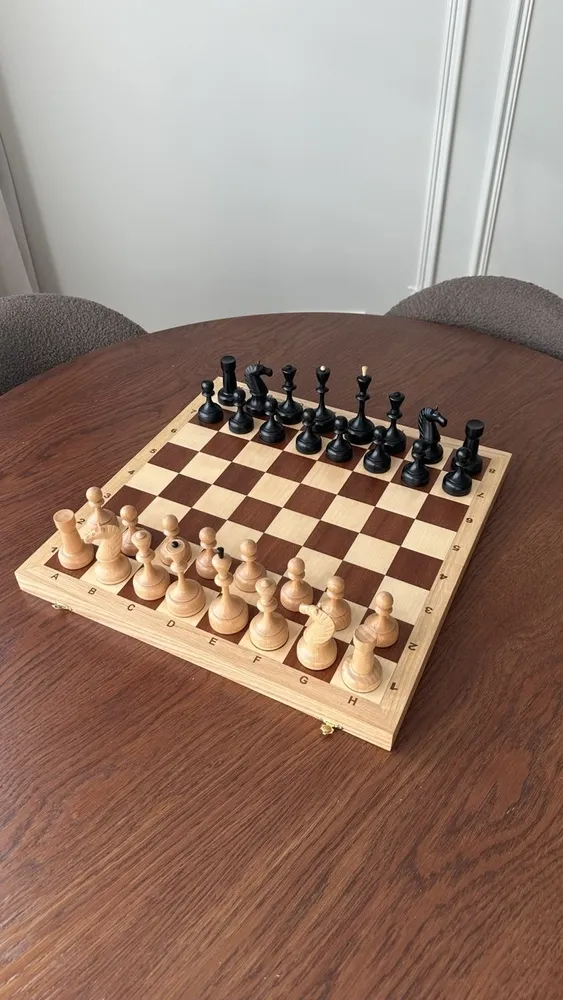
The starting setup in brief
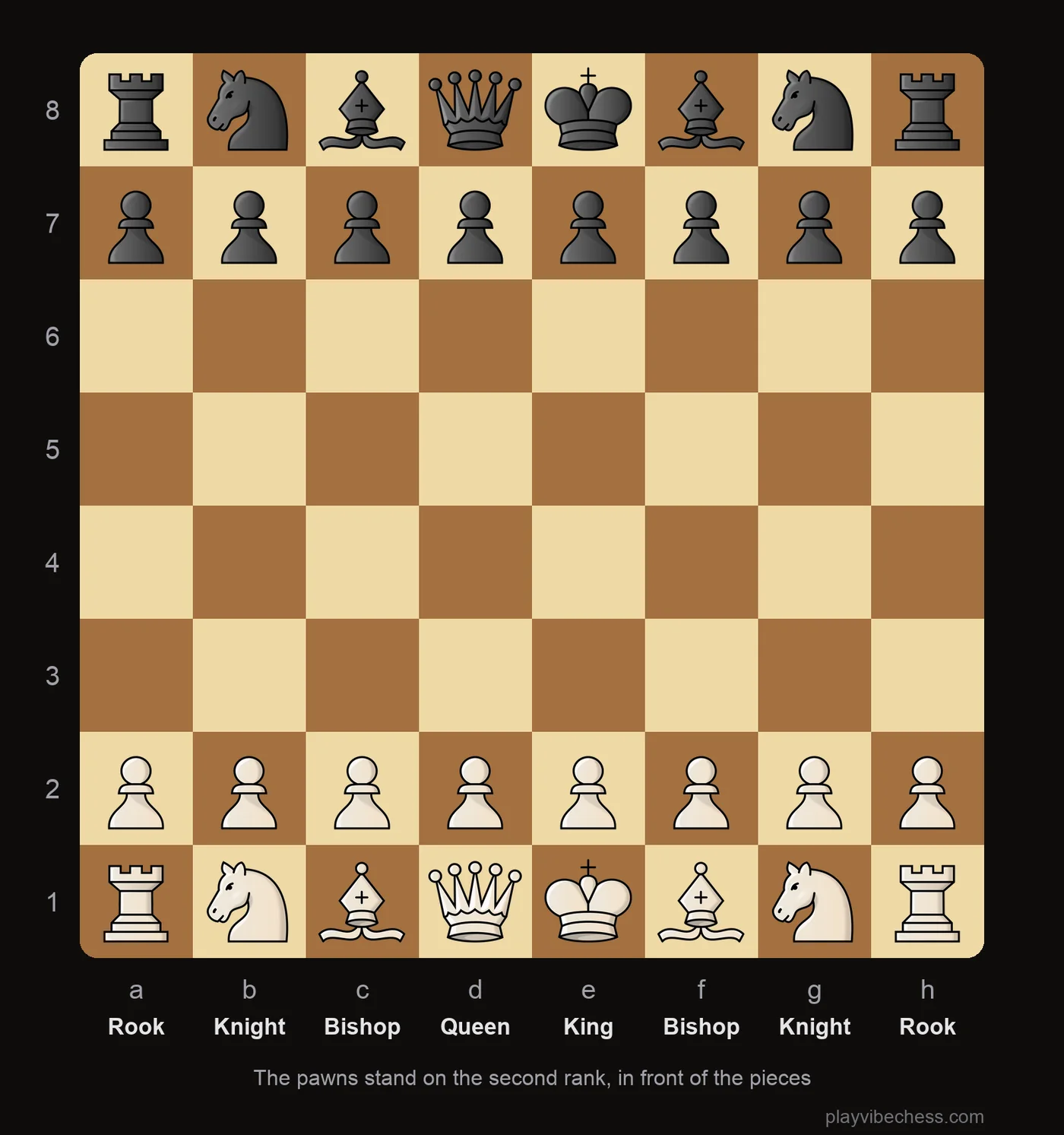
Each player occupies the two ranks nearest to them. The eight major pieces stand on the far rank, with eight pawns right in front of them. For White that is the first and second ranks, for Black the seventh and eighth. The arrangement is a mirror image: whatever White has on the first rank, Black has on the eighth.
The order of the major pieces from the corner inwards is the same for both sides: rooks on the edges, knights beside them, then bishops, and the two central squares go to the king and the queen.


On the edges of the back rank are the rooks (they look like a tower), next to them the knights, then the bishops, and in the middle the queen and the king. In front of them, a row of eight pawns.
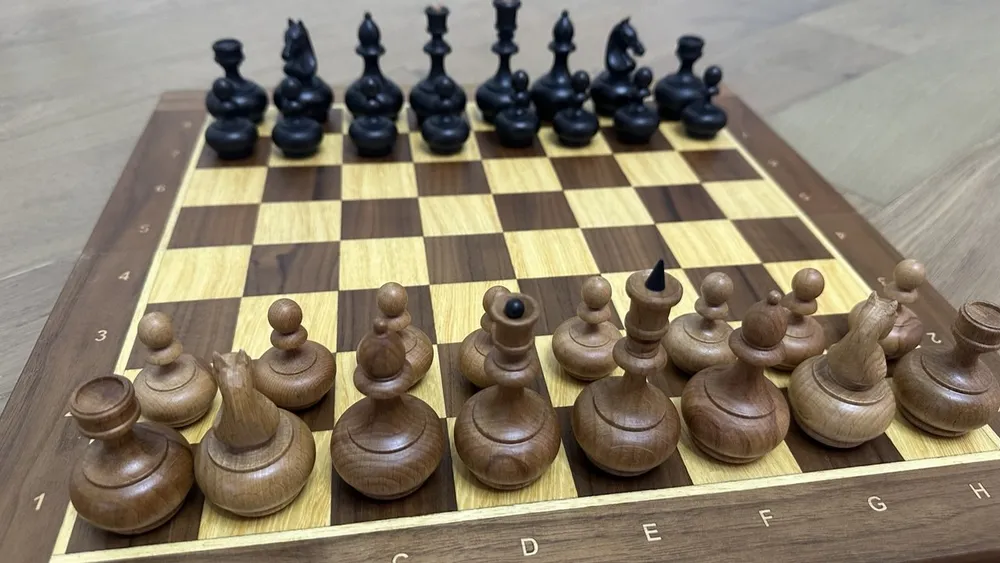
How to set up a chess board step by step
- 1. Turn the board the right way round. The corner square on each player's right should be light. The simple rule: “white on the right”. If the bottom-right corner turns out to be dark, turn the board round.
- 2. Put the rooks in the four corners of your half - on the outermost squares of the back rank.
- 3. Put the knights next to the rooks.
- 4. Then, further towards the middle, the bishops. Every square on the back rank is now taken except the two central ones.
- 5. Put the king and the queen on the central squares. Here the main rule applies: the queen goes on a square of her own colour. The white queen on a light square, the black queen on a dark one. The king takes the central square next to her.
- 6. Line up all eight pawns in a row in front of the major pieces.
After that the position is symmetrical: the white and black pieces stand facing each other like a mirror image.
Where the king stands and which colour the queen goes on
These two pieces occupy the middle of the back rank and are the usual source of confusion - which of them goes where. The phrase to remember is “queen on her own colour”:
- The white queen stands on d1 - a light square.
- The black queen stands on d8 - a dark square.
- The king takes the neighbouring e-square in both cases (e1 for White, e8 for Black).
From which follows the answer to a common question: it is the queen that stands on her own colour, not the king. White's king ends up on a dark square, Black's on a light one. If the queen and the king are placed correctly, they face each other across the whole board.
The easiest way to check is from your own side of the board: if you are playing White, the king stands to the right of the queen; if Black, to the left. Either way, both players see their own king on the e-file.
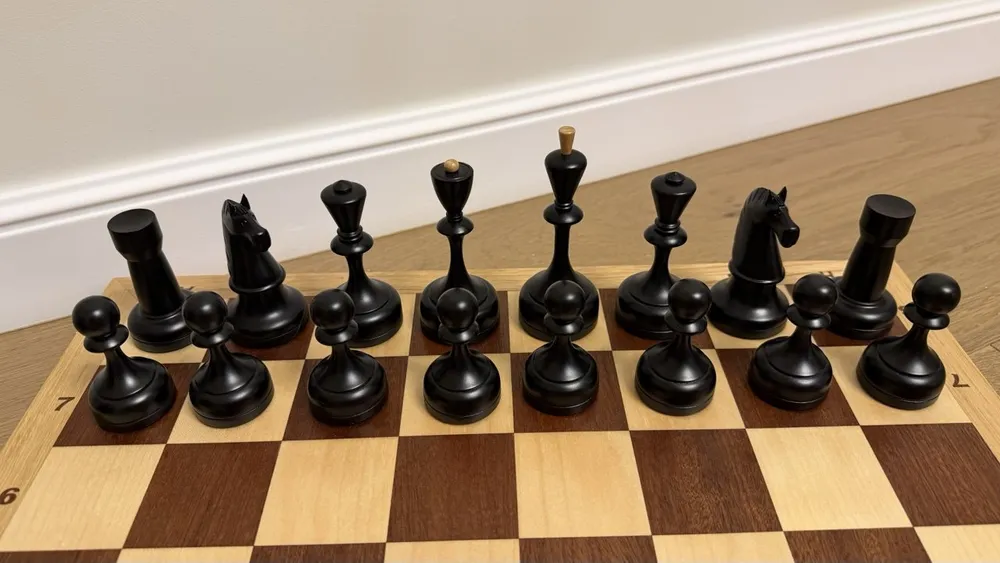
How many of each piece there are in chess
Each player has 16 pieces, 32 on the board in total. One side consists of:
- 8 pawns
- 2 rooks
- 2 knights
- 2 bishops
- 1 queen
- 1 king
The colours of the sets are a convention: “white” pieces can be pale beige or yellow, “black” ones dark brown. All that matters is that one set is lighter than the other. White always moves first.
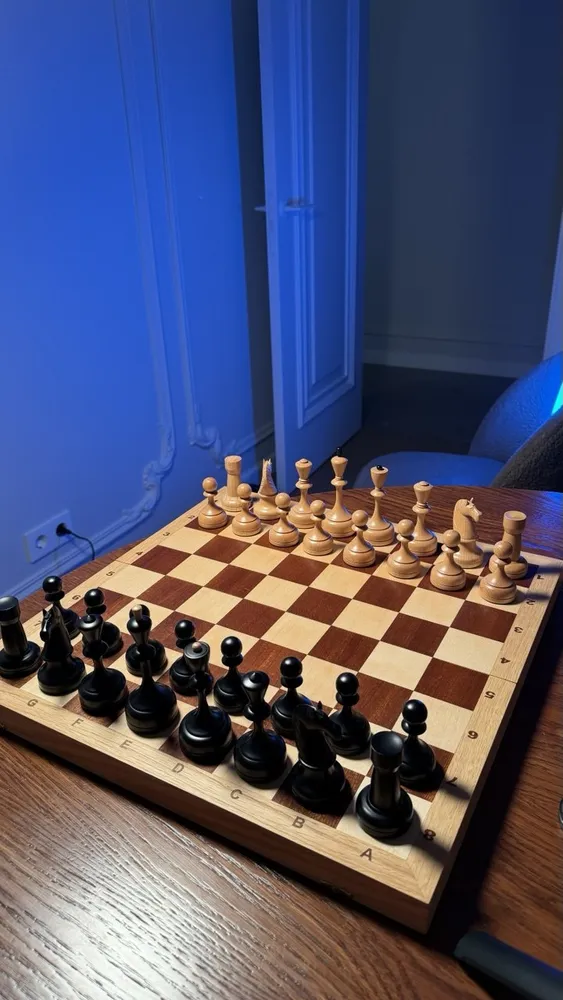
The arrangement of the pieces on the board with their names
Going from the edge of the board towards the middle, the pieces on the back rank are called:
- The rook (a1 and h1) - looks like a tower.
- The knight (b1 and g1) - with a horse's head, the only piece that jumps over others.
- The bishop (c1 and f1) - a tall piece with a slanted top.
- The queen (d1) - the strongest piece, a crown with points.
- The king (e1) - the tallest piece, with a small cross on top.
In front of them, along the whole second rank, stand eight identical pawns - the smallest pieces.
Everyday names for the pieces: castle, officer, horse
At home and in the park the pieces often get their own names, and those words appear in no textbook. To save any confusion, here is the key - the everyday name on the left, the one used in the rules and in game notation on the right.
| What people say | The proper name | Where it stands at the start |
|---|---|---|
| The crown, the king's wife | The queen | d1 for White, d8 for Black |
| The castle, the tower | The rook | in the corners: a1 and h1, a8 and h8 |
| The horse, the pony | The knight | b1 and g1, b8 and g8 |
| The officer, the pointy one | The bishop | c1 and f1, c8 and f8 |
| The one with the cross | The king | e1 for White, e8 for Black |
Hence the familiar rule in its everyday form: “the queen loves her own colour” - which is exactly the same as “the queen stands on a square of her own colour”. The white queen on light d1, the black one on dark d8.
The most common mistakes
- The board is turned the wrong way round. If the light corner square ends up on the left, the whole setup shifts, even though at first glance it looks right.
- The king and the queen have swapped places. Check by colour: the queen must stand on a square of her own colour.
- The knights and bishops have been swapped. From the corner the order is strict: rook, knight, bishop - and only then the middle.
- The mirror image does not line up. In a correct position, the opponents' matching pieces stand directly opposite each other on the same file.
What to do once everything is set up
When the pieces are in place, the game can begin. The players move in turn, White first. Each piece moves by its own rules: the rook along straight lines, the bishop along diagonals, the queen both ways, the knight in an L-shape, and the pawns go forward and capture diagonally. There is a detailed walk-through in the article on the rules of chess - a good place to carry on from if you are only just starting.
And to practise, or to look at a particular position from a book, you can set the pieces up in the online chess board editor and try playing it out straight away.
Frequently asked questions
Which way round does the board go?
With a light-coloured corner square on your right - the simple “white on the right” rule. If the bottom-right corner is a dark square, turn the board round.
Which square and which colour does the queen stand on?
The queen stands on a square of her own colour: the white queen on d1 (a light square), the black queen on d8 (a dark one). The phrase “queen on her own colour” is the thing to remember.
Where does the king stand?
The king takes the central square next to the queen, on the e-file: e1 for White and e8 for Black. It is the queen that stands on her own colour, not the king.
How is the arrangement of the pieces different from the setup?
It is not: they are two names for the same thing. “Chess setup”, “the arrangement of the chess pieces on the board” and “how to lay out a chess set” all describe the same starting position - rooks in the corners, then knights, then bishops, the queen and the king in the middle, and a row of pawns in front of them.
How many pieces are there in chess?
Each player has 16 pieces, 32 on the board in total: 8 pawns, 2 rooks, 2 knights, 2 bishops, a queen and a king.
In what order do the pieces stand on the back rank?
From the corner inwards: rook, knight, bishop, and then the queen and the king take the two central squares.
Is it true that the queen goes on her own colour?
Yes, and the rule is exactly that: the white queen stands on the light square d1, the black queen on the dark square d8. The king takes the neighbouring e-square and therefore ends up on a square of the opposite colour.
What are the proper names of the pieces people call the castle and the officer at home?
The castle or tower is the rook, and it stands in the corners. The officer is the bishop, on the c- and f-files. The horse is the knight, on the b- and g-files. The rules and game notation use only the names rook, knight, bishop, queen, king and pawn.
The short version
- The starting position is always the same and always symmetrical.
- The board goes with a light corner square on the right.
- The order from the corner: rook, knight, bishop, then the queen and the king in the middle.
- The queen stands on a square of her own colour, the king next to her.
- Each player has 16 pieces, 32 in all; White moves first.