The good thing about a chess party is that it does not require everyone to play at a decent level. Quite the opposite - the best field is a mixture: a couple of confident players, a group of amateurs and a few beginners who “used to know how”. Invite people through your own chat, social media or a shout in a local community.
10-20 people is about right. More is livelier, but it takes more boards and more space. A good venue is a flat, an anti-cafe or a quiet bar with big tables.
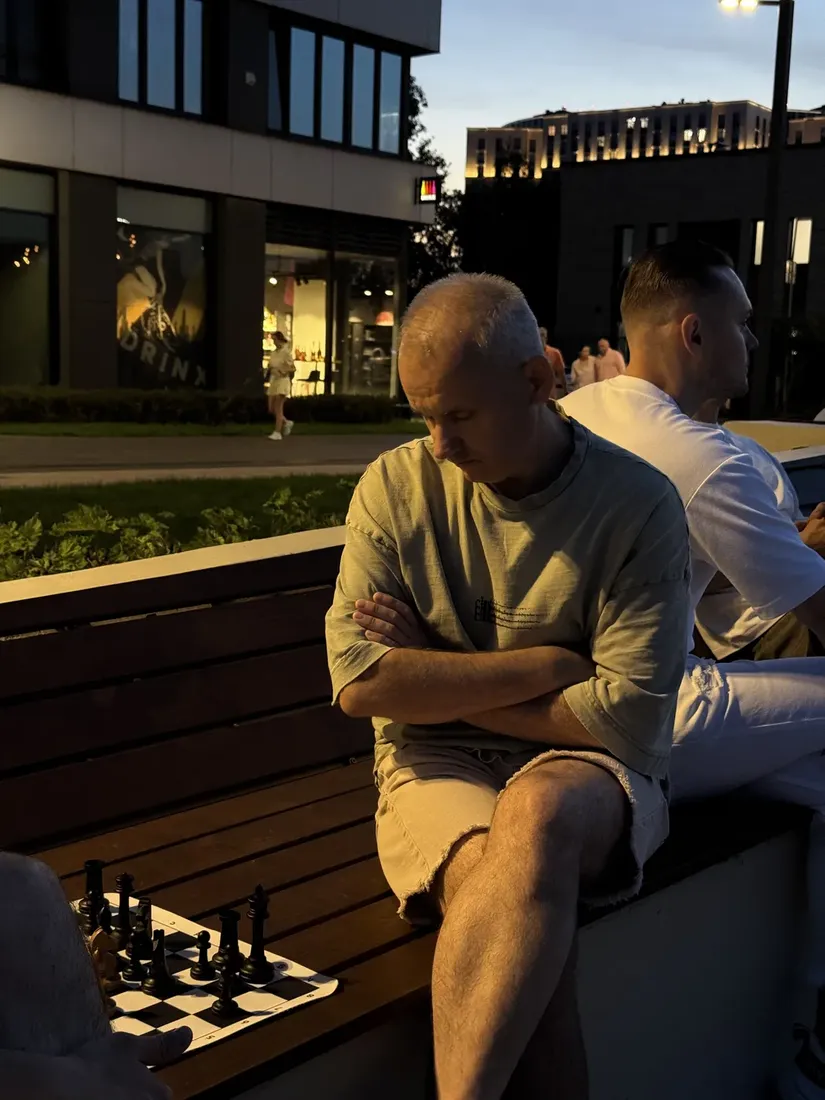
The secret of a good chess party is not to turn it into a strict competition. Take fast blitz 5+0 and 5-6 rounds: between the games there is time for conversation, drinks and getting acquainted, while the bot prepares the next pairing.
It is the pairing that makes the evening sociable: the bot matches people by score, not by which group they came with, so guests play new faces instead of only their own friends. It is the same principle as in chess team-building, only in a friendly setting.
So that beginners do not feel shy, announce that the evening is a friendly one and remind them that after round one the Swiss system will pair them with other beginners. Losing a fast blitz game is nothing to fear - the game is short and a rematch is close by. Enter guests without Telegram by name so that nobody is left out. And if the format catches on, a one-off party grows into a regular community - there is a page about that on chess meetups, and in Moscow such evenings already happen - see chess networking in Moscow.
Everything is run from the bot Vibe Chess Bot: /create_tournament in advance, /open_registration with a link into the party chat, /start_tournament on the spot, /next_round between rounds. Guests mark their own results with a button and the standings update in front of them. More detail is in the organiser's guide.
No - a mixed field is the best kind. After round one the Swiss system pairs beginners with beginners and strong players with strong ones, so nobody ends up feeling awkward. At a party the conversation matters more than the standard of play.
10-20. Fewer makes it more intimate, more makes it livelier but takes more boards and more space. The bot handles the pairing whatever the number of guests.
Take fast blitz with 5-6 rounds: between short games there is time to talk. And the bot's pairing brings strangers together, so guests get to know each other over the board instead of sitting in their own little groups.
Enter them as a guest by name - they play on equal terms with everyone else and you mark their results. Nobody gets left out.
Yes, a one-off evening often grows into a standing community. Agree how often you will meet and keep a shared chat - in the bigger cities chess evenings already happen regularly.
There are no club or arbiter roles in the app: the create button is available to everyone. You can announce a tournament today and run it this weekend.
The bot is constantly improved based on real tournaments. If you need a feature that isn't there yet, message the developers right inside the bot with the /support command. Many features appeared exactly because organizers asked for them, and useful ideas get added quickly.
In a bar or an anti-cafe - a tournament in a bar. At home - a home tournament. Regular meet-ups - chess meetups. General preparation is in how to run a tournament.

At the board since childhood: hazy about his rating, precise about every rook he has blundered. Counts an evening as a good one if the opponent stayed to talk afterwards instead of rushing off to check with an engine. Message →