Point 1.5 of the FIDE general rules for Swiss tournaments (C.04.2, edition from 1 February 2026): changing correct pairings to favour anyone is forbidden. If there are signs that pairings were adjusted for a norm or a title, FIDE commissions treat it as a violation.
The value of the Swiss system is that pairings do not depend on people: a rule calculates them from points, colours and the history of games. As soon as the arbiter starts choosing opponents, the tournament stops being fair - even with good intentions.
Point 4.4 lists five cases. In each the chief arbiter decides, and only if they consider the change in the tournament's interest. Next to them - common requests that do not fit those cases:
| Situation | Can pairings be changed? | Basis |
|---|---|---|
| Two players have already played each other | yes | point 4.4.1 - an accidental repeat pairing |
| The regulations allow the arbiter to change pairings | yes | point 4.4.2 - if it is stated explicitly |
| Two players with similar scores are left without an opponent and agree to play | yes | point 4.4.3 |
| A latecomer arrived, the changes are minimal, everyone affected agrees | yes | point 4.4.4 |
| A withdrawal or a wrong result affected the top boards of the last round | yes | point 4.4.5 |
| A player asks for a different opponent | no | changing correct pairings in a player's favour is forbidden (1.5) |
| Friends want to play each other | no | the same point 1.5 |
| A norm or title is at stake | no | adjusting pairings for a norm is treated by FIDE as a violation |
| A player needs a table by the door or by a socket | pairings are not changed | the table is changed - the opponent stays the same |
Most urges to "fix the pairings" disappear once you correct what the pairings were calculated from. The software then makes the correct pairings itself, and the tournament history stays clean:
| What happened | Right | Wrong |
|---|---|---|
| A wrong result | correct the result | rearrange the pairs "as they should have been" |
| A player left before the round | withdraw the player | cross out the pair and make a new one by eye |
| A player warned they would miss a round | do not pair them this round | pair them with someone "just in case" |
| A new player arrived | add them before the next round is paired | write them into pairings already published |
If the pairings are already published and the round has started, the data is corrected for the next round. What to do if the error was noticed late - a pairing error.
Moving a table is not a pairing change. A wheelchair user needs a table by the entrance, a player with a flat phone - one by a socket, a broadcast pair - the table under the camera. The arbiter moves the pair, but the opponent and colour stay the same. It does not affect the result or the pairing.
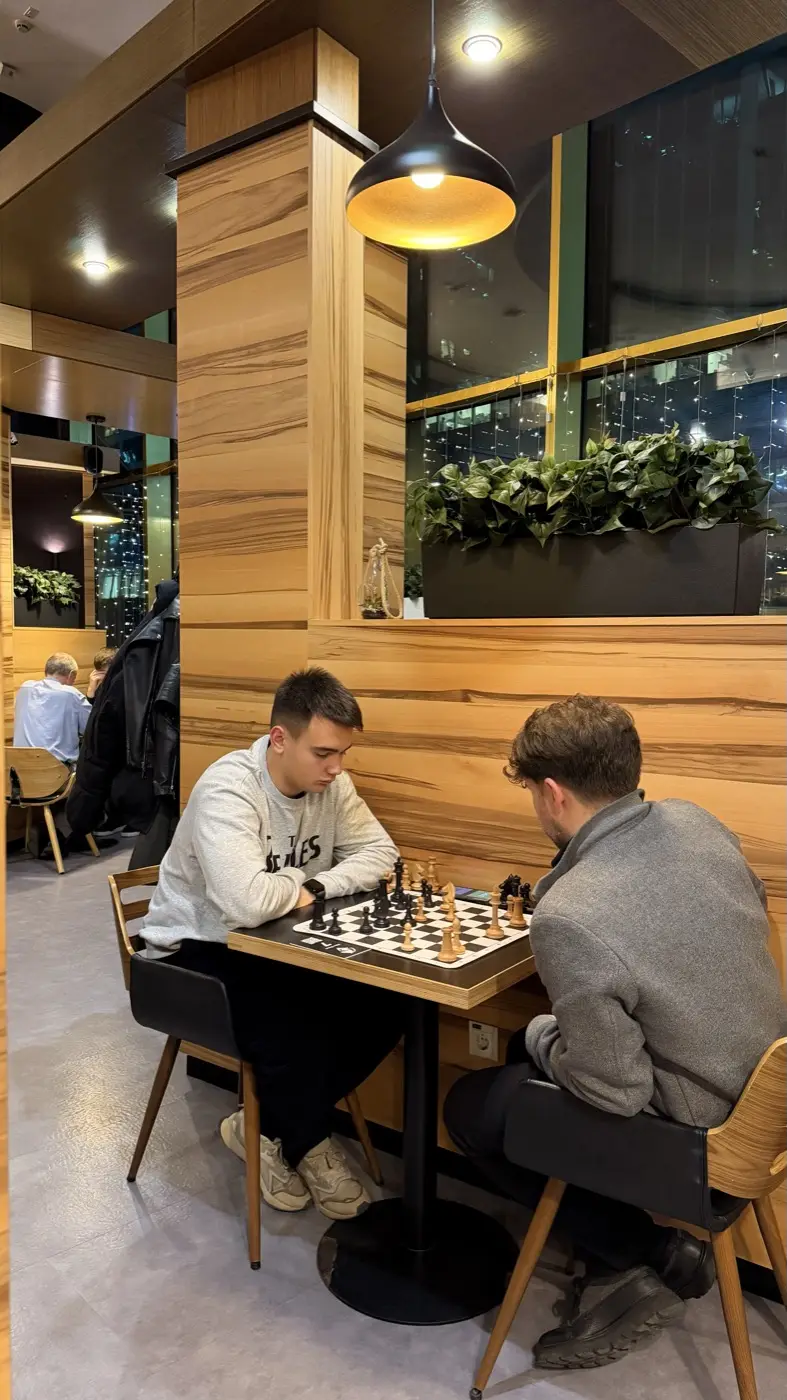


If a tournament is not rated, the FIDE rules are formally not binding on it. But players still expect a fair pairing. If the organiser wants to keep the right to change pairings - for example, so that a father does not play his son - it has to be written into the regulations and announced before the tournament. FIDE point 4.4.2 works exactly that way: a change is possible if the tournament rules explicitly allow it.
The regulations in full - chess tournament regulations, about relatives in the pairings - relatives and clubmates in the pairings.
In the Vibe Chess app pairs cannot be rearranged by hand: pairings are always calculated from the tournament data. The arbiter corrects that data from their panel, and the next pairing takes everything into account:
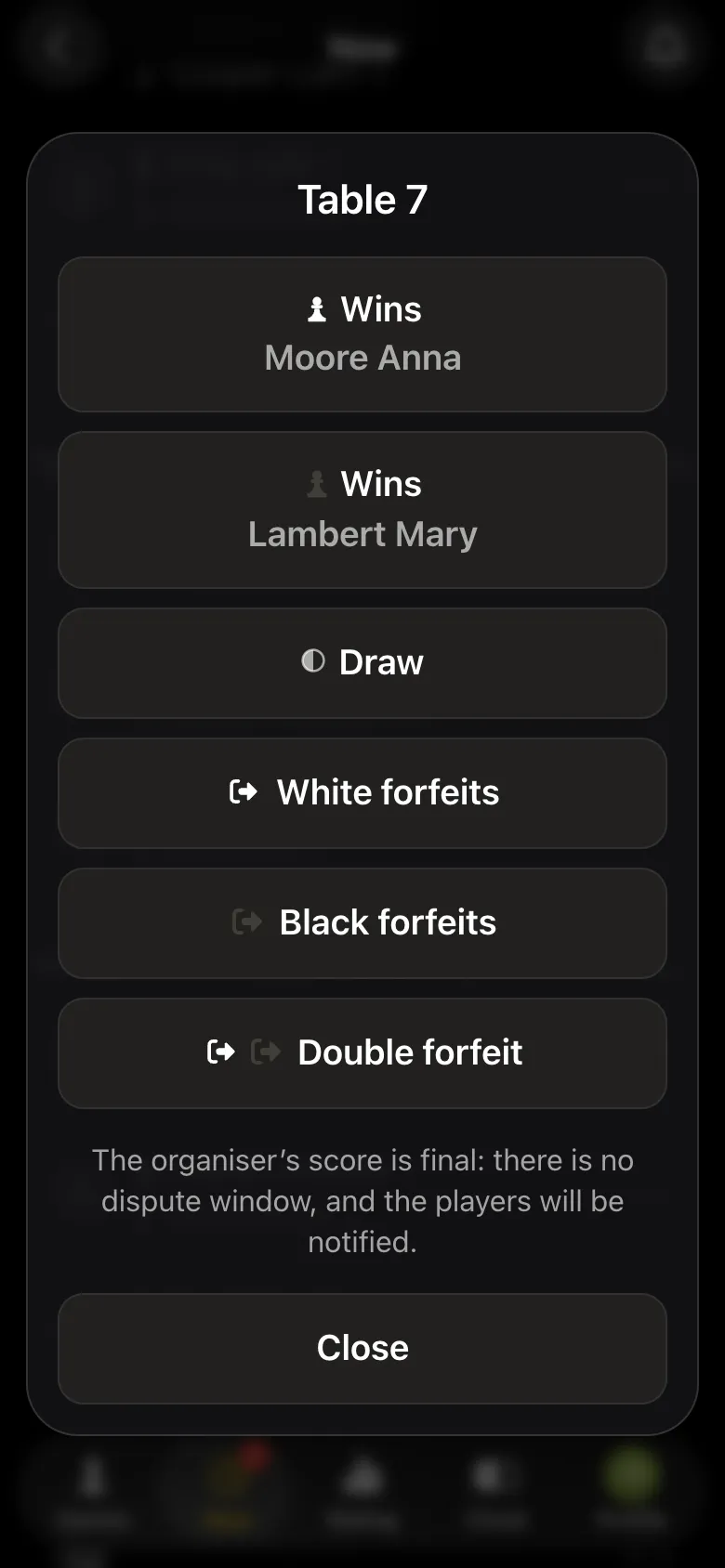
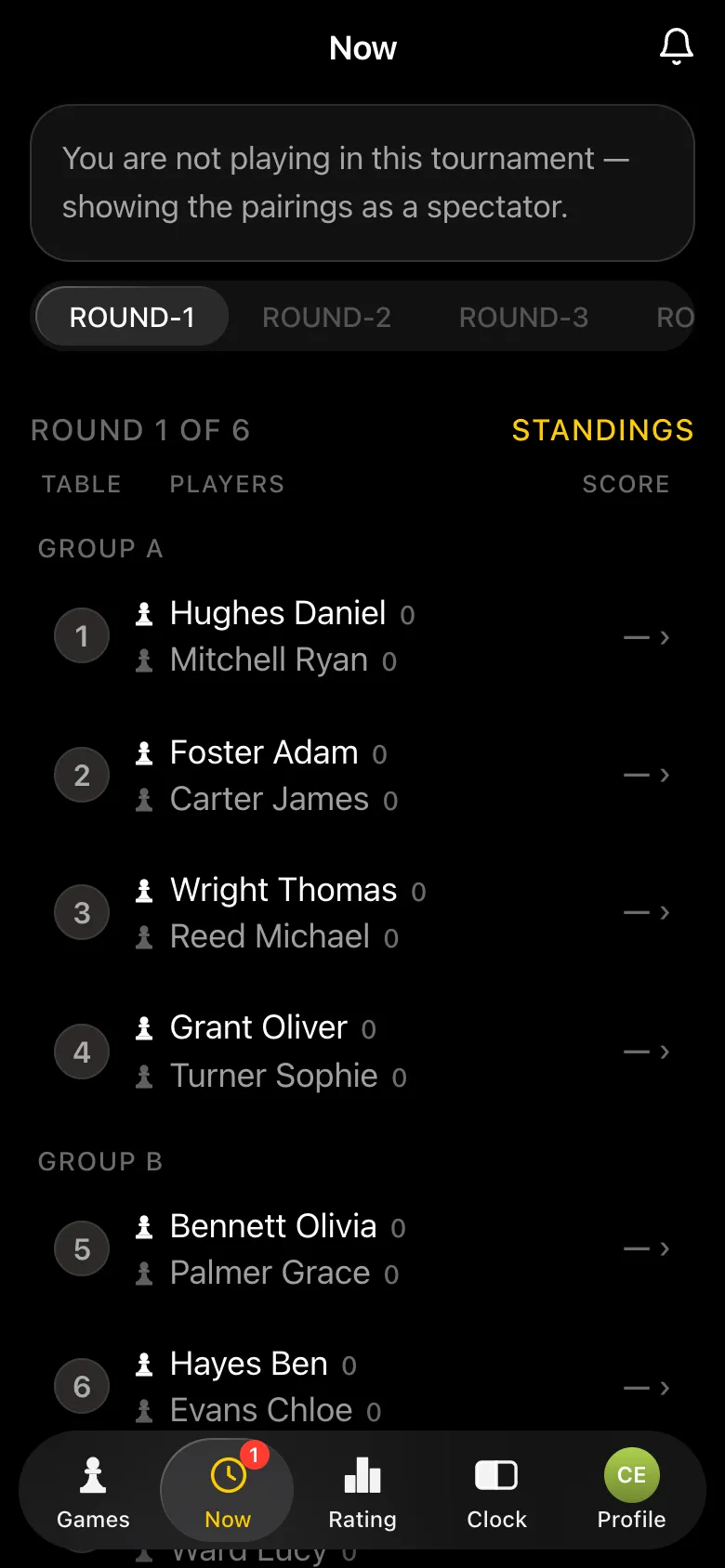
All of the arbiter's work in the app - arbiting a chess tournament.
Correct pairings - no: the FIDE rules forbid it. The chief arbiter may change published pairings only in five cases, for example an accidental repeat pairing.
No. Changing correct pairings in a player's favour is forbidden, even at the joint request of two players.
Correct the result. If the round has not started - recalculate the pairings; if it has - the corrected result goes into the next round's pairing.
Yes, if the opponent and colour do not change. Moving a table is not a pairing change.
Only if this is explicitly written in the regulations and announced in advance. Otherwise players are entitled to expect a fair pairing by the system.
No. Pairings are calculated from the tournament data. The arbiter corrects the data - attendance, no-shows, the field, results - and the next pairing takes it into account.
Everything people usually keep in a spreadsheet is already in the app: pairings, points, tie-breaks, round order. Free, with no subscriptions and no cap on the number of players.
The bot is constantly improved based on real tournaments. If you need a feature that isn't there yet, message the developers right inside the bot with the /support command. Many features appeared exactly because organizers asked for them, and useful ideas get added quickly.
More about pairings: a pairing error, colour in the first round, accelerated pairings, removing a player from a tournament and a double forfeit.

At the board since childhood: hazy about his rating, precise about every rook he has blundered. Counts an evening as a good one if the opponent stayed to talk afterwards instead of rushing off to check with an engine. Message →