Swiss pairing is a calculation: points, colours in previous rounds, who has played whom, starting number. If any of this data is wrong, so are the pairings. The most common errors:
| Error | How to notice | What to do |
|---|---|---|
| A previous round's result entered wrongly | a player complains about their pairing or their points in the table | correct the result; new pairings - if the round has not started yet |
| Someone who left was paired | one player is sitting alone at the table | withdraw the absent player; the opponent gets a forfeit win or a new pairing before the round starts |
| A latecomer was not added | the player came but cannot find themselves in the pairings | add them from the next round: past rounds score zero unless the regulations say otherwise |
| A repeat pairing | the players say "we have already played" | the pairings may be changed: this is the first case FIDE allows |
| Colours mixed up | noticed after the game | the result stands, the colours are corrected in the records |
| Wrong starting rating | the seeding does not match the rating list | correct it; in later rounds the pairing will use the right rating |
| Wrong tournament settings | the wrong system, number of rounds, acceleration | stop before the pairings are published; after that - only by the chief arbiter's decision |
How Swiss pairings are calculated - a Swiss system tournament.
The FIDE rules for Swiss tournaments (section C.04.2, edition from 1 February 2026) are clear: once published, pairings are not changed. There are five exceptions, and in each the chief arbiter decides - only if the change is in the interest of the tournament:
The most awkward case: the error was noticed after the round. Section C.04.2 has no direct rule for this, so arbiters follow general practice:
For a wrongly recorded result point 4.3 sets a deadline: if it is reported to the chief arbiter within the set time after the results are published, the correction counts in the table and in the next round's pairing. If it is reported when the pairings are already made but the next round is still being played - in the pairing one round later. If after the end of the next round - it is corrected only after the tournament, for rating purposes. The deadline for complaints is set in advance, in the tournament schedule.
Two useful details. Withdrawn players are not paired again (point 3.2). And players who were paired but did not play - for example, because of a no-show - may meet again in one of the later rounds (point 3.5): an unplayed game does not count as a meeting.


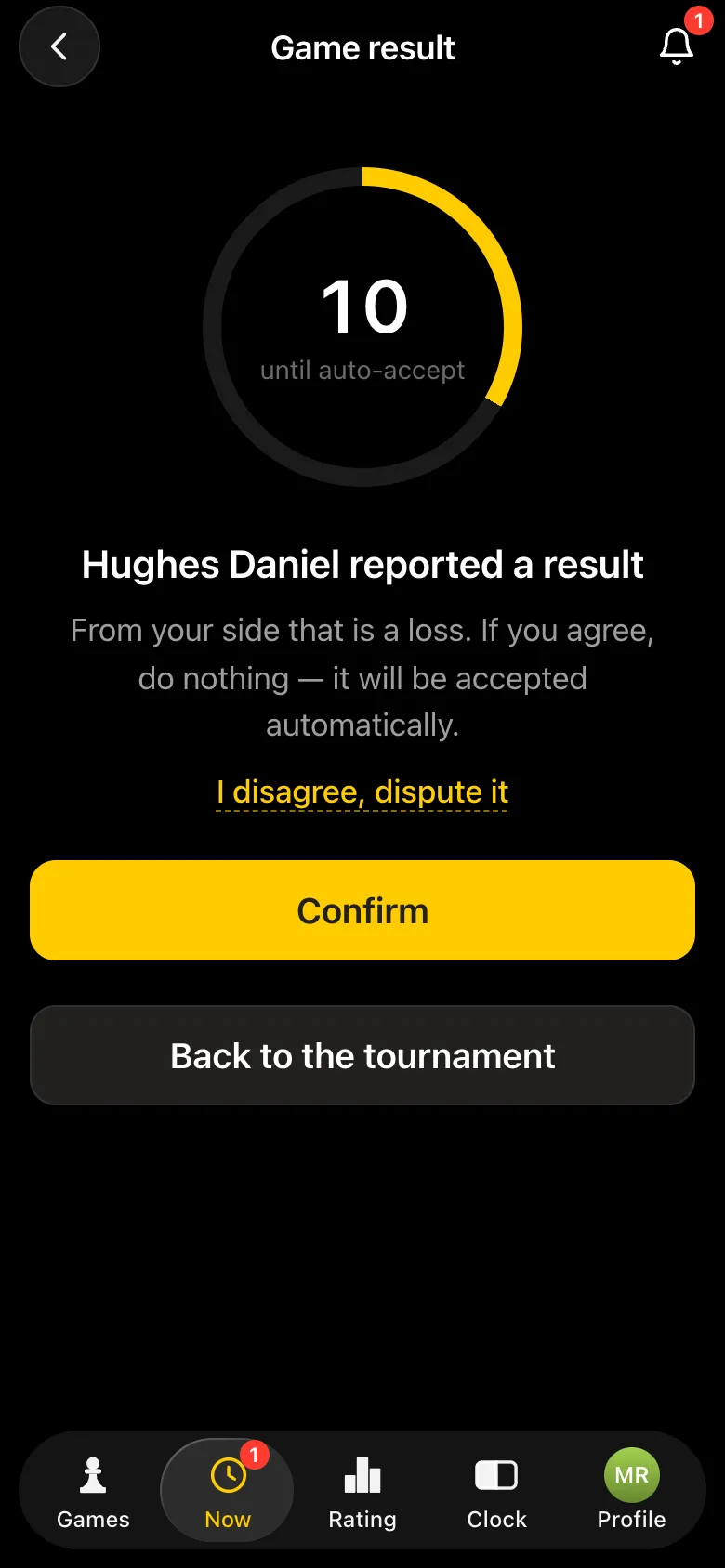
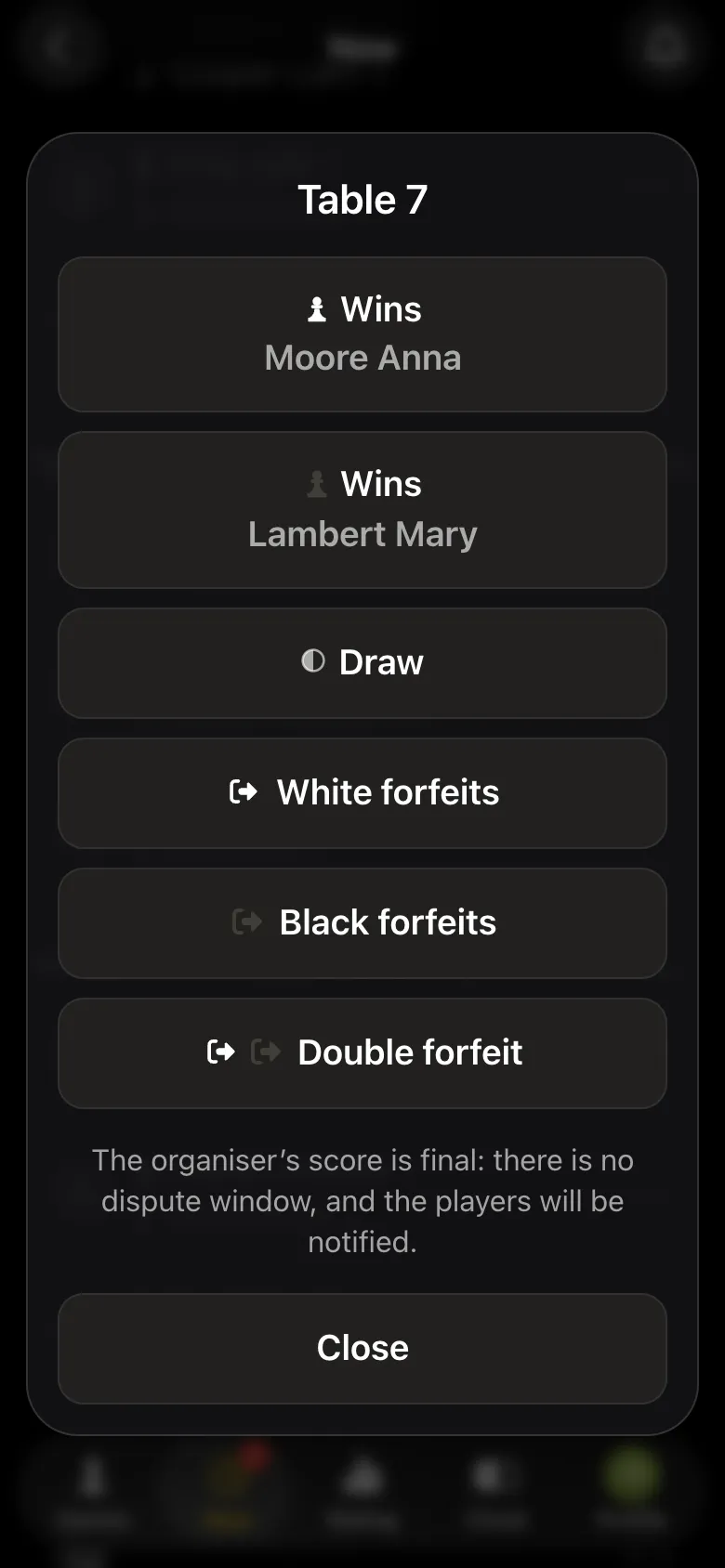
In the Vibe Chess app Swiss pairings are made by the bbpPairings engine following the Dutch system. Most sources of error are closed by the way the tournament itself works:
More about the engine - the bbpPairings engine, about the arbiter's work - arbiting a chess tournament.
Only in five cases from the FIDE rules: a repeat pairing, permission in the regulations, two players without an opponent agree to play, a latecomer admitted with the consent of those affected, unforeseen events on the top boards of the last round. The chief arbiter decides.
This is the first case in which published pairings may be changed (point 4.4.1). The chief arbiter makes new pairings if they consider it in the tournament's interest.
Usually not: the result stands, the error is corrected in the data, and the next pairing evens it out.
The result stands. The colours are corrected in the tournament records, and the next pairing takes into account who actually played which colour.
If it is reported within the set time after results are published - it counts in the table and the next pairing. If after the end of the next round - it is corrected only after the tournament, for rating.
Not at the moment: pairings are always calculated from results. The arbiter can correct the result of any round, and the correct data goes into the next pairing.
The Vibe Chess app is built for an evening over the board, not for online play: it keeps the sign-up list, the pairings and the table while you deal with people and the venue. All of it free.
score groups, no rematches, no second bye
everyone plays everyone, the app works out the number of rounds
who is free and who is already at a board is shown under Now
The bot is constantly improved based on real tournaments. If you need a feature that isn't there yet, message the developers right inside the bot with the /support command. Many features appeared exactly because organizers asked for them, and useful ideas get added quickly.
More about pairings and arbiting: online chess tournament pairing, a double forfeit, manual pairing changes, the arbiter's report after a tournament, removing a player from a tournament and arbiting a chess tournament.

At the board since childhood: hazy about his rating, precise about every rook he has blundered. Counts an evening as a good one if the opponent stayed to talk afterwards instead of rushing off to check with an engine. Message →