| Format | What the venue needs | How long guests stay | Who runs it |
|---|---|---|---|
| Chess tournament | boards, music turned down | 2-3 hours | the app, no host needed |
| Trivia night | projector, microphone, sound | 2-3 hours | a paid quizmaster or a franchise |
| Karaoke | equipment, soundproofing | until closing | a manager or a host |
| Stand-up and open mic | stage, sound, lighting | 1.5-2 hours | an event producer |
| Board games | a shelf of games, someone to explain the rules | 2-4 hours | a game host or the guests themselves |
| Mafia / werewolf | a separate room, quiet | 3-4 hours | a host |
| Film screening | projector, screening rights | about 2 hours | a manager |
| Tasting or workshop | the product, an expert | 1.5-2 hours | a bartender, the chef or a guest expert |
| Talk or club meeting | projector, rows of chairs | 1.5-2 hours | a speaker |
| Live match on screen | a screen, broadcast rights | about 2 hours | nobody |
The durations are typical for each format, not a promise: they depend on the room, the crowd and how the evening is put together.
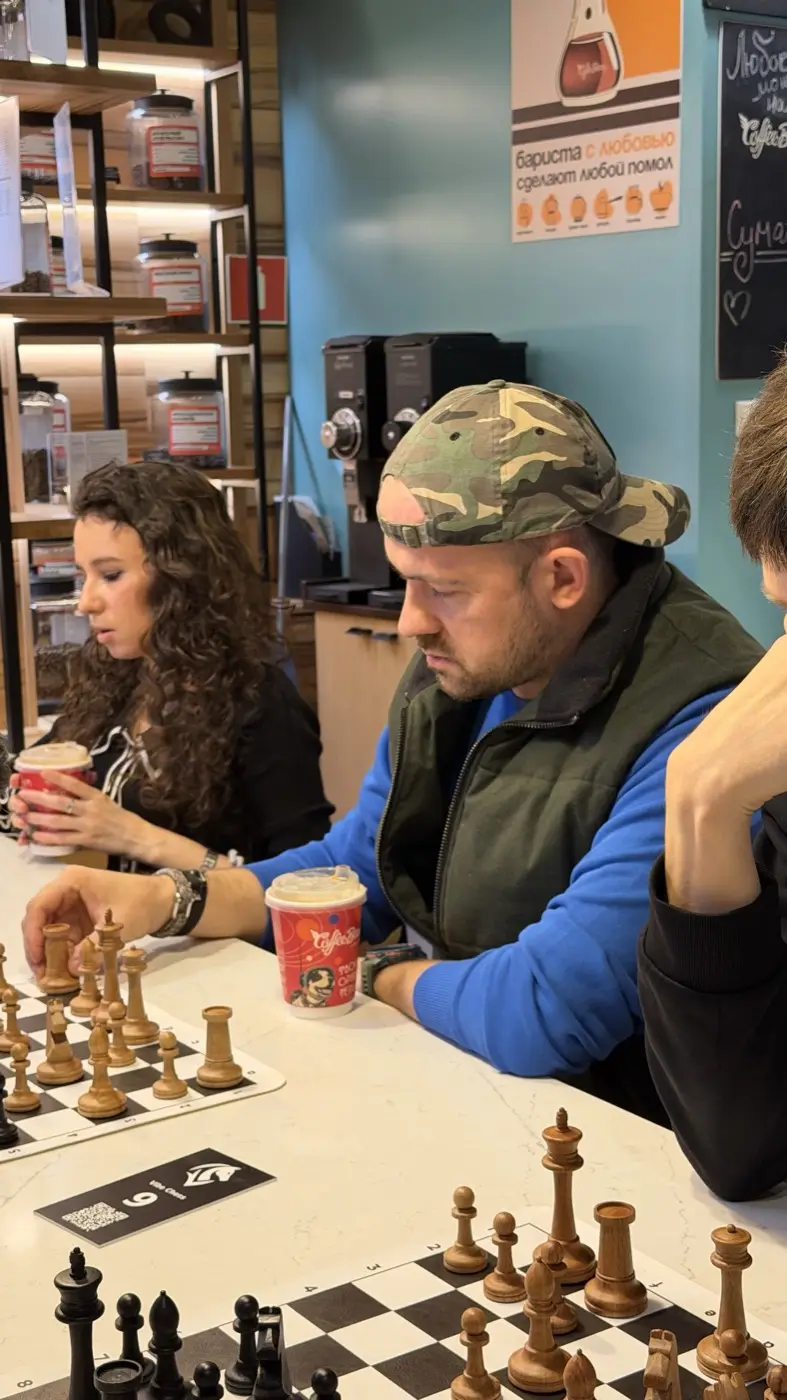
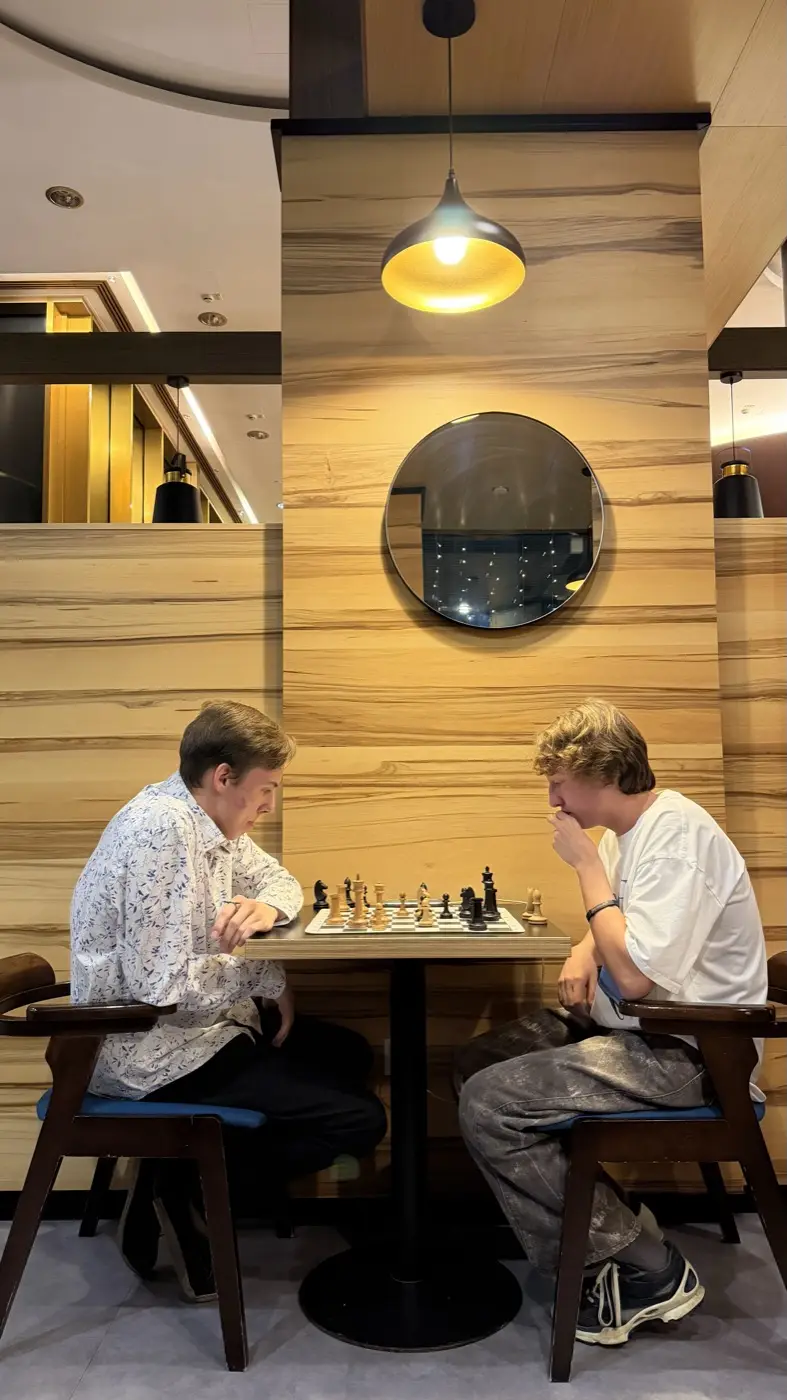
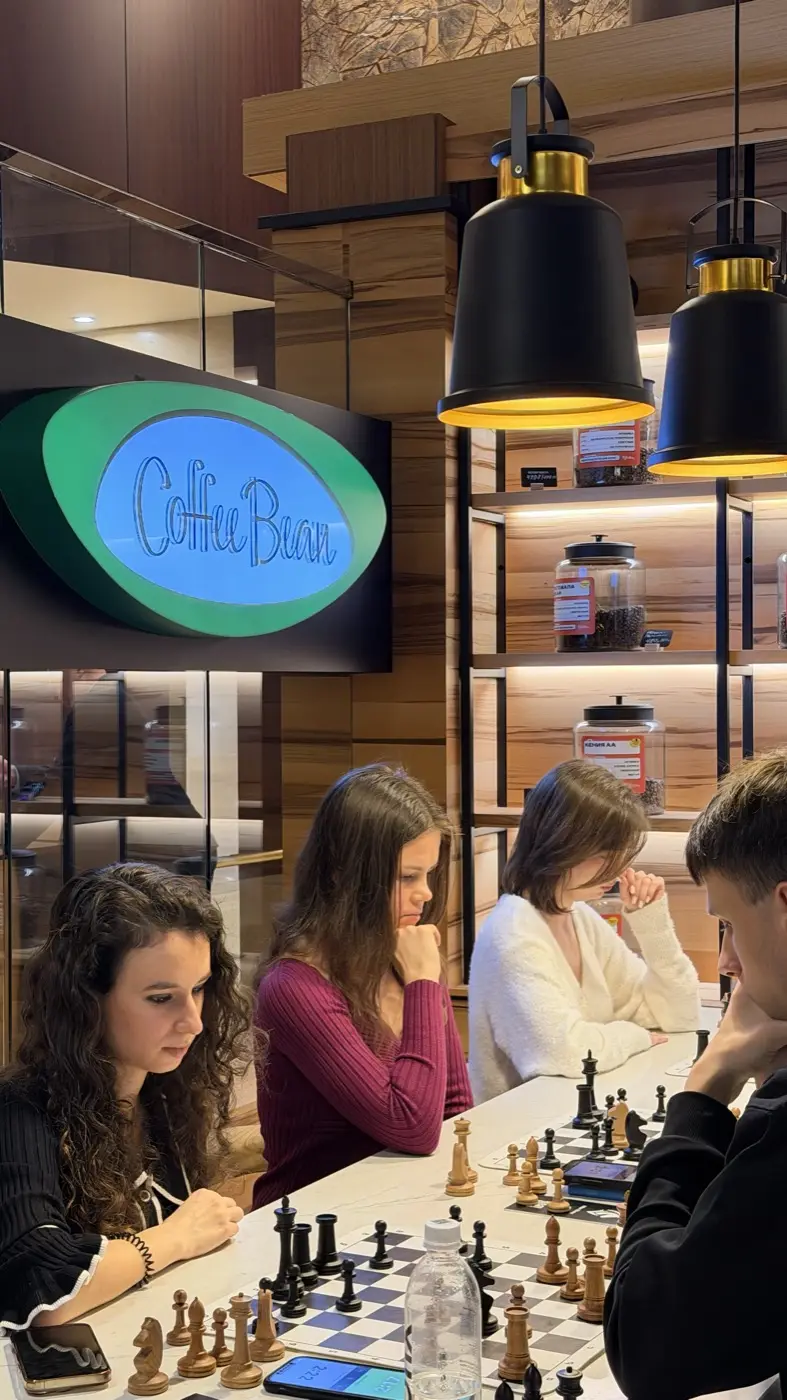
Chess answers all four questions at once. The evening can be run by a manager: they create the meetup in the Vibe Chess app and check in whoever arrives, and the app takes care of seating, pairings, the clock and the standings. Guests stay two or three hours, order between rounds and don't disturb the rest of the room. A regular tournament on the same day quickly builds a steady group.
Most importantly, a chess night brings in people who otherwise would not have come. Local chess players look for where their kind of people meet, find the tournament in the app's feed and get to know your venue through a good evening. The only cost is boards and pieces, roughly ten dollars for a set that serves two players.
How to set it up step by step: a chess tournament in a café run by your own staff.
| Day | What to put on | Why |
|---|---|---|
| Monday | chess tournament, a club around a hobby | a quiet day: calm formats with no preparation suit it |
| Tuesday-Wednesday | trivia, chess, a talk | the best days for a regular evening - little competition |
| Thursday | workshop, tasting, stand-up | guests are already in weekend mode |
| Weekend daytime | chess, board games, family formats | families and people who don’t go out at night |
The same day every week beats changing dates: “chess on Tuesdays” sticks, “sometime this month” doesn't. More on quiet days: how to get more customers to your café on weekdays.
What to give winners so the prize brings them back: chess tournament prizes from the venue. A similar format for groups of friends is described in chess party.
Formats that run themselves: board games, live sport on screen and a chess tournament. In chess the app handles seating, pairings and the standings, and your staff only check people in.
The quiet ones: chess, board games, tastings. Karaoke, stand-up and loud parties take over the whole room.
Regular evenings usually go on Monday to Wednesday, when the room is emptiest. What matters most is the same day every week.
The Vibe Chess app is free. You only need boards and pieces: roughly ten dollars for a set that serves two players, bought once.
A post on the venue's social media, a poster by the door and a QR code on the tables. A chess tournament is also visible in the city feed in the Vibe Chess app, where chess players find it.
Pairings are computed by bbpPairings, an open-source engine implementing the Dutch system by FIDE rules: score groups, floats on an odd field, colour alternation. Free to use.
proper rounds with correct pairings, not random matchups
a full circle, with the round count derived from the field
a light format with no tournament machinery
The bot is constantly improved based on real tournaments. If you need a feature that isn't there yet, message the developers right inside the bot with the /support command. Many features appeared exactly because organizers asked for them, and useful ideas get added quickly.
For venues: a tournament at your venue, run by your staff, chess in a coffee shop, guests on quiet days and chess meetups in cafés and bars.

At the board since childhood: hazy about his rating, precise about every rook he has blundered. Counts an evening as a good one if the opponent stayed to talk afterwards instead of rushing off to check with an engine. Message →