Vibe ChessVibe ChessApp

A chess tournament in your café, bar or restaurant - no host, no arbiter

Alexey Mudry · updated November 9, 2026
Bars and coffee shops from different cities often write to us: we want a chess tournament here, please come and run it. We can't travel to every city, so we made it possible for the venue's own staff to run the tournament - the manager, a host, a barista or a waiter. They create the meetup in the app, set out the boards and check in whoever arrives. From then on the app does the work: it seats people at tables, tells them who plays whom, runs the clock and the score and shows the winner at the end. No arbiter or host is needed, and the person in charge doesn't have to play chess at all.

What it looks like

These clips were filmed at our chess evenings in Moscow restaurants. At your venue it will look the same: boards on ordinary tables, a cup of coffee or dinner beside them, the clock on a phone.

Kaya, Moscow

The whole evening: a handshake before the game, a clock on the table, talk between rounds.

Goldfinch, Moscow

Several boards in an ordinary restaurant room, the clock on a phone, dinner next to the board.

Kaya, Moscow

Close up: the game is on, and people are laughing over the board.

What a chess night gives a venue

🕖

Guests on a quiet night

A chess night goes on a Monday to Thursday, when the room is half empty. People arrive at a set time instead of “whenever”.
⏳

Two or three hours at the table

Five rounds of blitz with breaks take about two and a half hours. All that time your guests are sitting with you and ordering.
♟️

A new crowd

Local chess players come from the listing in the app. For many it is their first visit, and they remember your place by a good evening.
🔁

They come back

A tournament on the same day every week builds a regular group. A month in, some of them come without needing a listing at all.
🔇

Doesn’t bother anyone else

No microphone, no stage, no loud music. Other guests eat next to the boards and often wander over to watch a game.
📸

Something to post

Boards across the room, focused faces, the winner getting a prize - ready-made pictures for your social media.

How chess compares with other formats is covered in event ideas for cafés and bars, and the quiet days of the week get their own article: how to get more customers on weekdays.

Local chess players get to know your venue

A chess tournament introduces your place to people who otherwise would never walk in. Every city has chess players with nowhere to play over the board: nobody to play at home, the club is far away and online has got old. They look for where their kind of people meet, and they go wherever there is a tournament.

  • • an open meetup appears in your city's feed in the app, where everyone looking for a game can see it;
  • • newcomers from your city get the nearest events from the bot with a sign-up button - yours will be among them;
  • • the event card shows your venue's photo, address and description, so people know where they are going;
  • • after the tournament every player gets the results with the name of the evening and the venue.

Chess players retell a well-run evening in their city chats, and next time they bring friends.

Who does what: the venue and the app

WhenThe venueThe Vibe Chess app
A week beforea member of staff creates the meetup in the app: date, time, format, your venue with a photothe event appears in the city feed; people sign up through the link and the QR code
The day beforebuy or get out the boards and pieces, decide on a prizeon the morning of the event players get a reminder with the address
An hour beforeset the boards out on the tables, turn the music downnothing: the list of who signed up is already in the app
Startgreet the guests and check in who has arrivedchecked-in players go into the pairing
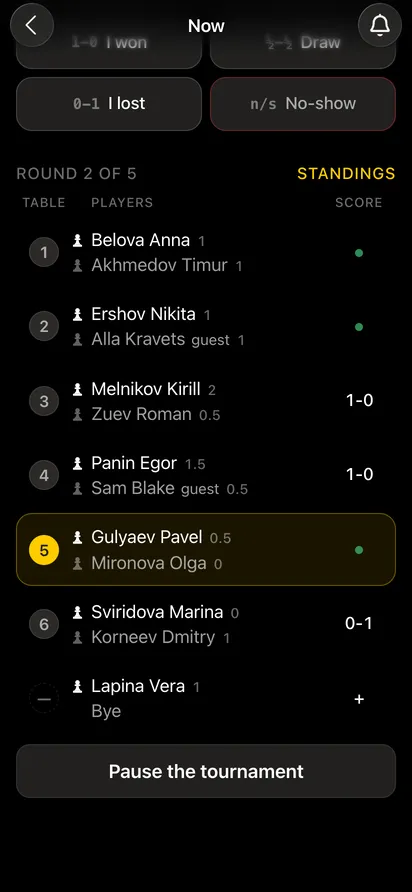
Roundsbring the ordersseats people at tables, tells everyone their opponent and colour, runs the clock and the standings
Finishhand the prize to the winnershows the final standings and sends the results to every player
Your staff member is needed for ten minutes at the start: greet people and check them in. During the rounds the players record the score themselves and the opponent confirms it. If they disagree, they tap “I disagree, dispute it” and sort it out at the board. Nobody has to run between the tables.

Five steps in the app

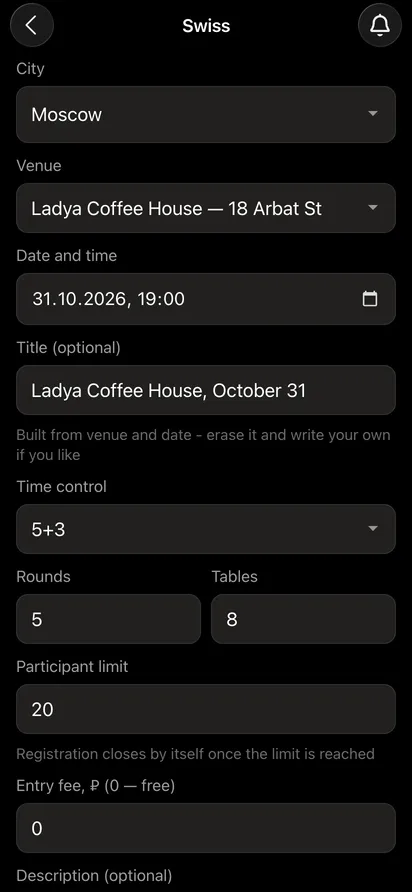
  1. 1. Create the meetup. “Create your own game” → format (for the first time, the Swiss system) → date, time, time control and number of rounds. The venue is added right in the form: name, address, a photo of the room.
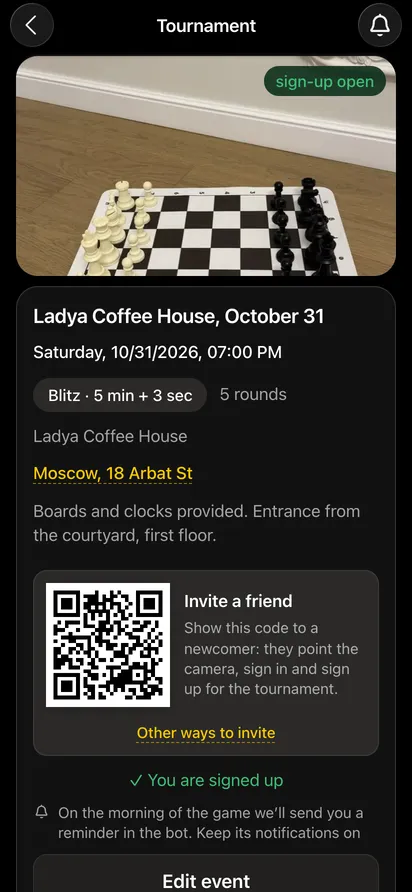
  2. 2. Invite players.The event card has a link and a QR code. Post them on the venue's social media and put the QR code on the tables and by the till.
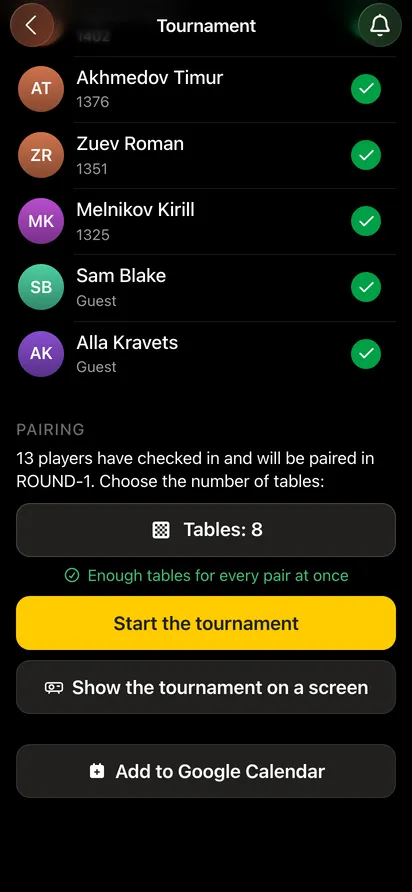
  3. 3. Check people in. Guests arrive and your staff member ticks them off the list. Anyone without a phone is added as a guest by name and plays like everyone else.
  4. 4. Start the tournament. Choose the number of tables and tap “Start the tournament”. Every player sees the round, the table, the opponent and the colour.
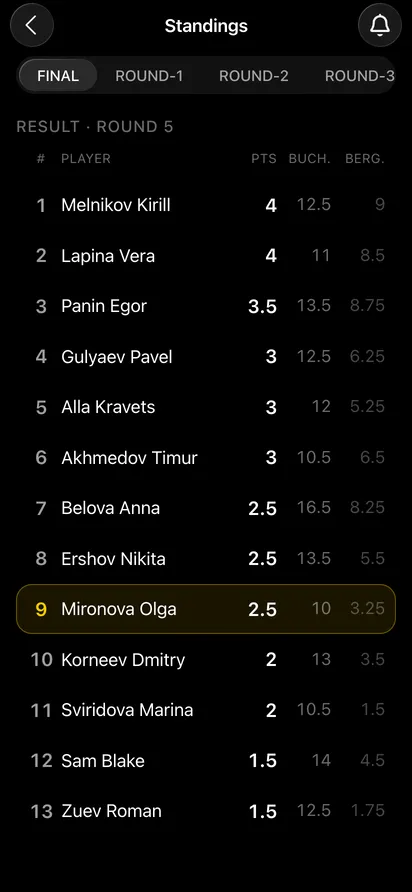
  5. 5. Results. After the last round the app works out the places, shows the final standings and medals for the top three.
Tournament form in the Vibe Chess app: city, venue, date and title
The venue with a photo is added in the form
Tournament card in the Vibe Chess app: venue photo, date, time control and invitation QR code
The QR code is on the event card
Check-in: every player checked in, the table count and the Start the tournament button
Check in who came - and start
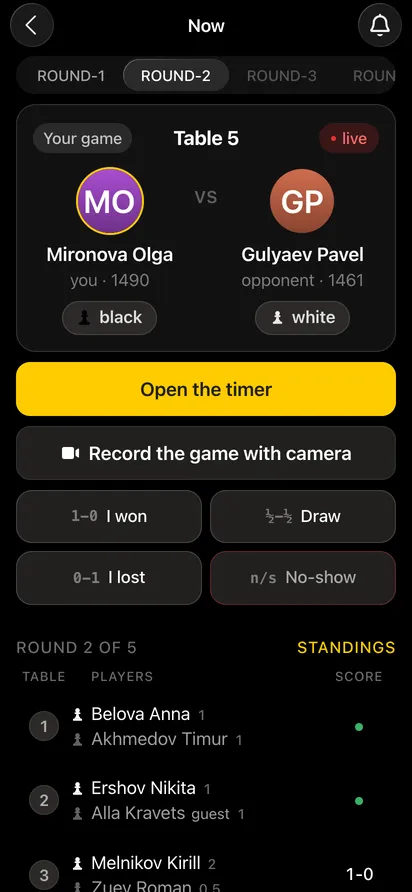
A player's round screen: table, opponent, colour, clock and result buttons
Everyone sees their table and opponent
List of boards in the round: finished games with scores and games still in progress
You can see which boards are still playing
Final standings of a chess tournament after round five
The final standings are worked out automatically

A full walkthrough with every screen: how to run a tournament in the app. You can also put the pairings and standings on a TV in the room: it looks great and saves you from “where am I sitting?” questions.

What to buy and what it costs

The app is free: no subscription, no fee per player. The only cost is the chess sets. You need one set for every two players: in Russia a board is about 300 roubles and plastic pieces about 500, so a set comes to roughly ten dollars. Eight sets are enough for a 16-player tournament, about 6,400 roubles once. You don't need chess clocks: every player has one on their phone.

PlayersSetsCostTables
84≈ 3,200 roubles4 tables for two
126≈ 4,800 roubles6 tables
168≈ 6,400 roubles8 tables
2412≈ 9,600 roubles12 tables or long tables in a row

Which boards survive a hundred evenings: which chess sets to buy for tournaments. The sets stay with you, and on ordinary days you can keep them on a shelf for guests.
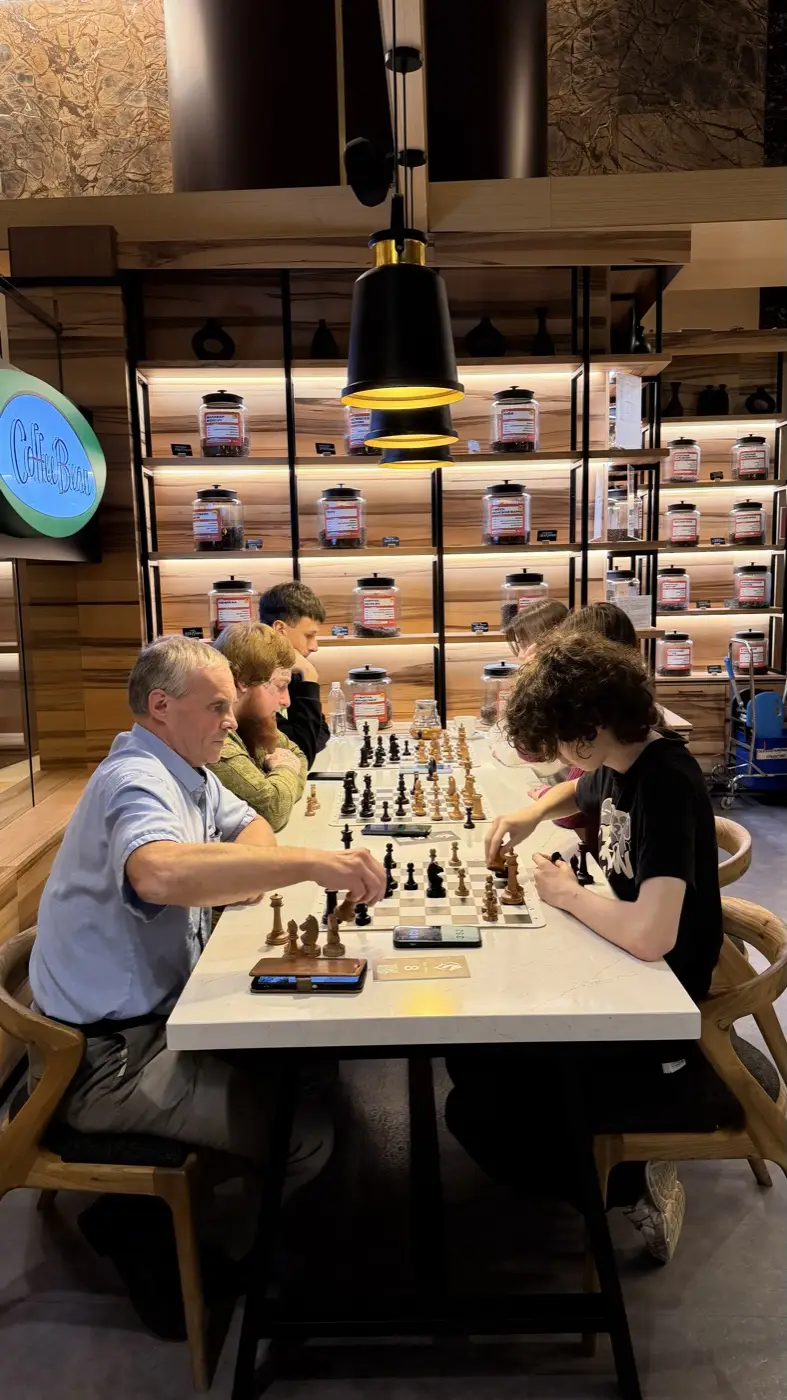
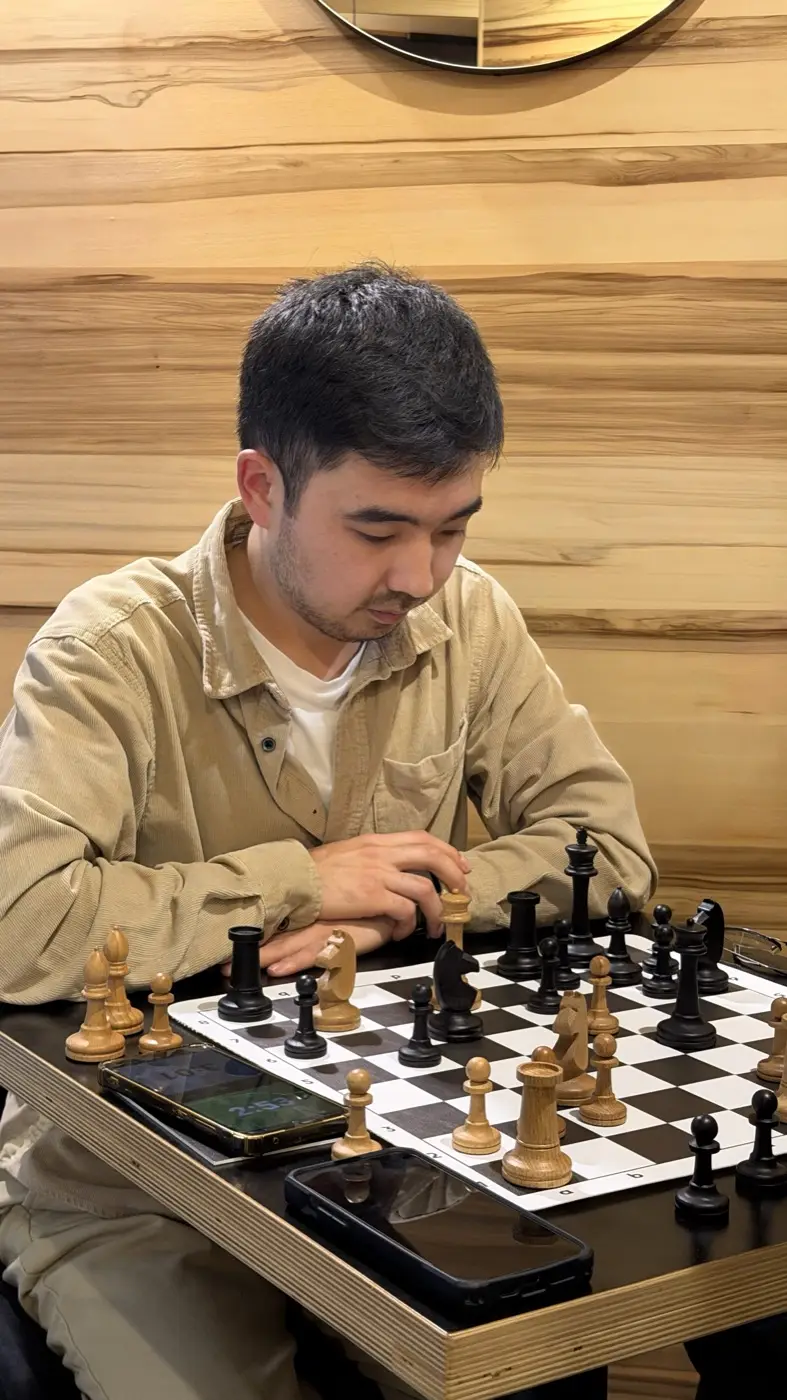
A row of tables in Coffee Bean: tournament games on several boards at onceA player thinking over a move, a phone with a chess clock beside the boardTournament players at Coffee Bean: a group photo after the games
A Vibe Chess tournament at Coffee Bean, Moscow City: the coffee shop's ordinary tables, clocks on phones, a group photo after the games.

A prize from the venue

The tournament works without prizes, but a prize from the venue makes it more fun: players fight harder, and the winner remembers your place for a long time. The prize doesn't have to be expensive. A signature drink or dessert, a voucher for the next visit or the venue's challenge cup all work. A voucher has a bonus: it brings the winner back.

What to give and how to mention the prize in the listing: prizes for a chess tournament at a café.

Which venues it suits

  • • coffee shops - a small evening for 8-12 people or a daytime meetup at the weekend; more in chess in a coffee shop;
  • • bars and pubs - blitz over drinks on a weeknight;
  • • restaurants - an evening with dinner, where the break between rounds becomes a moment to order;
  • • board game cafés and lofts - a long evening that can alternate a tournament with casual play;
  • • bookshop cafés, food halls, hotel lobbies - anywhere guests already stay a long time.

The main requirements for the room are light over the tables and quiet music during the rounds. If the tournament becomes a regular thing, it grows into a club with its own league: how to start a chess club.

Create a chess meetup at your venue

Open the Vibe Chess app, choose a format and add your venue with a photo. A week from now there will be a chess night in your room.

Questions from venue owners

Does the member of staff need to know how to play chess?

No. They create the meetup, check in whoever arrives and tap “Start the tournament”. The app handles pairings, tables, the clock and the standings, and the players record the score themselves.

How much does the app cost?

Nothing. Creating meetups, pairings, standings and results are all free. The only cost is boards and pieces: roughly ten dollars a set, one set for every two players.

Where do the players come from?

An open meetup appears in the city feed in the app, and the bot shows newcomers from your city the nearest events. Add the link and QR code to your venue's social media and to the tables.

What if players argue about a result?

One player records the score and the other confirms it. If they disagree, they tap “dispute”, and the result is entered again after they talk it over at the board.

How long does the tournament take?

Five rounds of 5+3 blitz with breaks take about two and a half hours. Starting at 7 pm and finishing by 9:30 works well.

Can we charge an entry fee?

You can set a fee in the event settings. Most venues keep it free and earn on what guests order.

What if people turn up without a phone?

They are added to the tournament as guests by name. A guest goes into the pairing and plays like everyone else.

Free

The app instead of arbiter software

Pairings are computed by bbpPairings, an open-source engine implementing the Dutch system by FIDE rules: score groups, floats on an odd field, colour alternation. Free to use.

  1. 1The event is created in the app in a minute
  2. 2Players register themselves through the link
  3. 3The engine pairs every round, not the organizer
  4. 4The finished tournament exports as a TRF file that arbiter software accepts
  • Swiss system. proper rounds with correct pairings, not random matchups
  • Round robin. a full circle, with the round count derived from the field
  • Free meetup. a light format with no tournament machinery

More than a bot: the app, FIDE rules and a TRF report

  • The app. Besides the bot there is an app - inside Telegram and simply at playvibechess.com/app: what is on in your city, the player list, a live table, the current round, your profile and game history - everything that is awkward to read as chat messages.
  • Pairings by FIDE rules. Pairings are computed by bbpPairings, an open-source engine implementing the Dutch system: score groups, floats on an odd field, colour alternation, no rematches, and no player gets a bye twice.
  • A TRF report. A finished tournament exports as a single file in the FIDE data exchange format - the one arbiter software and federations accept. Your profile stores the FIDE ID, national federation code, title, sex and date of birth for it.
  • Free. All of the above, with no subscriptions, paid plans or limits on the number of tournaments and players.

Full overview

Missing a feature? Message the developers

The bot is constantly improved based on real tournaments. If you need a feature that isn't there yet, message the developers right inside the bot with the /support command. Many features appeared exactly because organizers asked for them, and useful ideas get added quickly.

Alexey Mudry
Alexey Mudry · hosted 40 events for Vibe Chess · 244 reviews · rating 5.0

At the board since childhood: hazy about his rating, precise about every rook he has blundered. Counts an evening as a good one if the opponent stayed to talk afterwards instead of rushing off to check with an engine. Message →