Article 4.3 of the FIDE Laws: if the player having the move deliberately touches a piece with the intention of moving or capturing it, then:
If none of the touched pieces can be moved, the player may make any legal move (Article 4.5). And one more rule next to it: a move is made with one hand (Article 4.1).
The last example is Article 4.4.3: the player wanted to castle and touched king and rook, but castling is illegal. Then they must make another king move, including castling to the other side if it is possible. If the king has no moves - the player is free.
While the piece is in your hand, you may choose the square again - but only for this piece. As soon as the piece is released on a square, the move is made and it cannot be moved elsewhere (Article 4.7). Three moves have their own details:
A move is made - but not yet completed. It is completed by pressing the clock. That matters for another rule: an illegal move in chess is penalised only after the clock is pressed.
Situations that most often bring the arbiter to the board:
| What happened | Outcome | Why |
|---|---|---|
| The hand hovered over a piece but did not touch it | nothing | the rule is only about touching |
| Brushed a piece with a sleeve, clearly by accident | nothing | a clearly accidental touch does not count (4.2.2) |
| Said "I adjust" after touching | must move | the warning comes before the touch (4.2.1) |
| Adjusted a piece on the opponent's time | a violation | only the player whose clock is running may adjust (6.2.5) |
| Picked up a piece and put it back on the same square | must move it | if it has a legal move (4.3.1) |
| Moved a piece but has not let go | may change the square | the move is made when the piece is released (4.7) |
| Released the piece on a square | the move is made | it can no longer be moved to another square |
| Touched their own piece, then the opponent's | capture with the first touched | if impossible - move or capture with the first touched piece that can (4.3.3) |
| Touched the rook first, then the king | no castling | must move the rook (4.4.2) |
| Put a queen on the promotion square | the choice is final | the piece has touched the square - it cannot be swapped for a knight (4.4.4) |
| The opponent noticed, but first touched a piece themselves | too late to claim | the right is lost by touching one's own piece (4.8) |
A piece is standing on the edge of its square and makes the position hard to read - you may adjust it without having to move it. Three conditions:
The opponent's pieces may be adjusted the same way - on your move and with a warning. Pieces displaced by accident (for example, knocked by a sleeve) are put back on your own time - that is Article 7.4.
The opponent claims: stops the clock and calls the arbiter. The right to claim lasts until they touch a piece themselves to make a move (Article 4.8). Once they have moved, the touch-move violation is in the past.
The arbiter decides on what they saw and on what the players and spectators say. Neither the clock nor the move record shows a touch, so an honest dispute about "touched or not" is settled by the arbiter's word. If the arbiter did not see the touch and nobody can confirm it, the game continues from the current position.
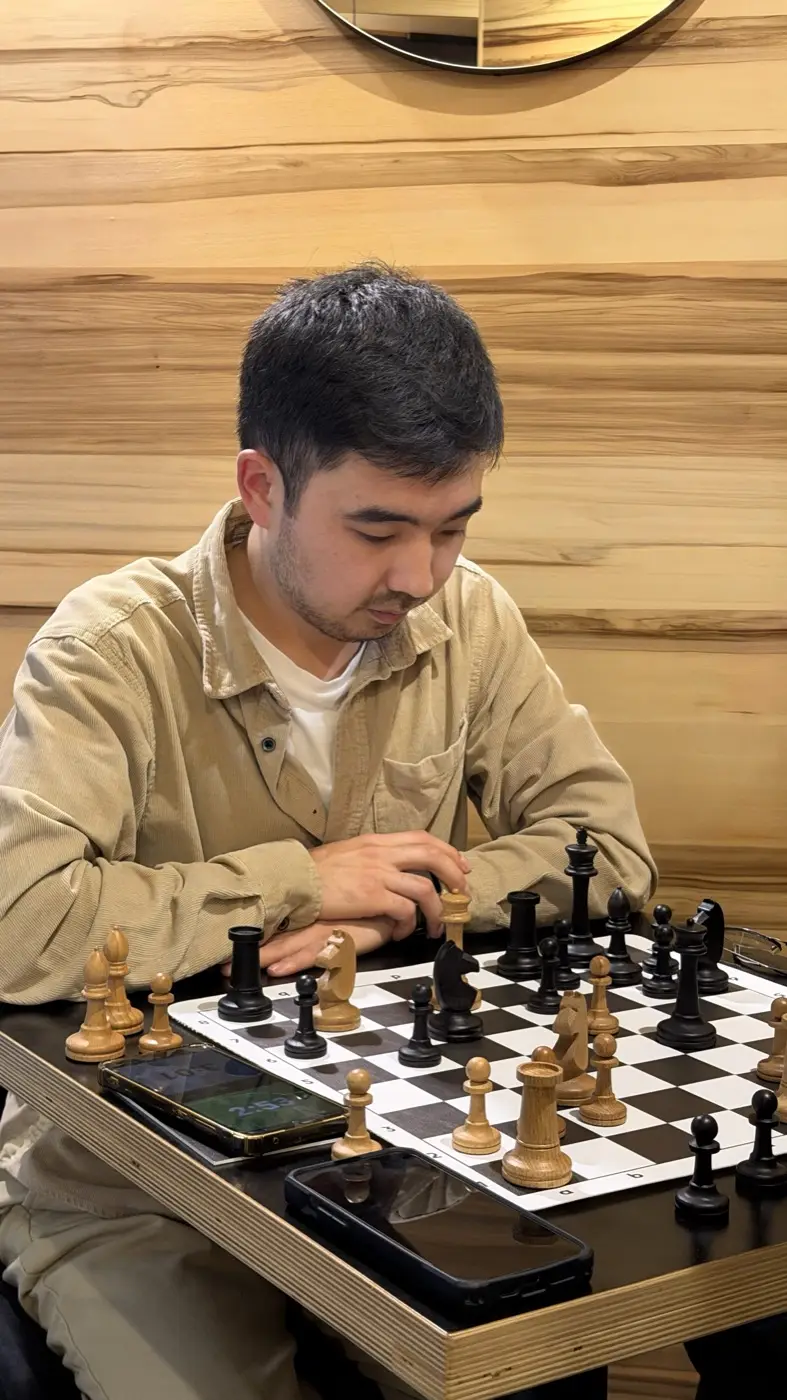
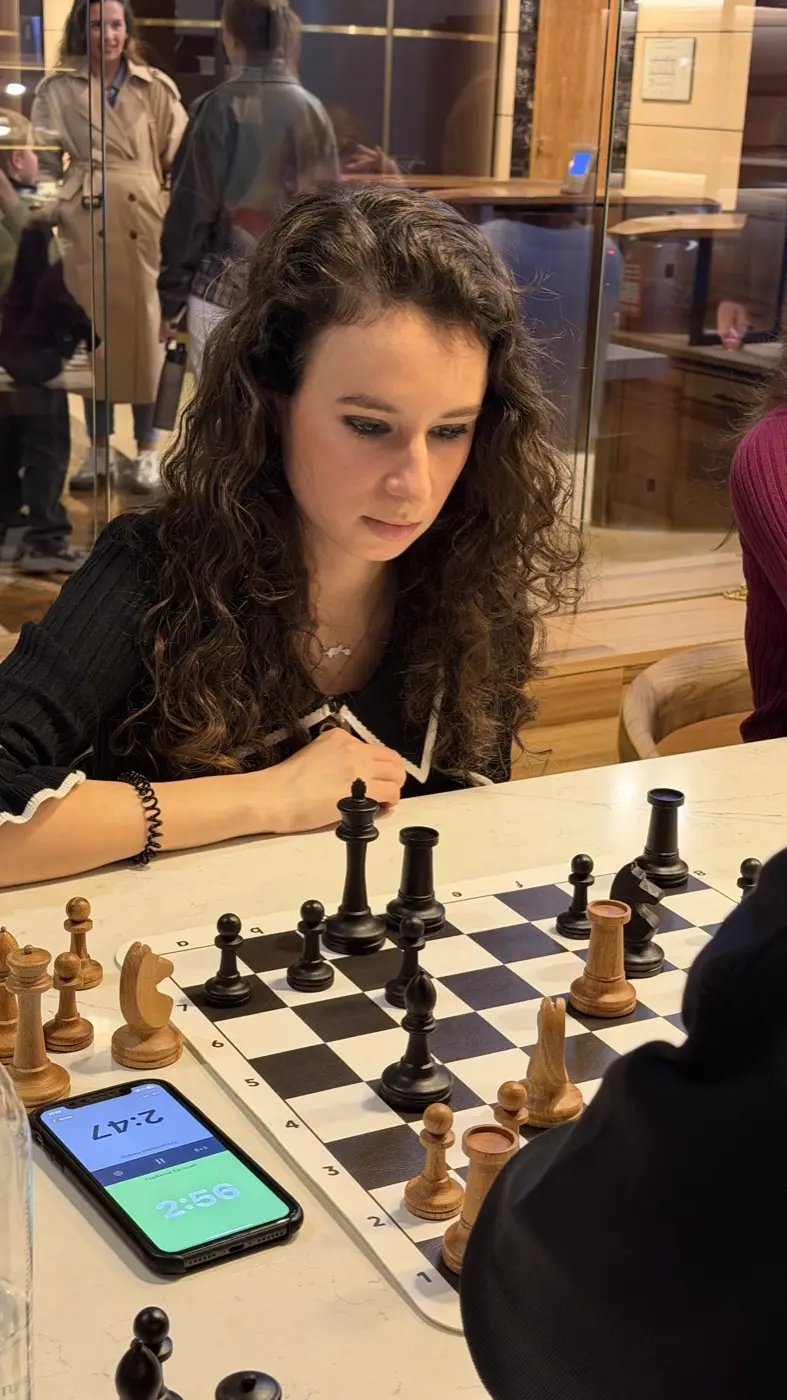

At Vibe Chess meetups the same rules apply: touch-move, one hand per move. How the app helps:
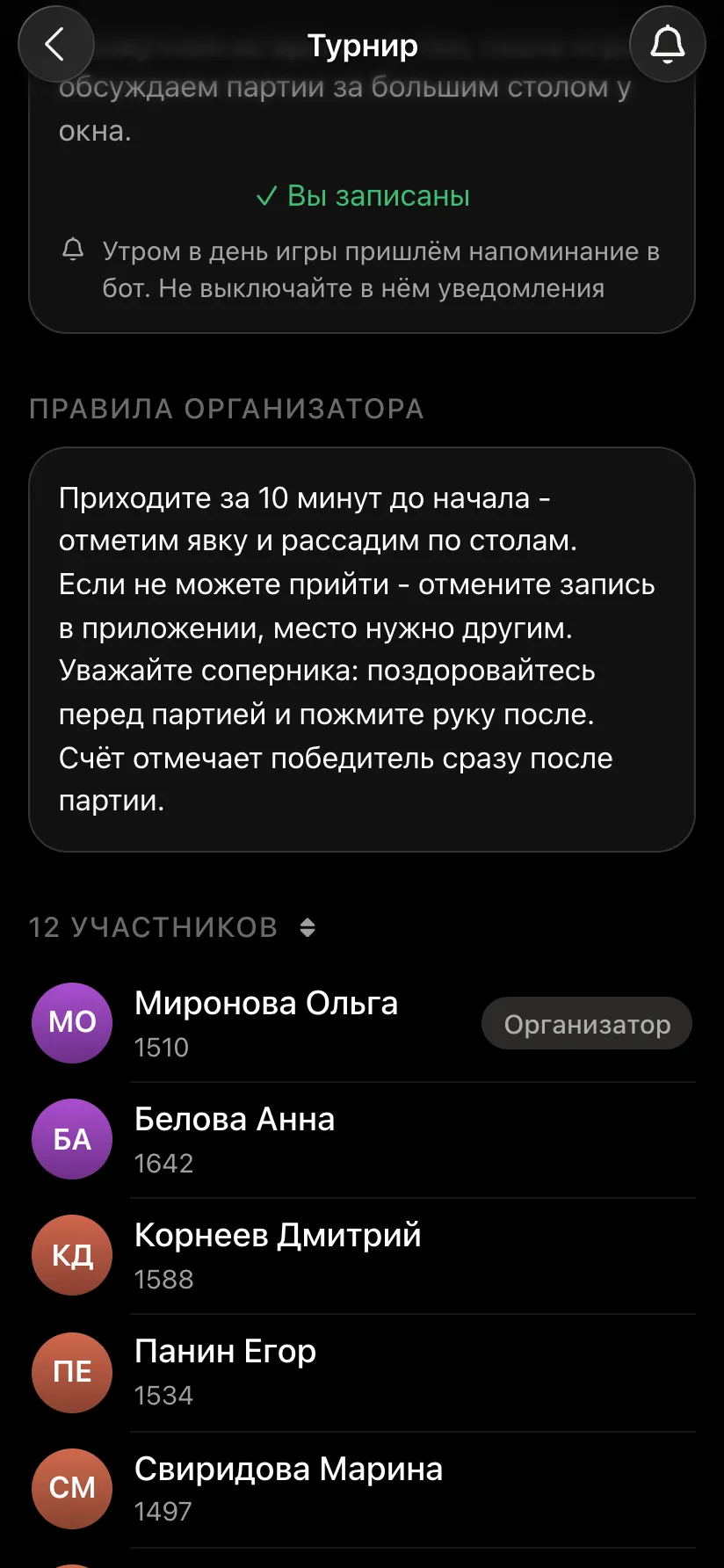
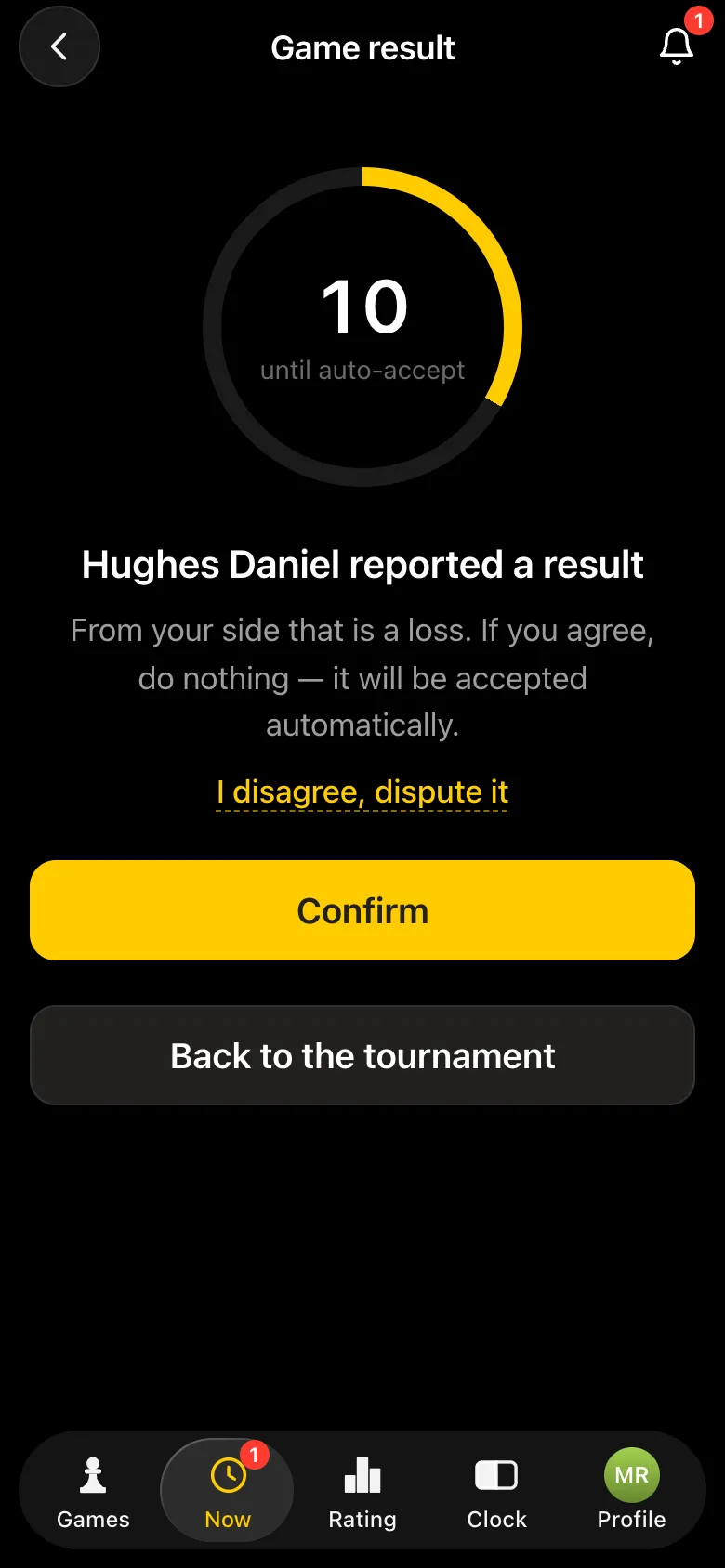
How the arbiter's work is organised - arbiting a chess tournament.
A player who, on their move, deliberately touches their own piece must move it if it has a legal move. Touched an opponent's piece - must capture it if possible.
No. A clearly accidental touch does not count (Article 4.2.2). But the arbiter decides what was accidental: if the touch looked deliberate, you will have to move.
The square - yes, until you release the piece. The piece - no: you have to move the one you touched first.
On your move, say "I adjust" beforehand and shift the piece within its square. Then you do not have to move it.
Yes, if castling to that side is possible. If it is not - you must move the king. If you touched the rook first and then the king, there is no castling: you must move the rook.
Yes. In blitz and rapid the rule is the same as in classical chess. A violation must be claimed before you touch a piece for your own move.
Everything people usually keep in a spreadsheet is already in the app: pairings, points, tie-breaks, round order. Free, with no subscriptions and no cap on the number of players.
The bot is constantly improved based on real tournaments. If you need a feature that isn't there yet, message the developers right inside the bot with the /support command. Many features appeared exactly because organizers asked for them, and useful ideas get added quickly.
More about the rules: an illegal move in chess, offering a draw, castling in chess, a fallen flag in chess and chess rules.

At the board since childhood: hazy about his rating, precise about every rook he has blundered. Counts an evening as a good one if the opponent stayed to talk afterwards instead of rushing off to check with an engine. Message →