There is one correct moment: after your move on the board and before pressing the clock. That is what Article 9.1.2.1 says. The logic is simple: the opponent receives the offer along with their own time and can think it over calmly, and you do not distract them while they are the one thinking.
An offer made at another moment is still valid. But if it disturbs the opponent's thinking, the arbiter may treat it as a distraction - Article 11.5 directly forbids "unreasonable offers of a draw".
In rapid and blitz there are no scoresheets, so step 4 is skipped. Everything else is the same: move, words, clock.
Two rules amateurs most often do not know:
An accepted draw is final. Even if a minute later it turns out the position was winning, the game cannot be brought back.
What the arbiter and the players do in the situations that come up at tournaments most often:
| Situation | Outcome | Why |
|---|---|---|
| Offered after their move, before pressing the clock | correct | this is exactly the procedure of Article 9.1.2.1 |
| Offered while the opponent's clock is running | the offer stands | but it may count as a distraction (Article 11.5) |
| Offered and then changed their mind | cannot withdraw | the offer stands until the opponent answers |
| The opponent said "let me think" | the offer stands | until they answer or touch a piece to move |
| The opponent silently made a move | declined | touching a piece to move is a refusal |
| "A draw, if you don't mind me taking the pawn" | no conditions allowed | a draw offer is unconditional |
| Offered before the first move | no draw | under Article 5.2.3 both must have made at least one move |
| Offers a draw every two moves | distraction | the arbiter may penalise using the scale of Article 12.9 |
| The regulations forbid draws before move 30 | not without the arbiter | Article 9.1.1: only with the arbiter's consent |
Under Article 9.1.1 the tournament regulations may forbid a draw by agreement before a certain move (often move 30 or 40) or without the arbiter's consent at all. This is called the "Sofia rule" - after the 2005 tournament in Sofia, one of the first to use it.
Why an organiser wants it: spectators and the broadcast get real games, not a handshake on move ten. At an amateur tournament a ban is usually unnecessary, but if you introduce one - write it into the regulations and announce it before the first round. The ban does not cancel draws by repetition, stalemate or the 50-move rule: those are draws by the Laws, not by agreement.
The regulations in full - chess tournament regulations.
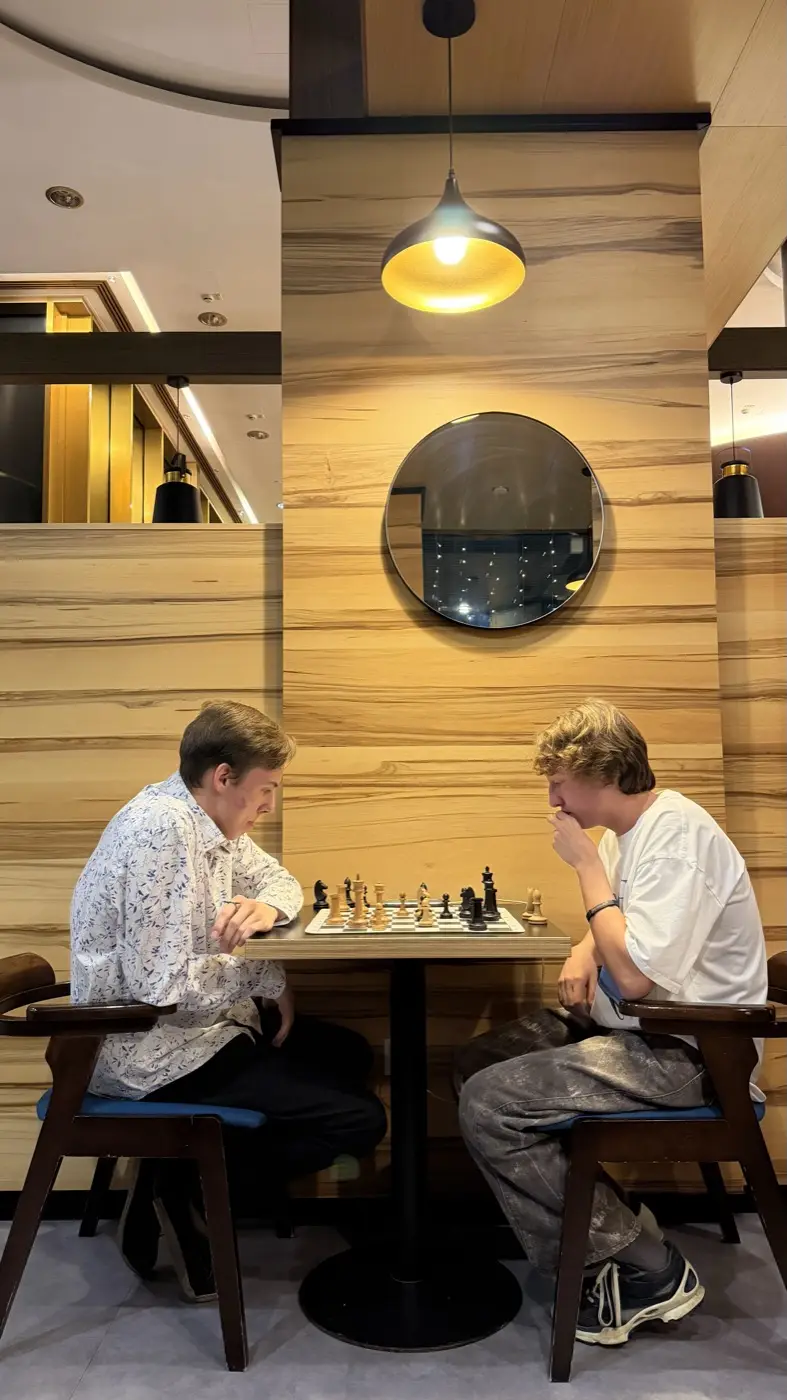
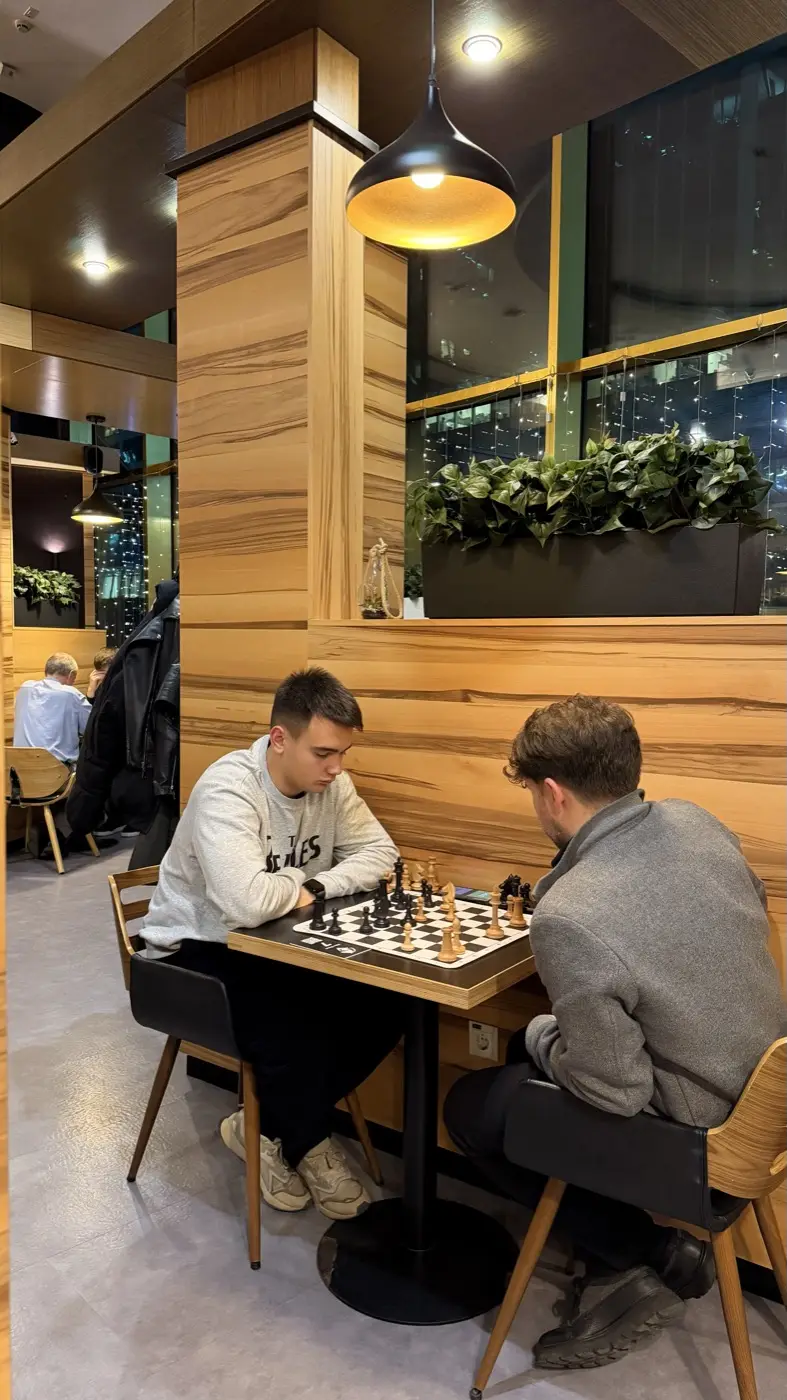
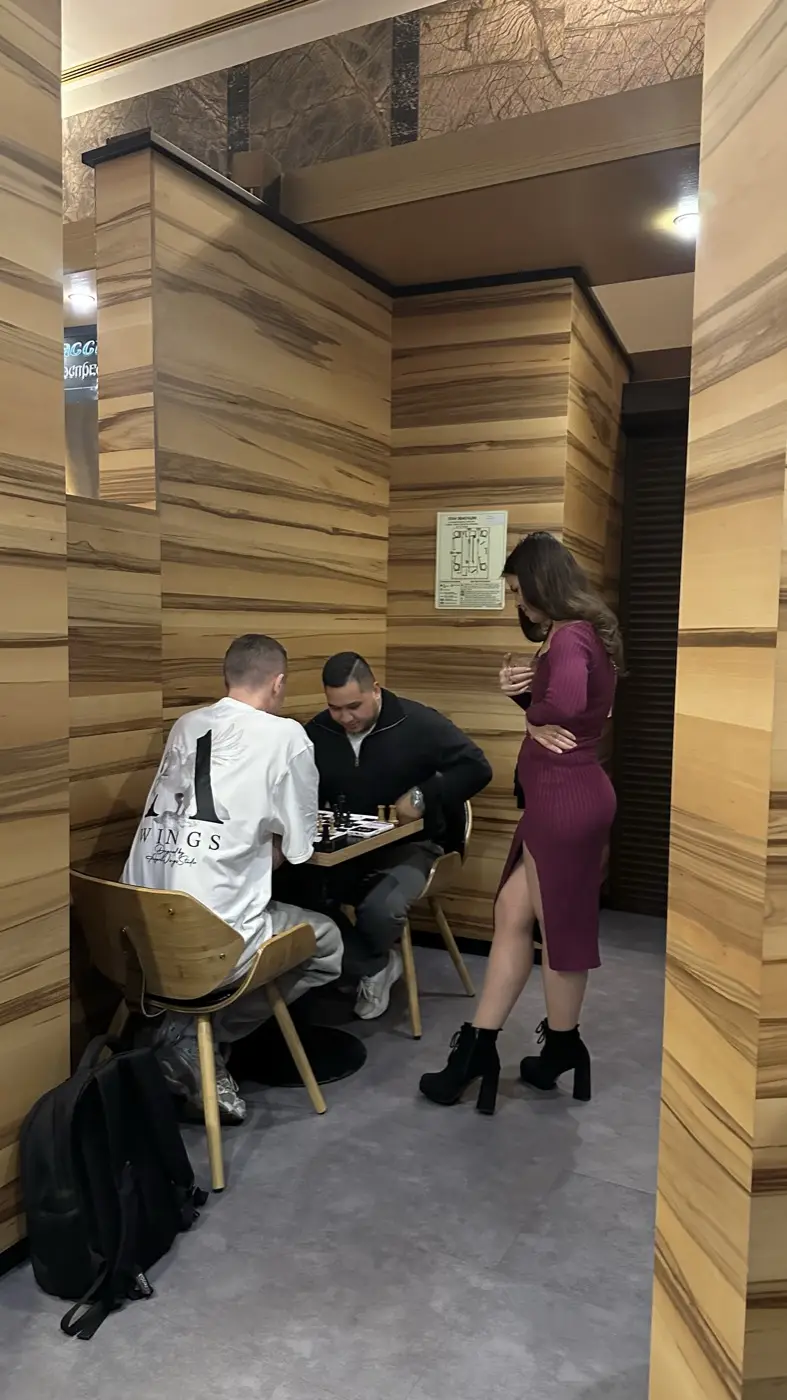
At Vibe Chess tournaments a draw is offered the same way as at any board: in words, after your move. Then the app takes over:
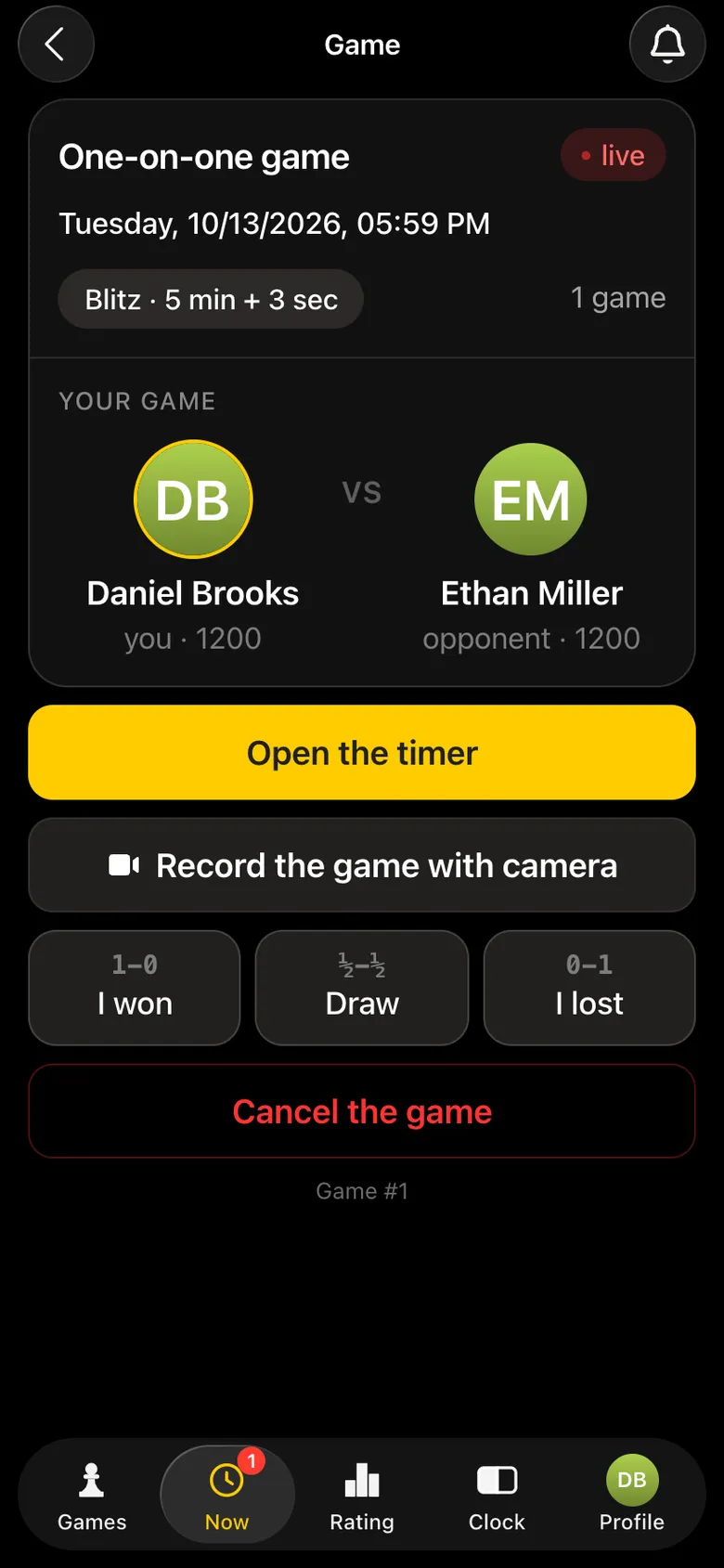
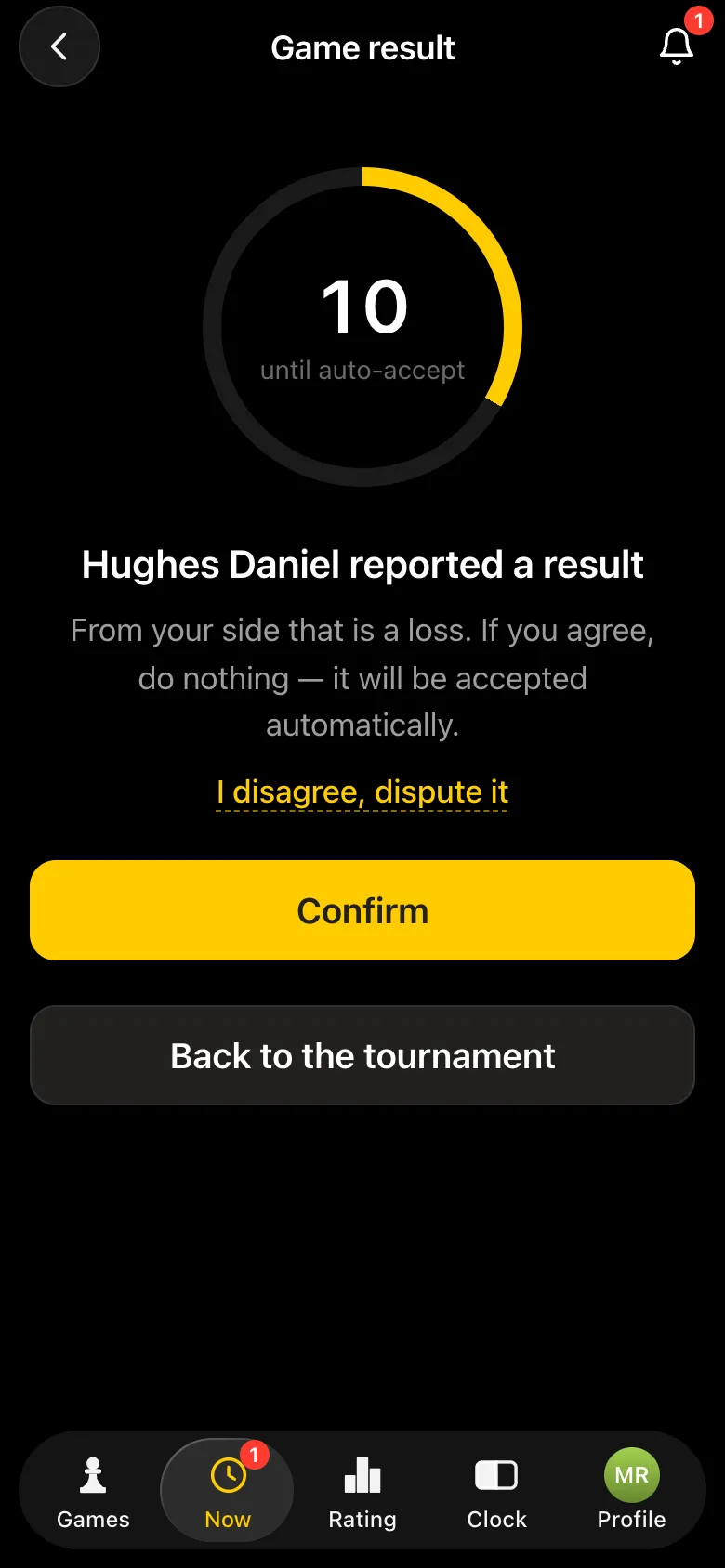
Correctly - after your move on the board and before pressing the clock. An offer at another moment is still valid, but it may count as a distraction for the opponent.
No. The offer stands until the opponent accepts it, rejects it in words, touches a piece to move, or the game ends some other way.
Say "no" or simply touch a piece to make a move. Under the Laws, touching a piece to move means a refusal.
The Laws set no number, but forbid unreasonable offers as a distraction for the opponent (Article 11.5). Repeating an offer when the position has not changed is a bad idea: the arbiter may penalise it.
No. A draw by agreement is possible only once both players have made at least one move (Article 5.2.3).
A rule in the tournament regulations under which a draw by agreement cannot be made before a certain move (for example, move 30) or without the arbiter's consent. Article 9.1.1 of the FIDE Laws allows it.
One of the players taps Draw in the game card, the other confirms or disputes it. A disputed draw is decided by the arbiter in their panel.
Everything people usually keep in a spreadsheet is already in the app: pairings, points, tie-breaks, round order. Free, with no subscriptions and no cap on the number of players.
The bot is constantly improved based on real tournaments. If you need a feature that isn't there yet, message the developers right inside the bot with the /support command. Many features appeared exactly because organizers asked for them, and useful ideas get added quickly.
More about the rules: draws in chess, the touch-move rule, an illegal move in chess, a fallen flag in chess and stalemate in chess.
At the board since childhood: hazy about his rating, precise about every rook he has blundered. Counts an evening as a good one if the opponent stayed to talk afterwards instead of rushing off to check with an engine. Message →