Vibe ChessVibe ChessApp

An illegal move in chess: what the arbiter does in blitz, rapid and classical

Alexey Mudry · updated October 26, 2026
An illegal move is the most common arbiting case at an amateur tournament. The king stepped into check, castling went through an attacked square, a piece turned out to be pinned - and the clock has already been pressed. The 2023 FIDE Laws handle it the same way for every time control: the position is restored, the opponent gets extra time, and a second offence loses the game. But in blitz and rapid there is an important qualification: if the opponent has already replied, the move stands. Below - what exactly counts as an illegal move, a table of penalties, the arbiter's procedure and how it works in the Vibe Chess app.

What an illegal move is

An illegal move is a move the rules of the game do not allow. A piece moved against its own rules, the player's own king stayed in or walked into check, castling broke one of its conditions.

What matters most to the arbiter is the moment the move counts as made. Under Article 7.5.1 an illegal move is completed when the player has pressed the clock. Until the clock is pressed it is not yet an offence: the move must be replayed, there is no penalty, but touch-move applies - the player must move the same piece if it has a legal move.

The rule is simple: the piece has moved but the clock has not been pressed - correct it without a penalty. The clock has been pressed - it is an illegal move with a penalty.

The three most common illegal moves: examples on the board

At amateur tournaments almost all illegal moves are one of three situations. Red marks squares the piece may not go to, a dot - where the move is allowed.

87654321
abcdefgh
The king walked into attack: the bishop on f3 covers e2. Ke2 is an illegal move, Kd2 is fine.
87654321
abcdefgh
Castling through an attacked square: f1 is covered by the rook on f8. Kingside castling is illegal, queenside is fine.
87654321
abcdefgh
A pinned piece: the bishop on e2 shields the king from the rook on e8. Bd3 would expose check - an illegal move.

Less common:

  • • a piece moved against its own rules: a knight three squares, a bishop along a file, a pawn backwards;
  • • castling after the king or that rook has already moved, or castling out of check;
  • • check not answered: the player missed the check and made an unrelated move;
  • • en passant made a move late instead of straight away;
  • • moving out of turn - two moves in a row.

How castling works in full - in castling in chess, with every condition on a diagram.

What is treated as an illegal move

The 2023 Laws penalise three more actions as an illegal move. Players often do not know about them and argue with the arbiter:

ActionArticleHow it is penalised
Pressed the clock without making a move7.5.3penalised as an illegal move
Made a move with two hands and pressed the clock (castling, a capture, a promotion)7.5.4penalised as an illegal move
Moved a pawn to the last rank, pressed the clock, but did not put a piece down7.5.2an illegal move; the pawn is replaced by a queen of the same colour
Moved a piece but has not pressed the clock yet7.5.1the move is not completed: it must be corrected, but there is no penalty

A word about two hands: castling is done with one hand - first the king, then the rook. The king with one hand and the rook with the other, then pressing the clock, is already an offence under 7.5.4 with a penalty.

The penalty for an illegal move in classical, rapid and blitz

The penalty works the same way but differs in size. In classical the opponent gets two extra minutes (Article 7.5.5), in rapid and blitz - one (Article A.3 of the rapid chess appendix). A second illegal move by the same player in the same game - a loss.

ClassicalRapid (more than 10 and less than 60 minutes)Blitz (10 minutes or less)
First illegal move+2 minutes to the opponent+1 minute to the opponent+1 minute to the opponent
Second illegal move by the same player in the same gamelosslossloss
…but the opponent cannot checkmate with the material leftdrawdrawdraw
Who noticesthe arbiter at any point in the gamethe arbiter or the opponent - before the opponent's next movethe arbiter or the opponent - before the opponent's next move
The opponent has already repliedthe position is restored anywaythe move standsthe move stands

A draw instead of a loss - when the opponent does not have enough material to checkmate by any series of legal moves. For example, they have only a king left. The same logic as when a flag falls - see a fallen flag in chess.

The count runs within one game. An illegal move in round one does not "carry over" to round two: in a new game each player starts again at zero offences.

Who may claim it and until when

This is where classical and fast chess differ most.

  • • Classical. If an illegal move is discovered during the game, the position is restored even if several moves have been played since. That is why moves are recorded in classical: the arbiter finds the position before the offence from the scoresheet.
  • • Rapid and blitz. Under Article A.5.2 the arbiter intervenes if they see the offence themselves - but only until the opponent has made their next move. If the arbiter does not intervene, the opponent may claim, under the same condition. If the opponent has replied and nobody claimed, the illegal move stands and the game goes on.
  • • After the opponent's replyan illegal move can be corrected only by mutual agreement of the players, without the arbiter's intervention.
How to claim in blitz: stop the clock and call the arbiter. Do not make your reply "on autopilot" - after it the right to claim is gone.

There is an exception. If in rapid one arbiter supervises no more than three games, and in blitz - one, and the moves are recorded, the classical rules apply (Articles A.4 and B.2). Finals and games on demonstration boards are played this way. The tournament regulations say in advance which version applies.

How the arbiter restores the position: the procedure

  1. 1Stop the clock. The arbiter (or a player, if there is no arbiter at the table) pauses the clock and calls the arbiter.
  2. 2Restore the position. The position immediately before the illegal move is set up on the board. If that cannot be done - the last position that can be established with certainty.
  3. 3Make a move instead. The player makes a move instead of the illegal one under touch-move: with the same piece, if it has a legal move.
  4. 4Add time. The opponent gets two extra minutes in classical or one minute in rapid and blitz. A second illegal move in the game - a loss.
  5. 5Record and continue. The arbiter notes the offence (whether it is the first or second in the game) and restarts the clock.

Step 3 is argued about most. Article 7.5.1 refers directly to touch-move (4.3 and 4.7): played the king to e2 - now you must move the king, if it has a legal move. If that piece has no legal moves, the player is free to choose.

The time on the clock is not rolled back when the position is restored: time spent on the illegal move stays spent. Only the opponent's time changes - by the penalty minute or two.
Special cases

  • • Both kings in check, or a pawn on the last rank. In rapid and blitz the arbiter who sees such a position waits for the next move. If the illegal position is still on the board - a draw (Article A.5.4).
  • • An illegal move that gave checkmate. Checkmate by an illegal move is not checkmate. If the opponent claimed before replying, the position is restored and the penalty applies.
  • • A flag fell during the dispute. That is exactly why the clock is stopped at the start. If the flag fell before the claim, it is settled separately, by the rules on time.
  • • A game without an arbiter.At a friendly meetup the players decide themselves: restore the position, the opponent gets a minute. Say so before round one - many people remember the old rule "an illegal move in blitz loses at once", abolished on 1 January 2018.
  • • Displaced pieces. If a piece is accidentally knocked off its square (Article 7.6), the position is simply restored. That is not an illegal move and not a penalty.
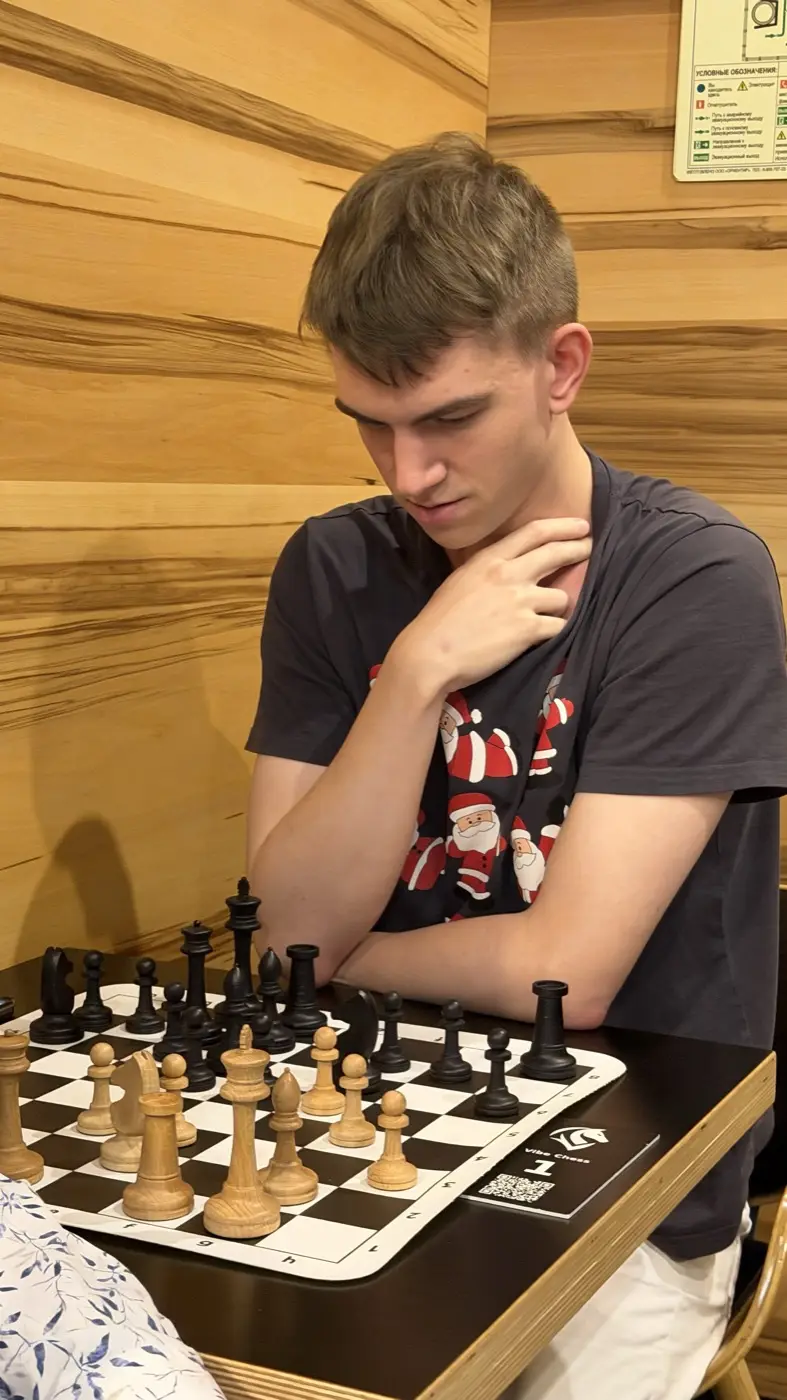
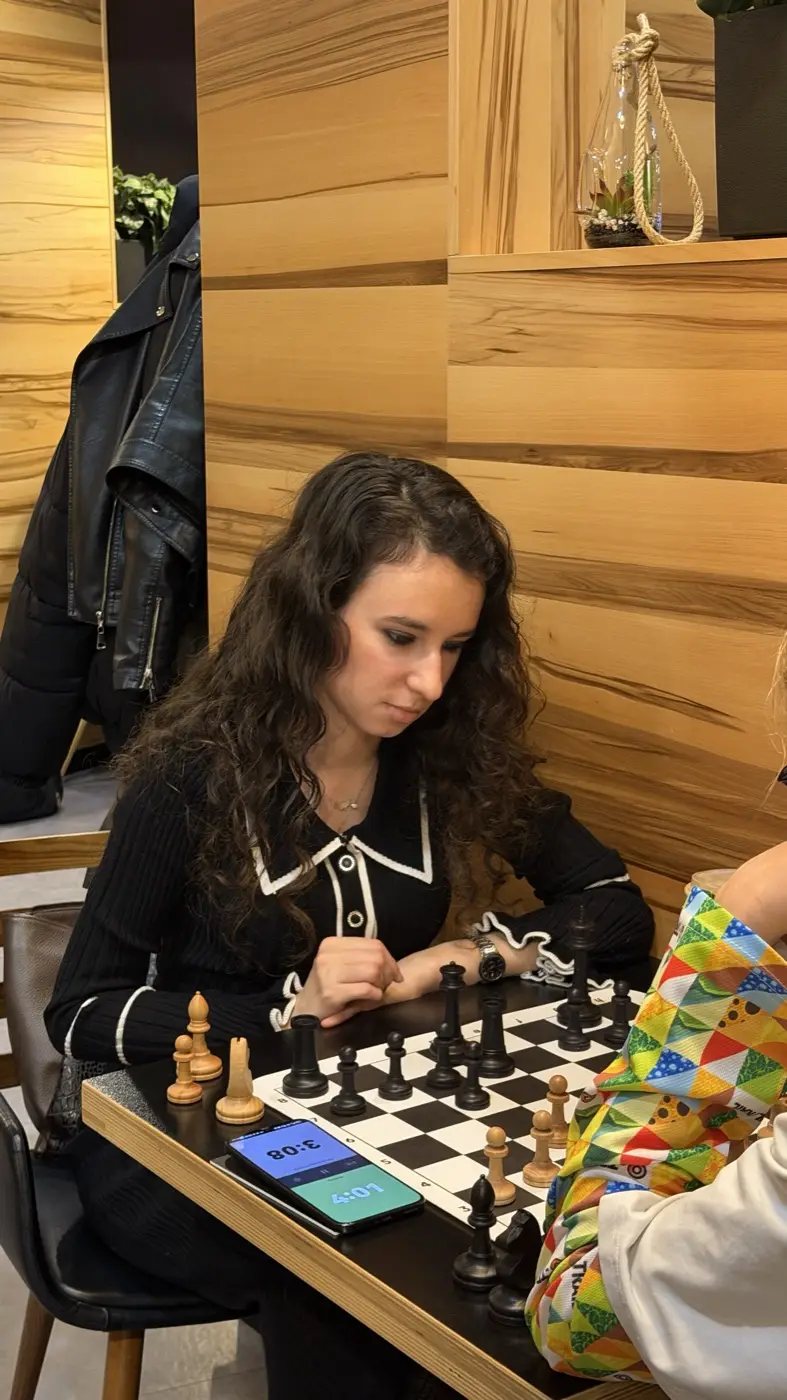
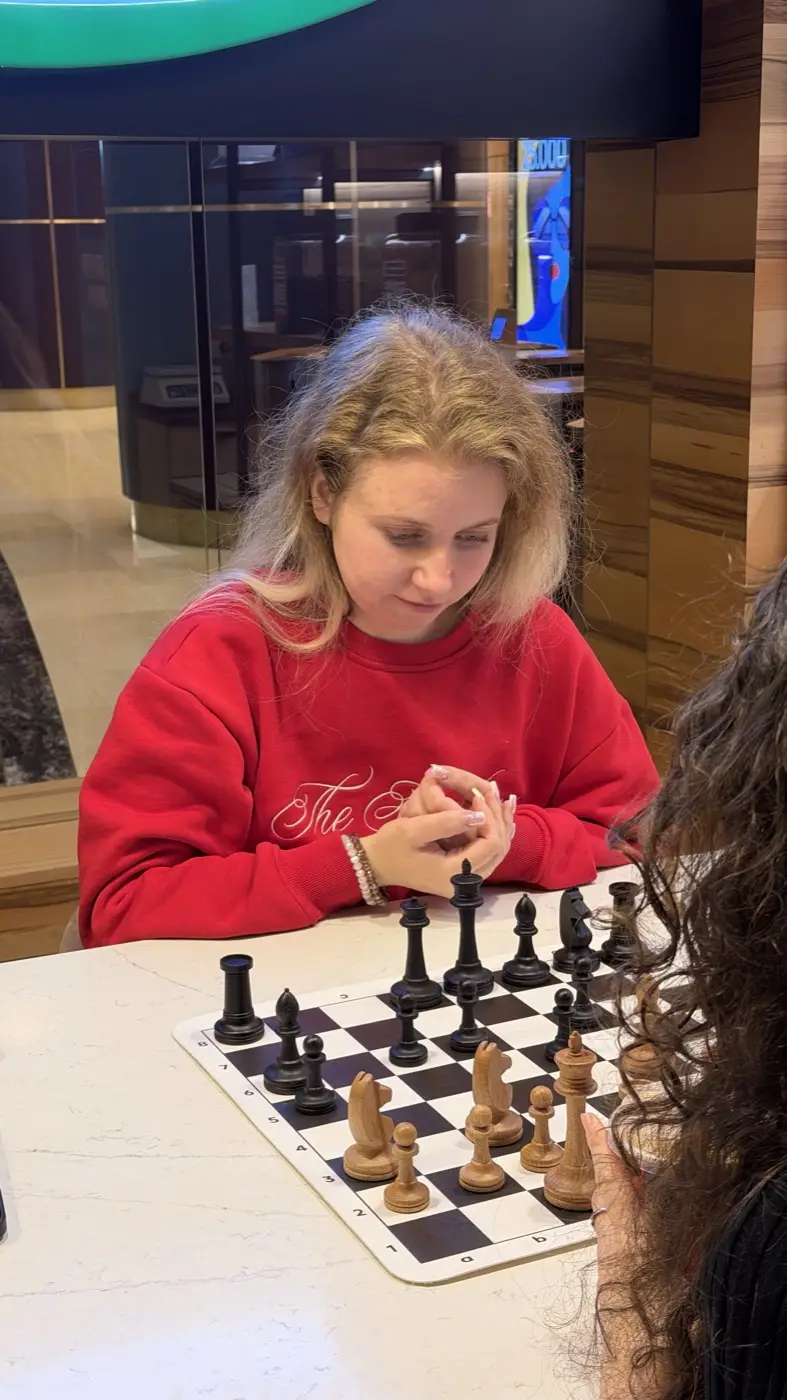
A player making a move, a phone with the chess clock beside the boardA tournament player in a red sweater looking at the boardA player thinking over the position, hand at his chin
A Vibe Chess tournament in Moscow City: a phone with the chess clock next to every board.

Illegal moves in the Vibe Chess app

At Vibe Chess tournaments the arbiter is not alone: the phones at the tables help. Here is what they do when an illegal move happens.
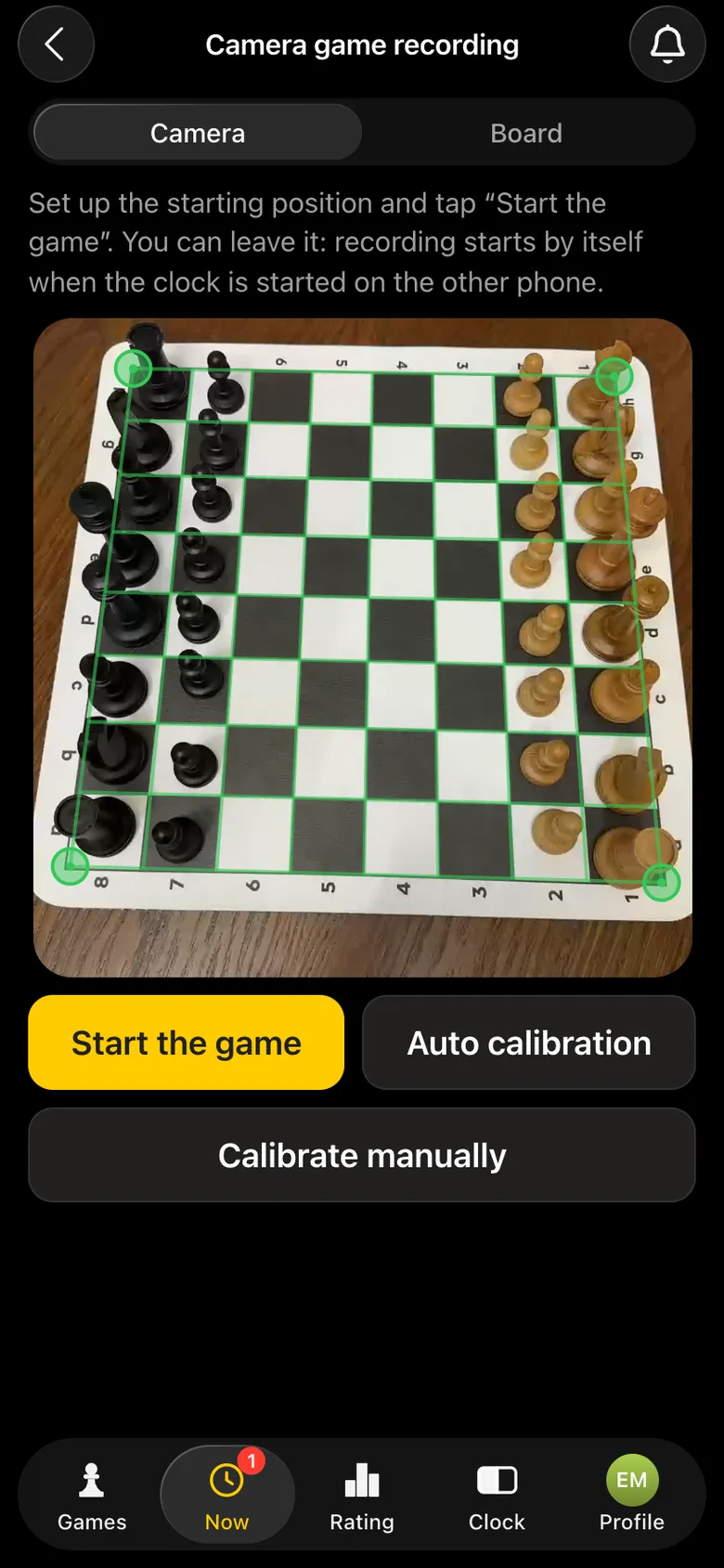
  • • The camera notices an illegal move.If the game is being recorded by a phone camera, the app sounds an alert and says what is wrong: "the rook is pinned", "the check is not answered", "the king cannot go to that square", "move out of turn" - and which piece to put back. The players do not need to call the arbiter to find out whether the move was legal.
  • • The piece is put back - the game goes on. Recording continues from the correct position.
  • • Played on after an illegal move - the game is not rated. If the illegal move was answered and play continued, recording stops at the last legal position, and a note appears on screen: the game continued after an illegal move and will not count towards the rating.
  • • The clock pauses with one tap - just like an ordinary clock when calling the arbiter.
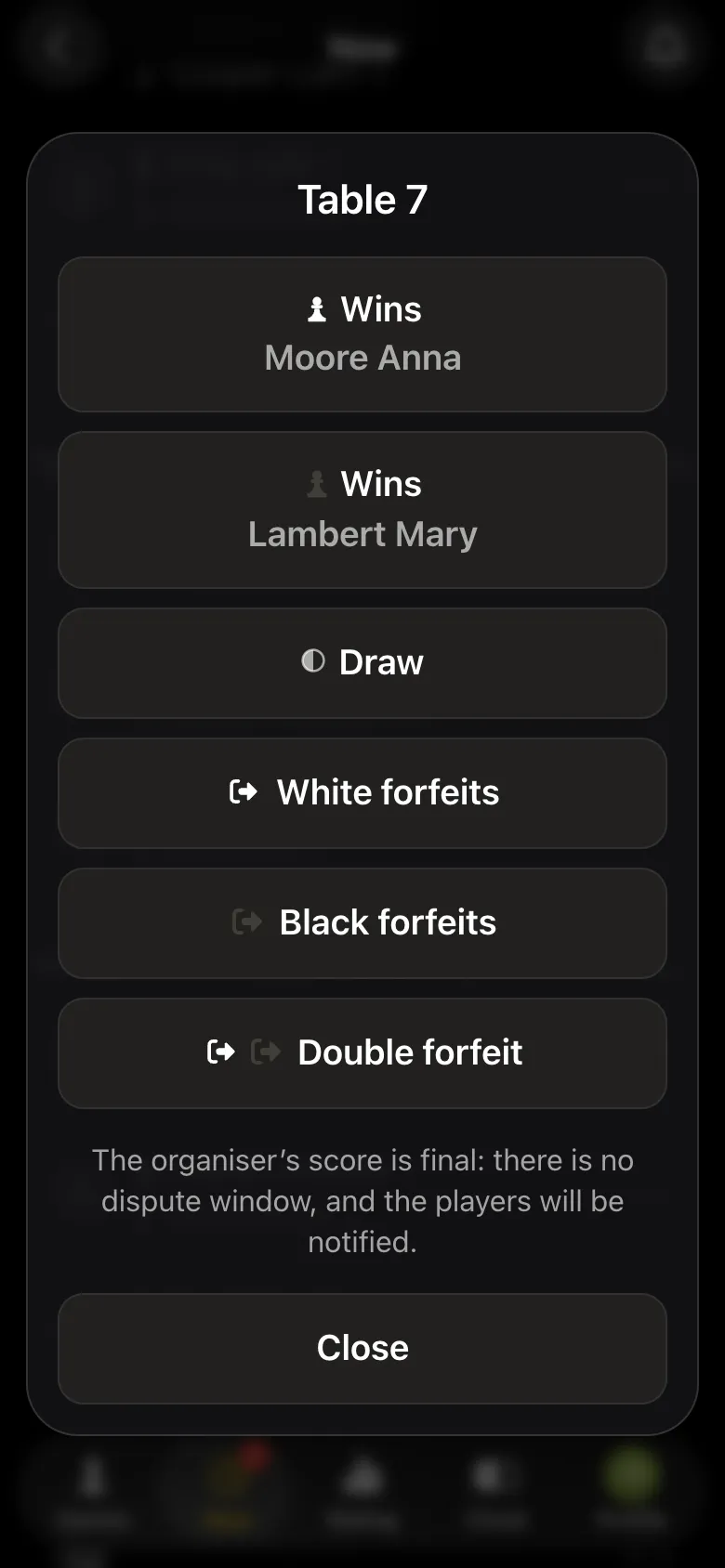
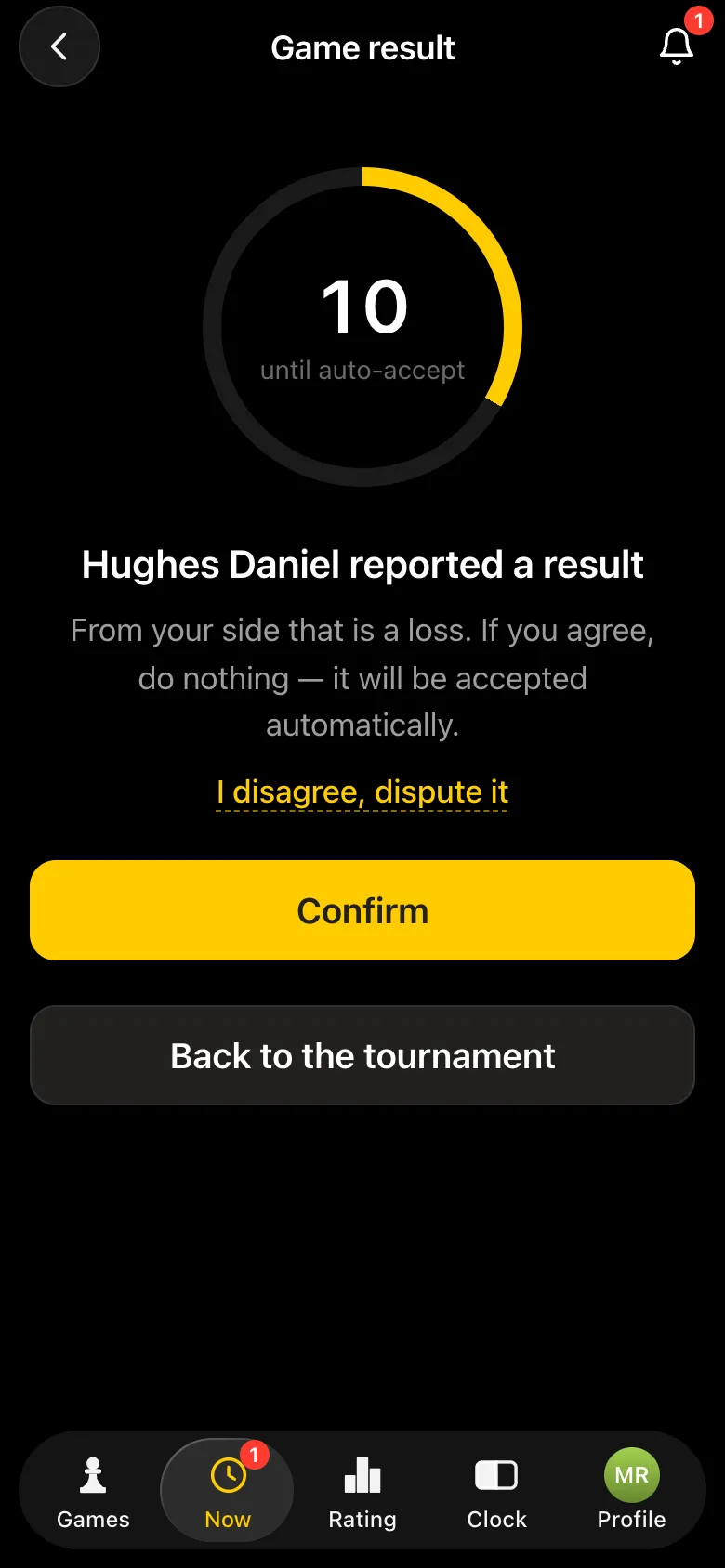
  • • The arbiter enters the score. A second illegal move is a loss: the players mark the result themselves, and if the opponent disagrees, they press the dispute button, and the organiser enters the final score from their panel.
The phone camera has found the chessboard: a green frame on the corners
The camera watches the board the whole game.
The player's window: the opponent has marked the result, Confirm and I disagree, dispute it buttons
Disagree with the result - dispute it.
The arbiter's score window: White wins, Black wins, draw, White no-show, Black no-show, double forfeit; the organiser's score is final
The arbiter enters the final score.
The app's clock does not yet have an "add a minute to the opponent" button: the arbiter adds penalty time manually during the pause or accounts for it by agreement. If your tournament needs that button, write to the developers - the link is at the bottom of the page.

How arbiting works in the app as a whole - arbiting a chess tournament, and how the camera records a game - chessboard recognition with a camera.

A ready-made clause for the tournament regulations

So that the argument does not start in the middle of a round, put the illegal-move rule into the regulations and announce it before round one. The text can be used as it is:

An illegal move is completed when the clock has been pressed. For a first illegal move the opponent receives 1 extra minute; for a second illegal move in the same game the player loses the game (a draw if the opponent has insufficient material to checkmate). An illegal move may be claimed before the opponent has made their reply: to do so, stop the clock and call the arbiter. After the reply the illegal move stands. Pressing the clock without a move and making a move with two hands are penalised as an illegal move.

For classical, replace "1 extra minute" with "2 extra minutes" and remove the sentence saying the move stands. The rest of the regulations - in blitz chess rules and rapid chess rules.

Run a tournament where disputed moves show up at once

Create a tournament in the Vibe Chess app: pairings, clocks on phones, cameras at the tables and an arbiter's panel for the final score. Free.

Frequently asked questions about illegal moves

What happens if I make an illegal move in blitz?

The position is restored and the opponent gets one extra minute. You must move the same piece if it has a legal move. A second illegal move in the game loses. But if the opponent has already replied and nobody claimed, the illegal move stands.

Does an illegal move in blitz lose the game at once?

No. That was the rule until 2018. Since 1 January 2018, and under the current 2023 FIDE Laws, only a second illegal move in a game loses; the first gives the opponent a minute.

How many minutes are added for an illegal move?

In classical - two minutes to the opponent, in rapid and blitz - one minute.

Can I claim an illegal move several moves later?

In classical - yes: the position is restored as soon as the offence is discovered. In rapid and blitz - no: you can claim only before your reply. After it the illegal move stands unless the players themselves agree to correct it.

I pressed the clock and forgot to move - is that an illegal move?

Yes. Under Article 7.5.3 pressing the clock without a move is penalised like an illegal move: the opponent gets extra time, and a second such case in the game loses.

What if a pawn reaches the last rank and there is no queen to hand?

Stop the clock and ask the arbiter for the piece you need. If you press the clock leaving the pawn on the last rank, it is an illegal move: the pawn is replaced by a queen and the opponent gets extra time.

How does the Vibe Chess app know about an illegal move?

If the game is being recorded by a phone camera, the app notices the illegal move itself, sounds an alert and says which piece to put back. If play continued after the illegal move, recording stops at the last legal position and the game does not count towards the rating.

Three event formats in one app

The Vibe Chess app is built for an evening over the board, not for online play: it keeps the sign-up list, the pairings and the table while you deal with people and the venue. All of it free.

  • Swiss system
    score groups, no rematches, no second bye
  • Round robin
    everyone plays everyone, the app works out the number of rounds
  • Free meetup
    who is free and who is already at a board is shown under Now

More than a bot: the app, FIDE rules and a TRF report

  • The app. Besides the bot there is an app - inside Telegram and simply at playvibechess.com/app: what is on in your city, the player list, a live table, the current round, your profile and game history - everything that is awkward to read as chat messages.
  • Pairings by FIDE rules. Pairings are computed by bbpPairings, an open-source engine implementing the Dutch system: score groups, floats on an odd field, colour alternation, no rematches, and no player gets a bye twice.
  • A TRF report. A finished tournament exports as a single file in the FIDE data exchange format - the one arbiter software and federations accept. Your profile stores the FIDE ID, national federation code, title, sex and date of birth for it.
  • Free. All of the above, with no subscriptions, paid plans or limits on the number of tournaments and players.

Full overview

Missing a feature? Message the developers

The bot is constantly improved based on real tournaments. If you need a feature that isn't there yet, message the developers right inside the bot with the /support command. Many features appeared exactly because organizers asked for them, and useful ideas get added quickly.

Alexey Mudry
Alexey Mudry · hosted 37 events for Vibe Chess · 157 reviews · rating 5.0

At the board since childhood: hazy about his rating, precise about every rook he has blundered. Counts an evening as a good one if the opponent stayed to talk afterwards instead of rushing off to check with an engine. Message →