Vibe ChessVibe ChessApp

Classical 90+30: how long a game lasts, notation and scoresheets

Alexey Mudry · updated October 26, 2026
90+30 is the most common classical time control: 90 minutes for the whole game and a 30-second increment per move, starting from move one. FIDE-rated tournaments, championships and opens are played at it. Compared with blitz and rapid everything is different: a game lasts up to four hours, moves are written on a scoresheet, and the tournament schedule is built around one or two rounds a day. Below - how long a game lasts, the rules of notation and scoresheets, adjourned games and postponements, and sample schedules.

What 90+30 means

The first number is each player's base time in minutes, the second is the increment in seconds after every move. This is a Fischer increment: the seconds are added even if the move is instant, and they accumulate.

There is also classical with two periods: 90 minutes for 40 moves, then another 30 minutes for the rest of the game, with 30 seconds per move from move one. It is written as "90/40 + 30 + 30s". This control is used at large tournaments. All the kinds of control and how they are written - chess time controls.

How long a 90+30 game lasts

The maximum length is easy to work out: both players use all their base time and all the increment. That is 2 × (90 minutes + 30 seconds × number of moves):

Game lengthIf both use all their time
30 movesup to 3 hours 30 minutes
40 movesup to 3 hours 40 minutes
60 movesup to 4 hours
80 movesup to 4 hours 20 minutes

That is the upper limit: many games finish earlier because players do not use all their time. But 4-4.5 hours are allowed per round: the last game of a round often goes to the very end, and the next round waits for it.

Recording moves: at 90+30 - to the end of the game

The main rule of classical chess: each player records their own moves and their opponent's (Article 8.1.1). In blitz and rapid there is no notation, in classical it is an obligation.

There is an exception - Article 8.4: if a player has less than five minutes, they may stop recording moves. But only when the increment is less than 30 seconds. At 90+30 the increment is exactly 30 seconds, so the exception does not apply: moves are recorded to the very end of the game, even in time trouble.

Moves are written on the tournament's paper scoresheet in algebraic notation or on a FIDE-certified electronic scoresheet.

Scoresheet rules

How to record

In algebraic notation, move by move, legibly. Your own moves and your opponent's.

When to record

You may reply to the opponent's move first and then write it down. But your previous move must be recorded before your next one.

What is not allowed

Writing a move in advance: the move on the board first, then the record. The exception is a draw claim by repetition or the 50-move rule.

What else goes on it

Clock times, a draw offer marked "=", details of claims. Nothing else: notes and analysis are forbidden.

Where it lies

On the table, visible to the arbiter. Scoresheets belong to the organiser: they are handed in after the game.

At the end of the game

Both players sign both scoresheets with the result. A signed result stands even if it is wrong - unless the arbiter decides otherwise.

Adjourned games and postponements

Classical games used to be adjourned: a player wrote a "sealed move" in an envelope, and the game was finished the next day. The procedure is still described in the FIDE Laws (Guidelines I), but in practice it is no longer used: overnight computer analysis made adjourning pointless, and the increment lets a game be finished in one day.

A different matter is postponing a gameto another time for a valid reason. That is not a FIDE rule but a condition of the regulations: whether postponement is allowed, who decides and up to which round. Postponements are most often allowed in round robins, where pairings are known in advance. In a Swiss tournament a postponement is almost impossible: the next round's pairings depend on the result.

A classical tournament schedule

FormatRound startWhat to keep in mind
One round a daystarting at 15:00 or 16:00the calmest format; 9 rounds - 9 days
Two rounds a day10:00 and 16:00less than two hours for lunch and rest between rounds if the first game ran long
Weekend tournamentSaturday and Sunday, 2 rounds each + Friday evening5 rounds in three days - a popular format for working people

How many rounds you need for your number of players - how many rounds in a Swiss system. If the tournament is rated - check the time control requirements: FIDE requirements for tournaments.
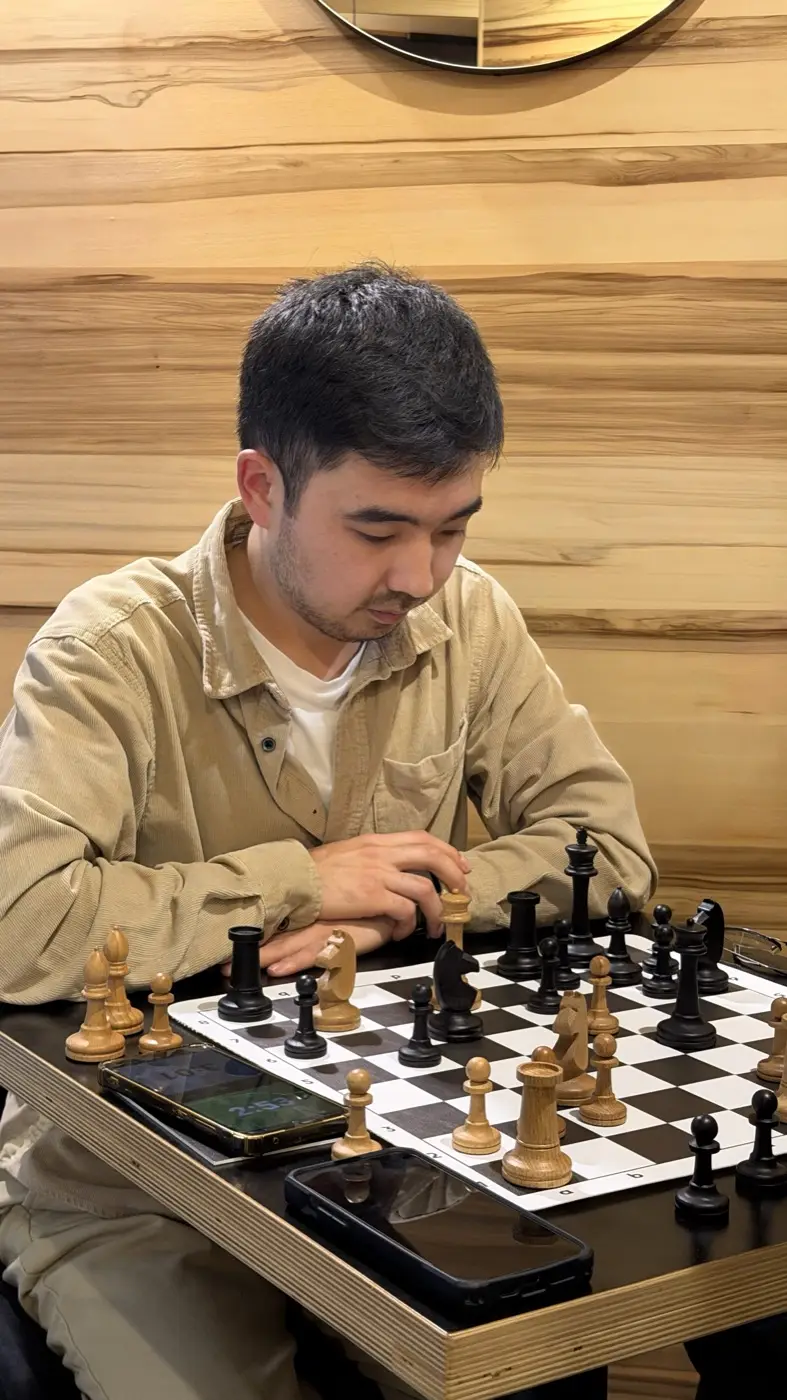
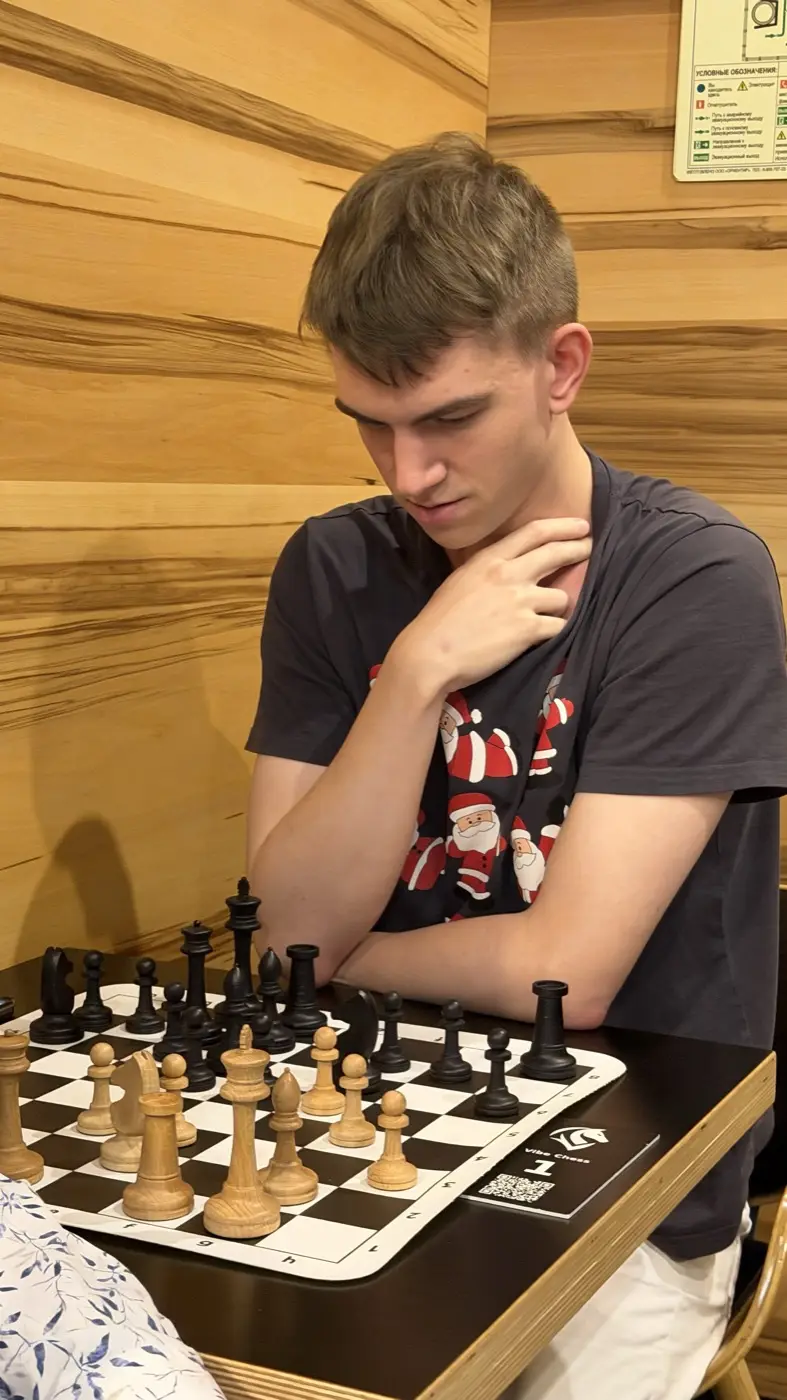
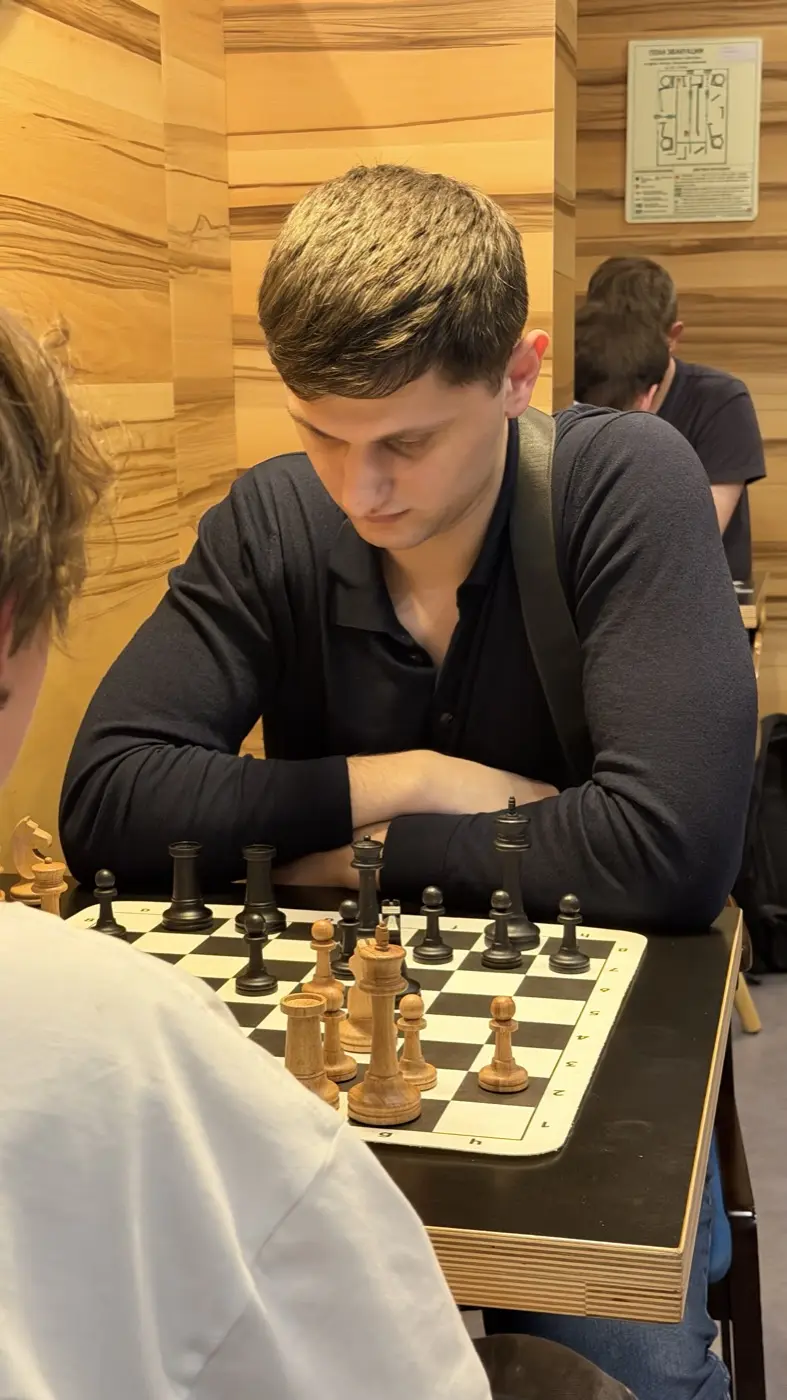
A player thinking over a move, a phone with a chess clock beside the boardA player thinking over the position, hand at his chinA player in a dark shirt over the board, arms crossed
A Vibe Chess tournament in Moscow City: a phone clock at every board.

Classical 90+30 in the Vibe Chess app

What the app gives a classical tournament:
  • • a 90+30 clock - a ready control in the classical section, next to 60+0 and 120+30;
  • • camera recording - the game records itself, and if the broadcast is on, the moves go live;
  • • pairings, standings and results - as in any tournament in the app.
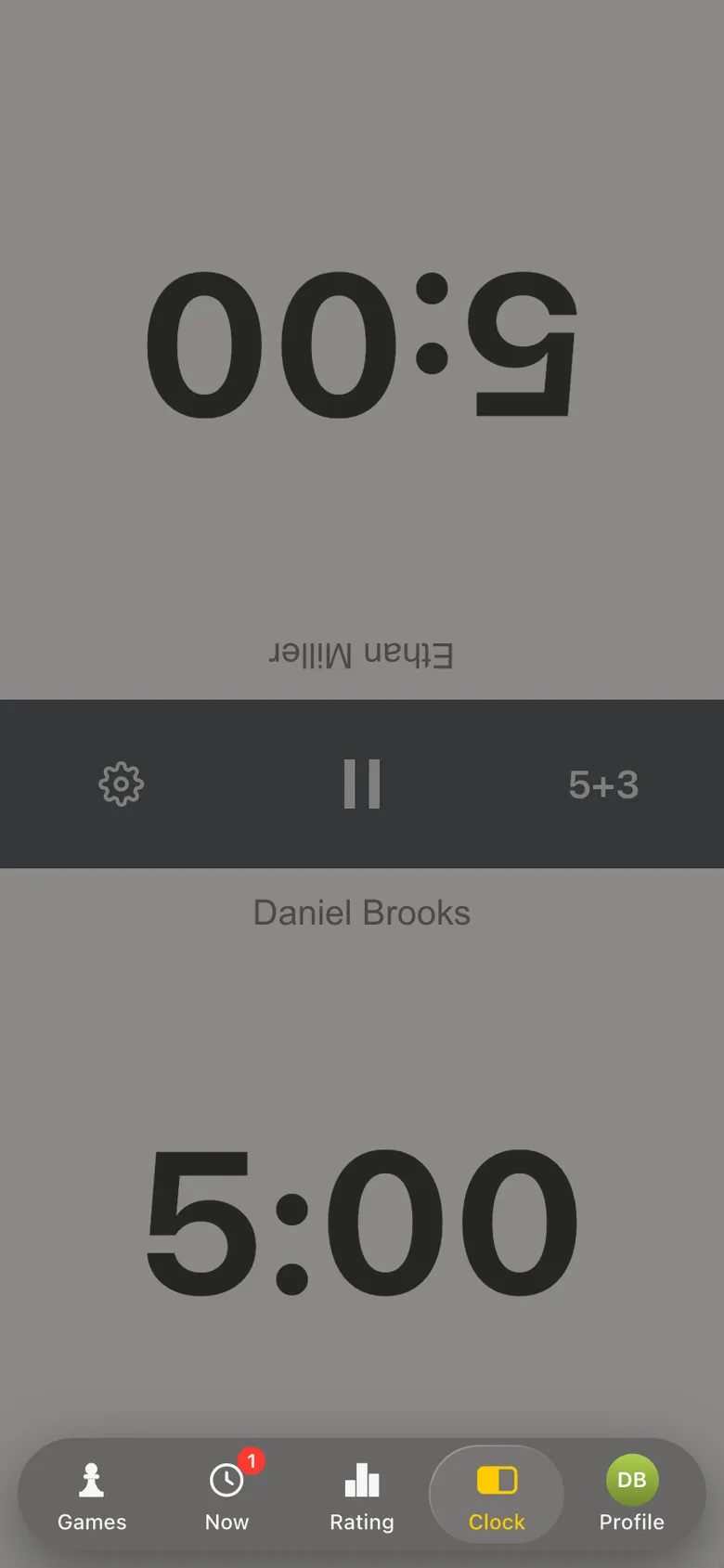
The chess clock in the Vibe Chess app: two halves of the screen
A clock on the phone: the tournament sets the control.
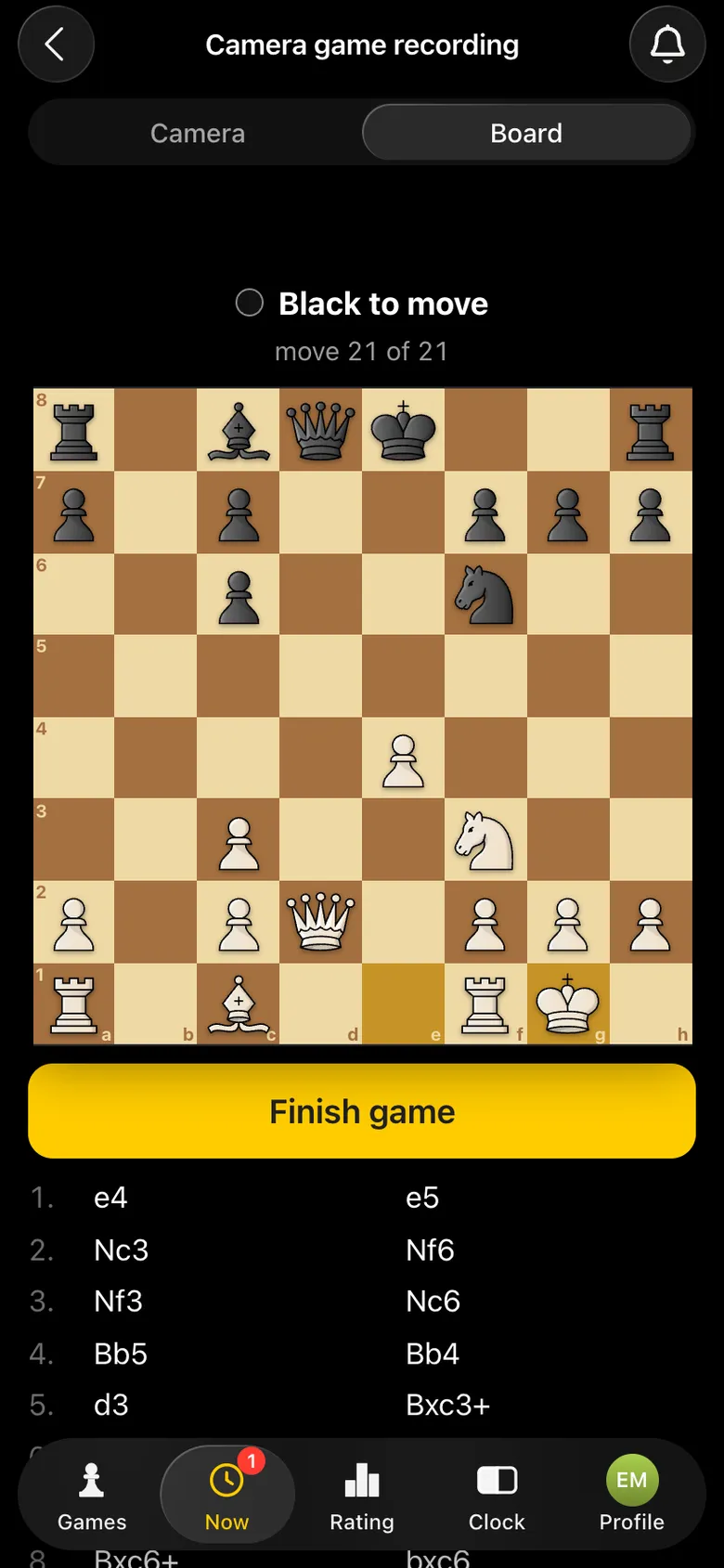
The Board tab: the recorded position and the game's move list
The camera records the game move by move.
Two caveats. Classical with two periods (90 minutes for 40 moves plus 30) cannot yet be set in the app's clock. And camera recording is not a FIDE-certified scoresheet: in rated classical a paper scoresheet is still needed. A game lasts four hours, so the clock phone goes on charge. Need two periods - write to the developers, the link is at the bottom of the page.

A classical tournament without a paper wall chart

In the Vibe Chess app the 90+30 clock, pairings, standings and results are on the players' phones. Create a tournament for free.

Frequently asked questions about classical 90+30

How long does a 90+30 game last?

Up to 3 hours 40 minutes with 40 moves and up to 4 hours with 60 moves, if both players use all their time. 4-4.5 hours are allowed per round.

Do I have to record moves in time trouble at 90+30?

Yes. The exemption from recording with less than five minutes applies only if the increment is under 30 seconds. At 90+30 moves are recorded to the end of the game.

Can I write a move down first and then make it?

No. The move on the board first, then the record. The exception is a draw claim by repetition or the 50-move rule.

Are games adjourned nowadays?

Almost never. The procedure remains in the FIDE Laws, but with an increment games are finished the same day.

Can a game be postponed?

Only if the tournament regulations allow it. Postponements are most often allowed in round robins.

Does the Vibe Chess app have a 90+30 control?

Yes, the app's clock has a ready 90+30 control, as well as 60+0 and 120+30. There is no two-period control yet.

Free

Anyone can be the organizer

There are no club or arbiter roles in the app: the create button is available to everyone. You can announce a tournament today and run it this weekend.

  1. 1Create the event, open sign-up, share the link
  2. 2Start the tournament - the app announces the pairing
  3. 3Record results as the evening goes
  4. 4Show the final standings and export the TRF report
  • Swiss. when there are more than ten players and nobody should be knocked out
  • Round robin. when the field is small and fairness matters most
  • Free meetup. when you simply want to get together and play

More than a bot: the app, FIDE rules and a TRF report

  • The app. Besides the bot there is an app - inside Telegram and simply at playvibechess.com/app: what is on in your city, the player list, a live table, the current round, your profile and game history - everything that is awkward to read as chat messages.
  • Pairings by FIDE rules. Pairings are computed by bbpPairings, an open-source engine implementing the Dutch system: score groups, floats on an odd field, colour alternation, no rematches, and no player gets a bye twice.
  • A TRF report. A finished tournament exports as a single file in the FIDE data exchange format - the one arbiter software and federations accept. Your profile stores the FIDE ID, national federation code, title, sex and date of birth for it.
  • Free. All of the above, with no subscriptions, paid plans or limits on the number of tournaments and players.

Full overview

Missing a feature? Message the developers

The bot is constantly improved based on real tournaments. If you need a feature that isn't there yet, message the developers right inside the bot with the /support command. Many features appeared exactly because organizers asked for them, and useful ideas get added quickly.

Alexey Mudry
Alexey Mudry · hosted 37 events for Vibe Chess · 157 reviews · rating 5.0

At the board since childhood: hazy about his rating, precise about every rook he has blundered. Counts an evening as a good one if the opponent stayed to talk afterwards instead of rushing off to check with an engine. Message →