A loss at seven is real grief, not a tantrum. While the child is upset, they cannot hear explanations about moves: any word about the game sounds like "it's your fault". So the order is always the same - first acknowledge the feeling, then, once they have calmed down, talk about the game. Sometimes only the next day.
| When | What to do | What not to do |
|---|---|---|
| Right after the game | hug them, give them water, stay quiet | go through the mistakes, ask "why" |
| Between rounds | "That hurts. Next round is in twenty minutes, let's go for a walk" | take them home after the first loss |
| In the car | talk about something else or about what they liked at the tournament | interrogate them about the game |
| In the evening | ask what they remember - if they want to tell you | compare them with other children |
| The next day | offer to look at the game together | insist if they do not want to |
How to behave at the tournament itself - where to stand, why you must not give hints and when to collect your child - parents at a junior chess tournament.
| Say | Do not say | Why |
|---|---|---|
| "That hurts, I understand" | "It's just a game" | it acknowledges the feeling instead of arguing with it |
| "You held out for a long time against a strong opponent" | "How could you blunder your queen?" | it praises the effort rather than scolding the mistake |
| "What happened there? Want to tell me?" | "I told you not to trade pieces" | it lets the child work it out themselves |
| "Shall we look at the game together tomorrow?" | "We'll go through it all at home now" | analysis is optional and with a fresh head |
| "I'm proud you played to the end" | "We've practised so much, and you..." | the game stays a game, not a debt to the parent |
| "Next time you can try something different" | "Look, Pete won everything" | comparing with another child does not motivate |
Praising effort rather than results is a well-known idea in child psychology: a child praised for trying copes with setbacks more easily and takes on hard things more willingly. In chess it matters especially - everyone loses, world champions included.
| Age | How they usually react | What helps |
|---|---|---|
| 5-7 | cries, gets angry, may sweep the pieces off | hug, distract, praise them for playing; no analysis needed |
| 8-10 | hurt, "I'm never playing again", looks for someone to blame | acknowledge the hurt, do not argue with "never", come back to it tomorrow |
| 11-14 | withdraws, is embarrassed in front of peers | do not discuss it in front of others, give them time; offer analysis but do not insist |
| 15+ | keeps it inside, knows their mistakes | ask if they want help; respect their wish to work it out alone |
At what age a child is ready for tournaments at all - what age to start chess.
Almost every child says this after a loss. Do not argue and do not try to persuade them right now: "OK, we'll decide later" takes the tension out better than any argument. A day or two later, once the hurt has passed, the question usually settles itself.
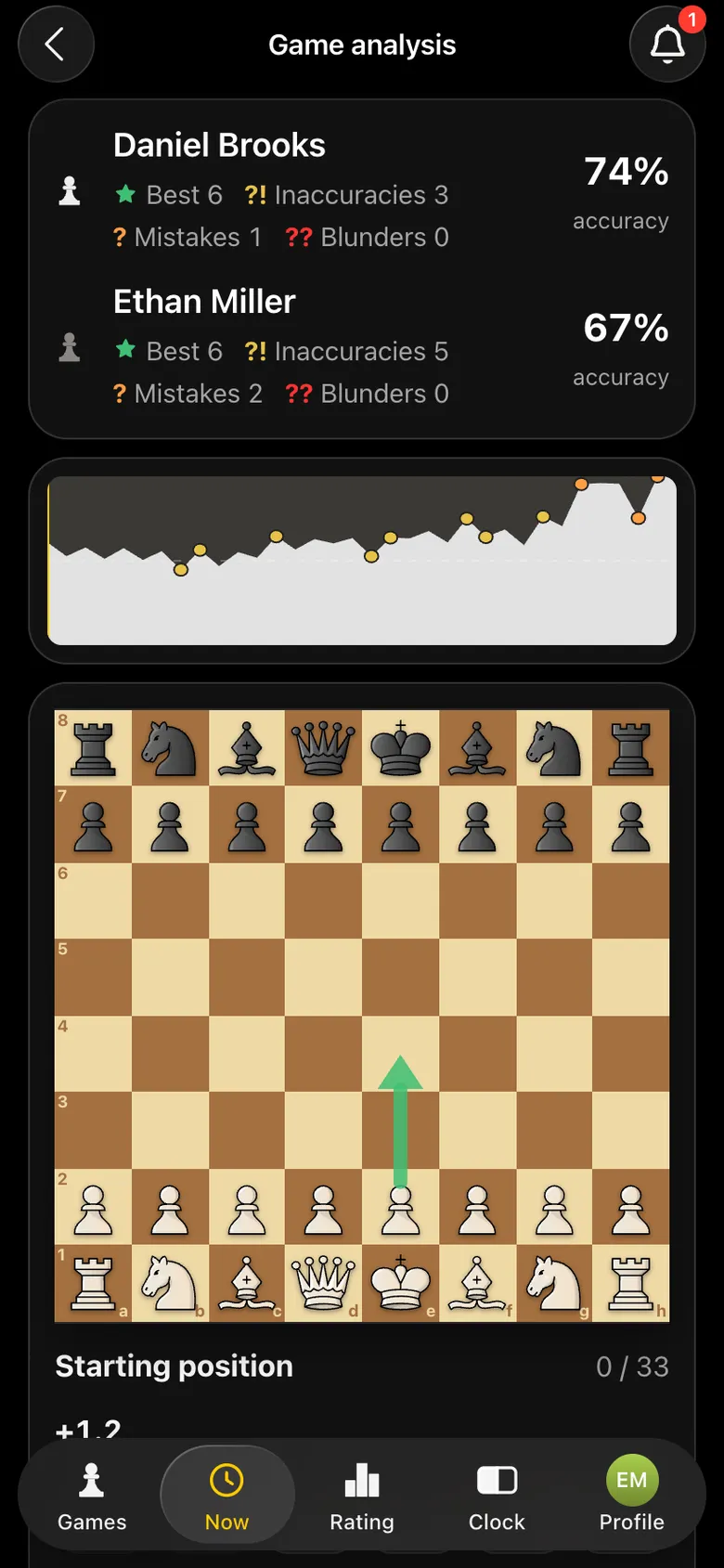
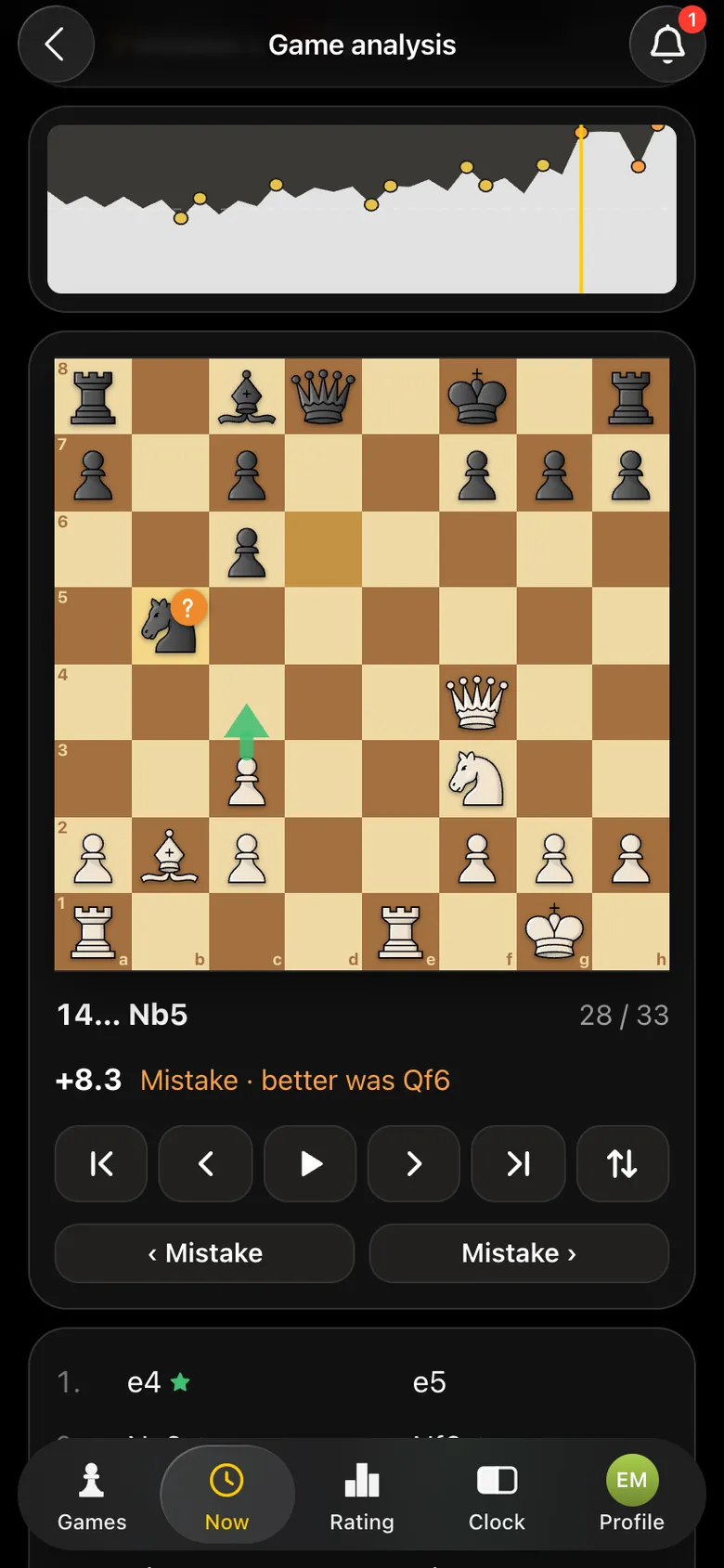
If the game was recorded with a phone camera in the Vibe Chess app, it is saved with the moves and an analysis: you can see the best moves and the mistakes, and step through the game move by move. It is easy to look at it together rather than from memory: chess game analysis.
That is a reason to take a break from competitions and talk to the coach. If it goes on for a long time, it is worth speaking to a child psychologist: the issue is usually not chess but a fear of failure in general. How to cope with nerves before playing - how to stay calm at a tournament.
First acknowledge the feeling: "that hurts, I understand". Then praise the effort - that they held out, thought, played to the end. Going through mistakes - later, and only if the child wants to.
For children aged 5-8 - yes, a loss is real grief for them. A warning sign is if the strong reaction does not fade with age, the child is afraid to go to a tournament or says they will let you down.
No. Right after a loss a child hears analysis as reproach. Better the next day, starting with "which move was your best".
Do not argue or persuade them straight away: "OK, we'll decide later". A couple of days later the hurt usually passes, and the decision is made calmly.
Better not, unless they ask. Finishing a tournament after a setback is a useful experience; leaving after the first loss is not.
There are no club or arbiter roles in the app: the create button is available to everyone. You can announce a tournament today and run it this weekend.
when there are more than ten players and nobody should be knocked out
when the field is small and fairness matters most
when you simply want to get together and play
The bot is constantly improved based on real tournaments. If you need a feature that isn't there yet, message the developers right inside the bot with the /support command. Many features appeared exactly because organizers asked for them, and useful ideas get added quickly.
More for parents: parents at a junior chess tournament, how to prepare for your first tournament, a junior tournament broadcast and how a children's tournament works.

At the board since childhood: hazy about his rating, precise about every rook he has blundered. Counts an evening as a good one if the opponent stayed to talk afterwards instead of rushing off to check with an engine. Message →