All players stand in one list - that is the ladder. Anyone may challenge a player a little higher up. If the challenger wins, they swap places. A draw or a loss - everything stays as it was. After a season, whoever is at the top wins the ladder.
Example: Foster Adam (rung 4) challenged Mitchell Ryan (rung 2) and won.
| Rung | Before | What happened | After |
|---|---|---|---|
| 1 | Hughes Daniel | did not play | Hughes Daniel |
| 2 | Mitchell Ryan | lost a challenge | Foster Adam |
| 3 | Clarke Emma | did not play | Clarke Emma |
| 4 | Foster Adam | challenged #2 and won | Mitchell Ryan |
| 5 | Frost Daisy | did not play | Frost Daisy |
Foster and Mitchell swapped places, everyone else stayed on their rungs. In some clubs the winner takes the loser's place and everyone in between moves down a rung - pick one version and write it into the rules.
A ladder is a club tradition, not a FIDE rule, so the club writes the rules. A template that works:
| Rule | How | Why |
|---|---|---|
| Whom you may challenge | 1-3 rungs above you | so nobody can jump straight to the top |
| Time to answer a challenge | 7 days to play the game | otherwise the challenge is awarded to the challenger |
| Refusal | without a good reason - a loss | otherwise those at the top would hide from challenges |
| Repeat challenge | the same opponent - not sooner than 2 weeks later | so nobody challenges the same person again and again |
| Result | the challenger won - they swap places; a draw or a loss - nothing changes | the ladder only moves from below |
| Time control | rapid 15+10 or a two-game blitz match | a single blitz game is too random |
| Inactivity | a month without games - one rung down | so the top does not go stale |
| Newcomer | starts on the bottom rung | or by rating, if they have one |
For a club, a ladder complements tournaments well: a tournament in the evening, challenges in between. How to build club life as a whole - how to start a chess club.
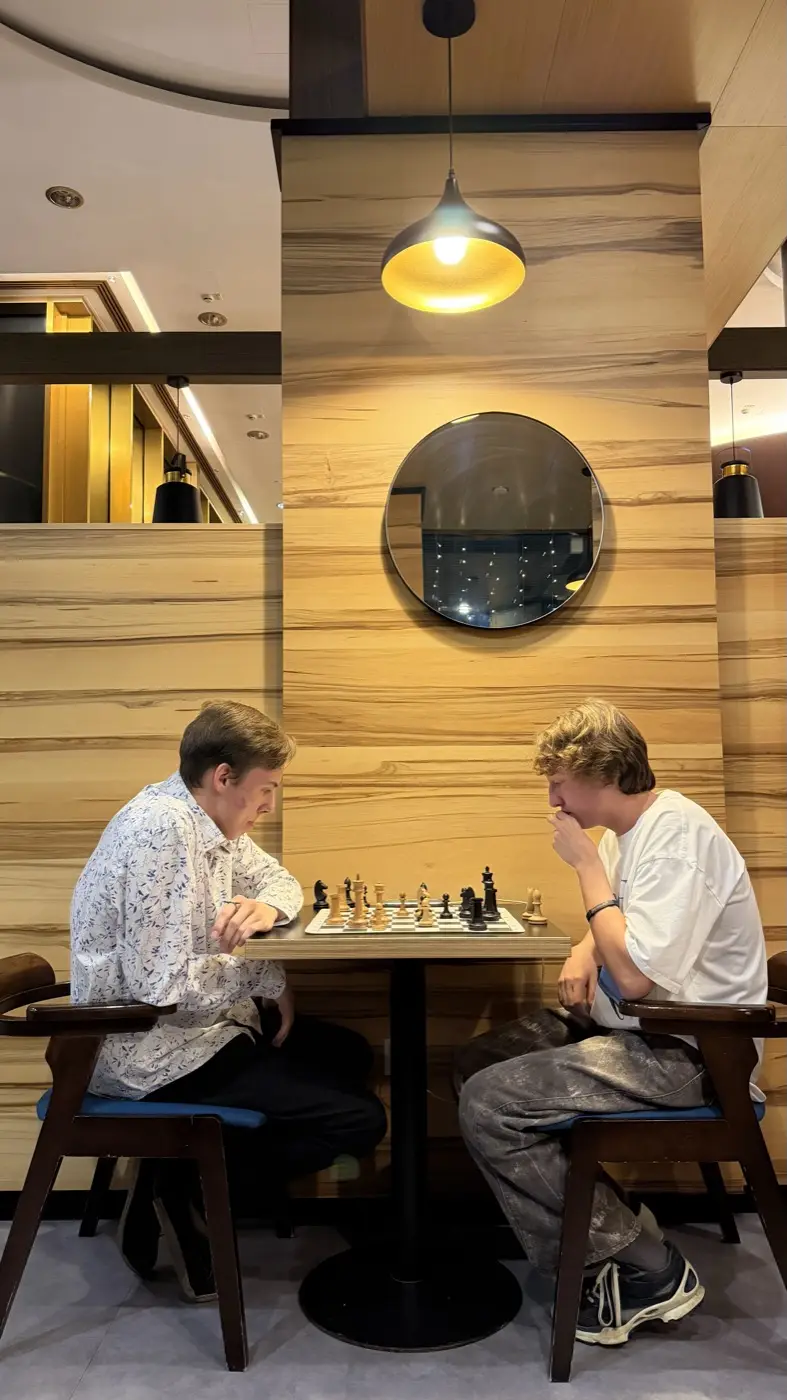
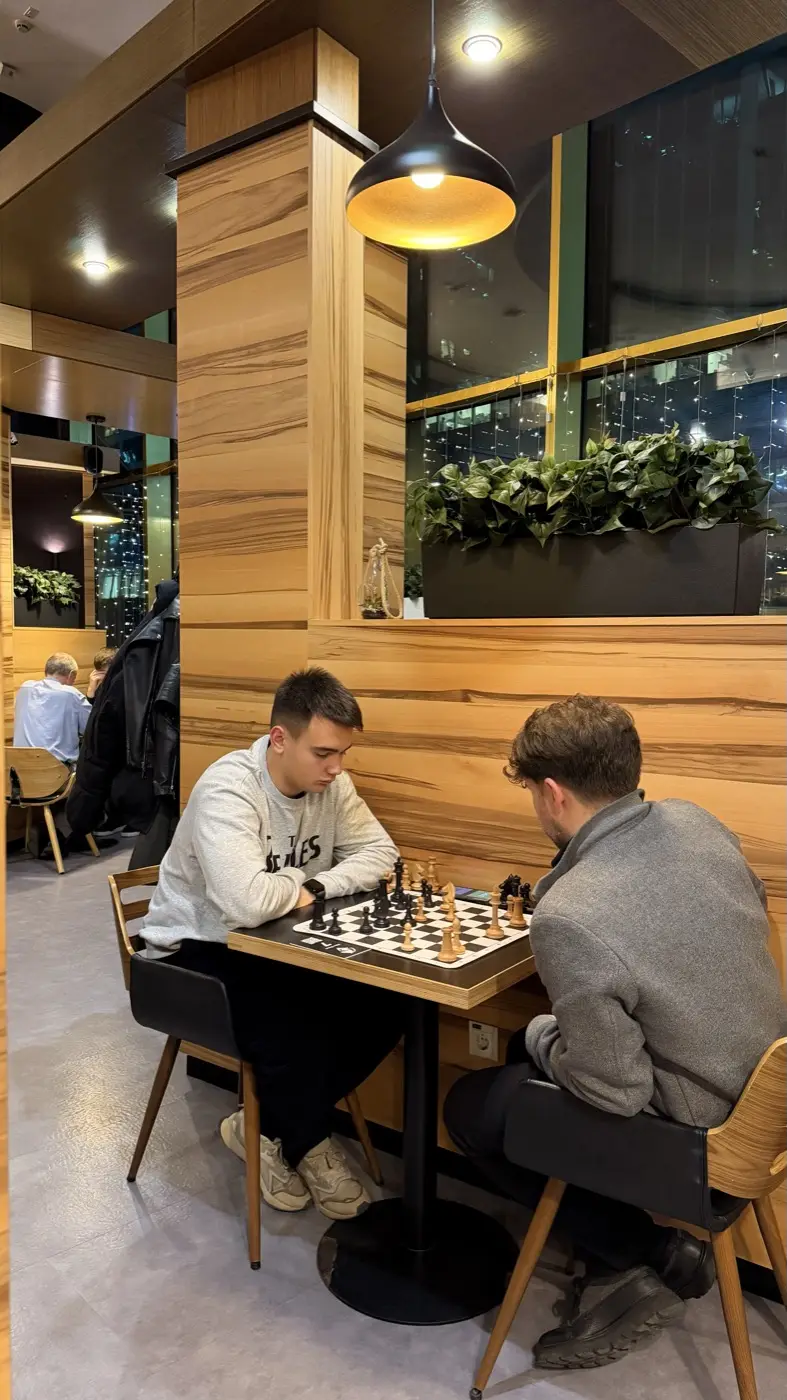
The Vibe Chess app has no separate ladder format. But everything needed for challenges is there:
The club rating works as a living ladder: you see who is higher, and you can challenge anyone. A ladder with place swaps under the classic rules is easy to keep as a table in the club chat, with the challenges themselves played through the app.
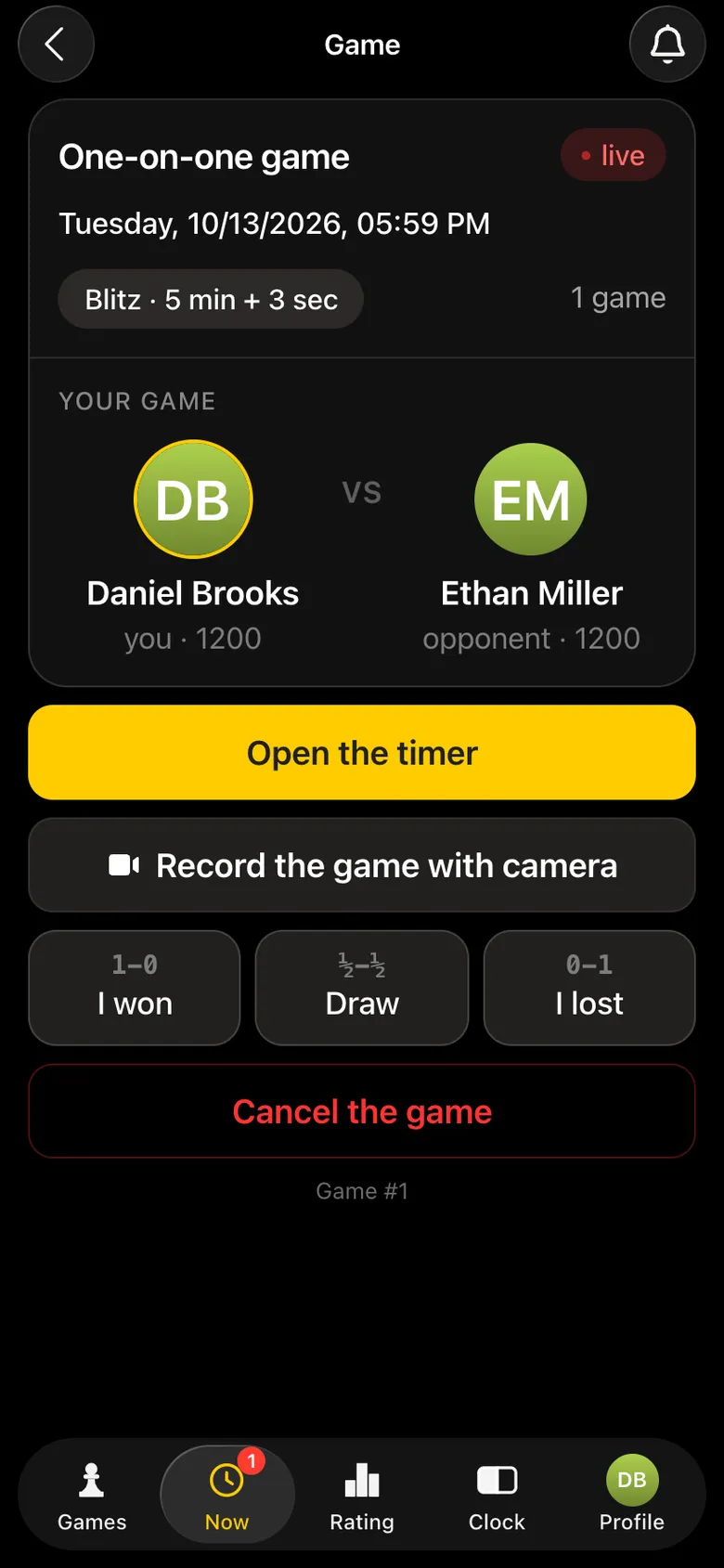
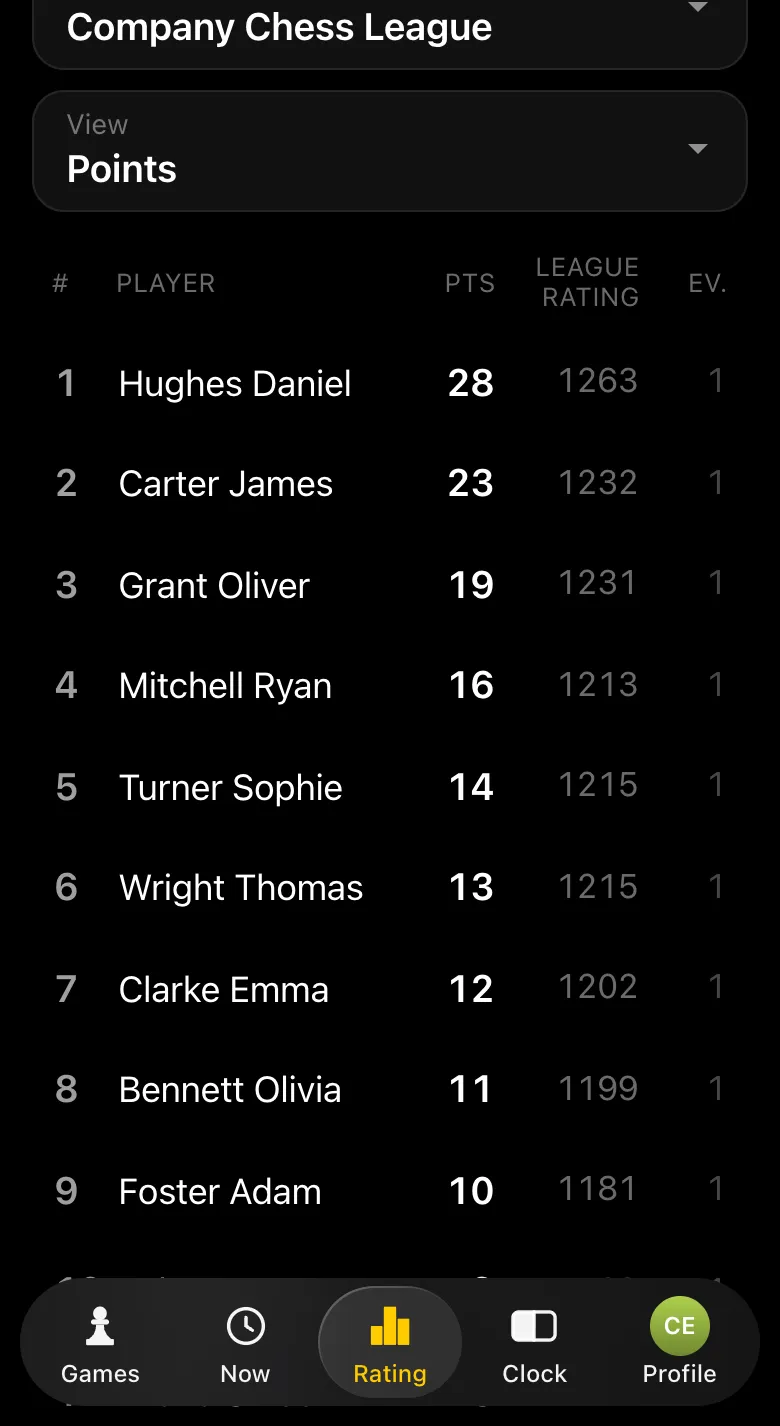
A club format in which players stand in a ladder-like list, challenge those a little higher up and swap places with them after a win.
Usually a player 1-3 rungs higher. The club sets the rule so nobody can jump straight to the top.
Under the usual rules, a refusal without a good reason or a game not played in time counts as a loss for the challenged player.
A rating is a number that changes after every game, taking the opponent's strength into account. A ladder is an order of places that changes only through challenges and only when the challenger wins.
There is no separate ladder format. You can challenge an opponent with the one-on-one challenge button in their profile, the game counts towards the rating, and the club rating works as a living ladder.
Pairings are computed by bbpPairings, an open-source engine implementing the Dutch system by FIDE rules: score groups, floats on an odd field, colour alternation. Free to use.
proper rounds with correct pairings, not random matchups
a full circle, with the round count derived from the field
a light format with no tournament machinery
The bot is constantly improved based on real tournaments. If you need a feature that isn't there yet, message the developers right inside the bot with the /support command. Many features appeared exactly because organizers asked for them, and useful ideas get added quickly.
More about the club: how to start a chess club, a season calendar of competitions, a one-on-one game and the Elo rating explained.

At the board since childhood: hazy about his rating, precise about every rook he has blundered. Counts an evening as a good one if the opponent stayed to talk afterwards instead of rushing off to check with an engine. Message →