A good calendar is built from events of different scale, each repeating at its own pace:
| How often | What to run | Why |
|---|---|---|
| Every week | a club evening: blitz or rapid, 5-7 rounds | keeps people coming, builds the "chess on Thursdays" habit |
| Once a month | a league stage or a bigger tournament: rapid, 7-9 rounds | gives a goal and a place in the season table |
| Once a season | a league final, a prize tournament, classical or a festival | an event people talk about and bring friends to |
| Once a year | the club championship, an open tournament, a charity tournament | the main date of the year, the one you find a venue and partners for |
A template for a city club with weekly evenings. Every Tuesday or Thursday is a club blitz; the table shows events on top of that:
| Month | Events | Why |
|---|---|---|
| September | season start: an open blitz for newcomers, league stage 1 | after the holidays people look for something new to do |
| October | league stage 2, a junior tournament | before the autumn school break |
| November | league stage 3, a company team tournament | in the autumn break - a daytime junior tournament |
| December | autumn league final, a New Year tournament | end-of-year office parties - demand for company tournaments |
| January | after the holidays: a "start of the year" tournament, winter league stage 1 | the first two weeks - no events |
| February | league stage 2, a themed holiday tournament | the winter school break - a junior tournament |
| March | winter league final, a Women's Day tournament | the spring school break - a junior tournament |
| April | spring league stage 1, a rated tournament | a quiet month for a big event |
| May | spring league final, the club championship | around the public holidays, not on them |
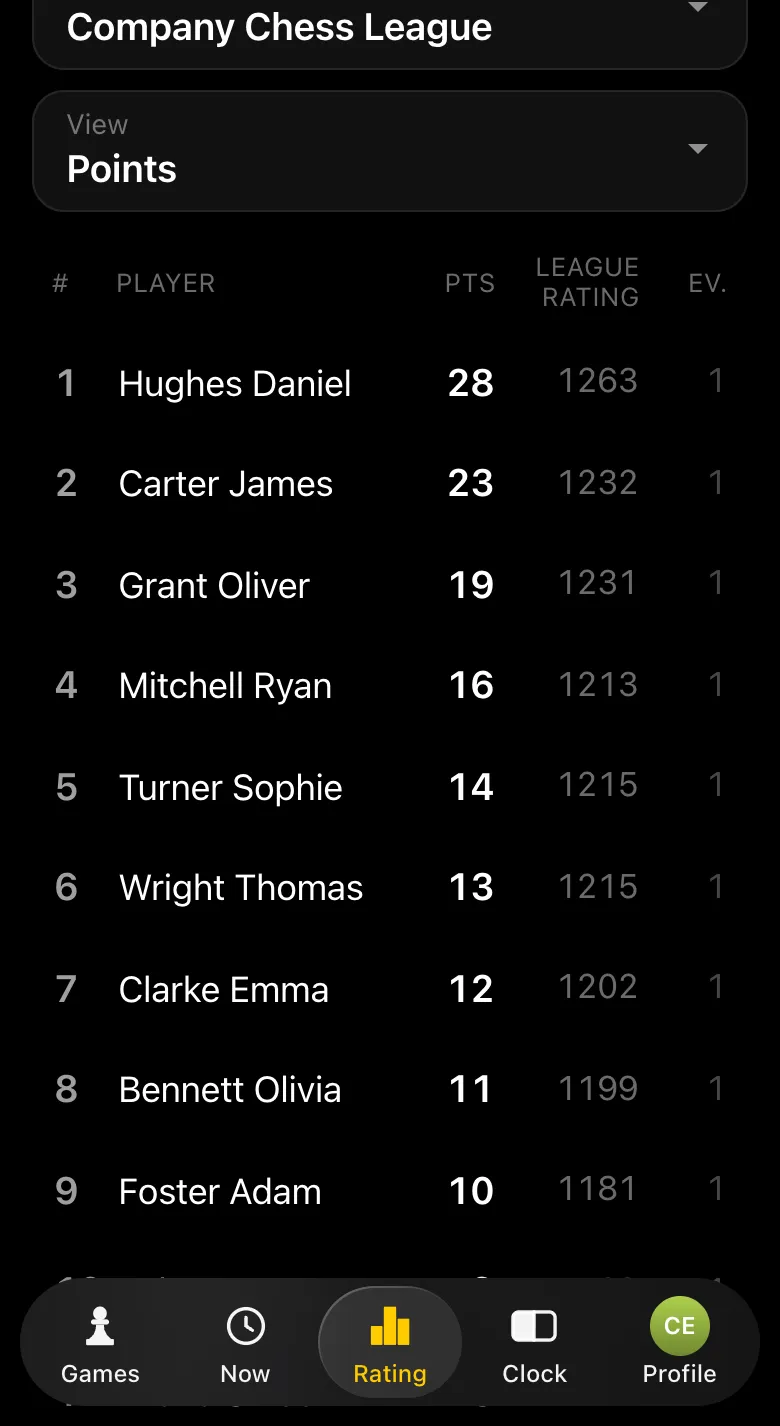
The best way to tie the calendar's events together is a league. Each monthly tournament is a stage, a place in a stage earns season points, and the season final decides the league winner. Someone who missed a stage is not out of the race, and every tournament means more than one evening.
The same idea works for companies, schools and clubs - the app keeps the season table for you.
The whole season calendar - as a pinned post in the club's channel. Each event - separately, two or three weeks ahead, with a sign-up link. Text templates - chess tournament announcement templates. How to plan the schedule of a single tournament - a chess tournament schedule.
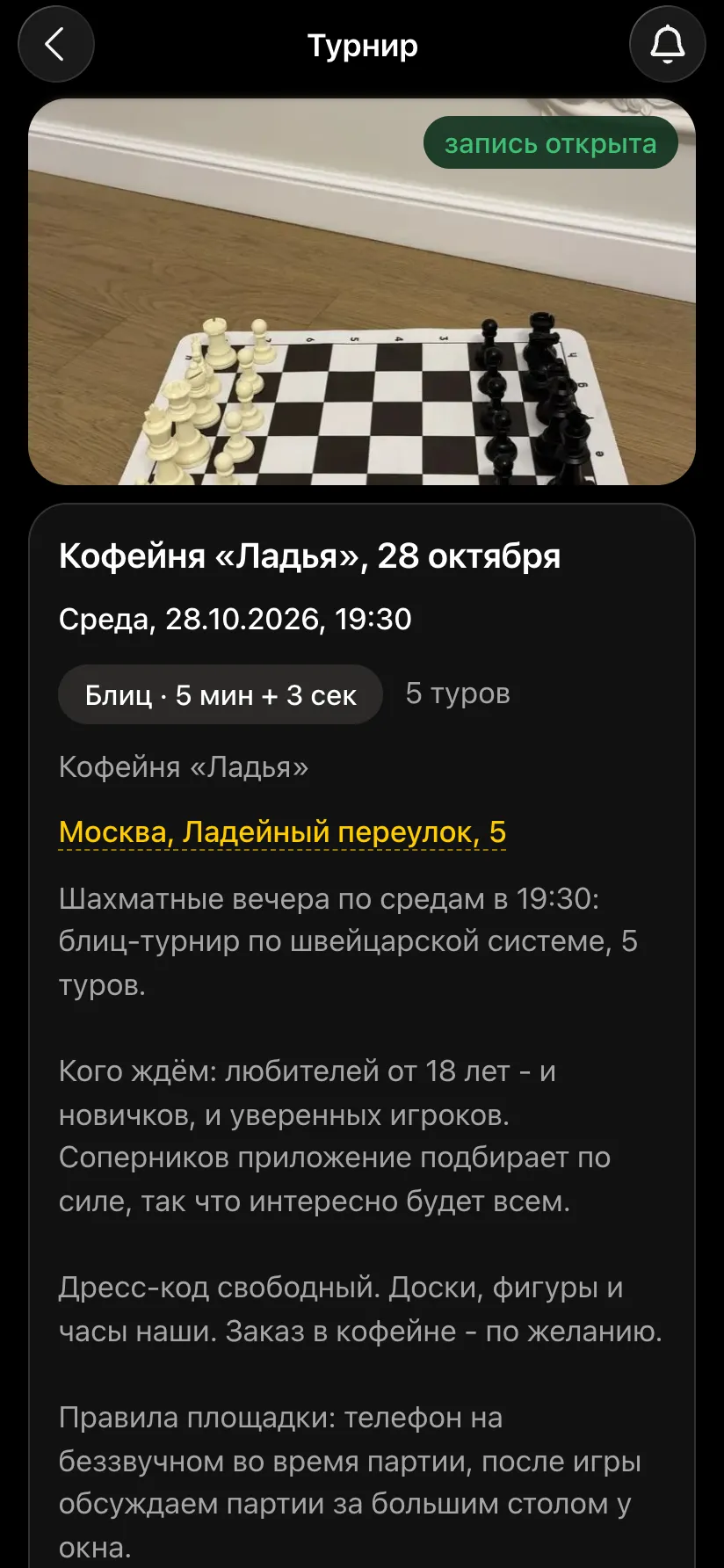
A convenient rhythm is a club evening every week on the same day, a league stage once a month and a final or prize tournament once a season.
In the school holidays, during the day. During term - on weekend mornings or afternoons.
The season calendar - in full at the start of the season. Each event - with its own announcement two or three weeks ahead.
With a league: each tournament is a stage, places in stages earn season points, and the final decides the winner.
Calendar quarters: autumn from September to November, winter from December to February, spring from March to May, summer from June to August.
There are no club or arbiter roles in the app: the create button is available to everyone. You can announce a tournament today and run it this weekend.
The bot is constantly improved based on real tournaments. If you need a feature that isn't there yet, message the developers right inside the bot with the /support command. Many features appeared exactly because organizers asked for them, and useful ideas get added quickly.
More about organising: a chess tournament schedule, how to reduce no-shows and how to start a chess club.

At the board since childhood: hazy about his rating, precise about every rook he has blundered. Counts an evening as a good one if the opponent stayed to talk afterwards instead of rushing off to check with an engine. Message →