FIDE categories are listed in the general regulations for FIDE competitions (section D.04.01): world championships for youths and girls, juniors, schools and seniors. Birth years are given for 2026 tournaments.
| Category | Code | Who plays in 2026 | Where it is used |
|---|---|---|---|
| Under 8, 10, 12 | U8, U10, U12 | born 2018, 2016, 2014 or later | world youth championships for the younger ages |
| Under 14, 16, 18 | U14, U16, U18 | born 2012, 2010, 2008 or later | world youth championships |
| Under 20 | U20 | born 2006 or later | world junior championships |
| Schools | U7, U9, U11, U13, U15, U17 | per the championship regulations | world school championships |
| Seniors | 50+ | born 1976 or earlier | world senior championships |
| Seniors | 65+ | born 1961 or earlier | world senior championships |
The letter U stands for "under". U10 means "under 10": it is for those who had not yet turned ten at the start of the year.
In Russian youth competitions the groups are different - with odd ages:
| Who | Group |
|---|---|
| Boys and girls | under 9 |
| Boys and girls | under 11 |
| Boys and girls | under 13 |
| Youths and girls | under 15 |
| Youths and girls | under 17 |
| Youths and girls | under 19 |
Exactly how age is counted - on a date or by year of birth - is set by the regulations of the particular championship. Most often the groups are written straight into the regulations as birth years. Senior groups and adult age sections in Russian competitions are also defined by the regulations - check them before signing up a child or an adult.
Why FIDE has even ages and Russia odd ones: these are different competition systems, and one does not convert into the other. A child born in 2016 plays in 2026 in the FIDE U10 group and in the under-11 group of a Russian championship - if the regulations count by year of birth.
Usually yes: a younger player is allowed to play with older ones if they are stronger than their peers. The reverse is not allowed: an older player does not play in a younger group. But this is a rule of the regulations, not a general law, and there can be restrictions: for example, a child plays in only one group in a season. Read the regulations before signing up.
At a junior club tournament the exact FIDE categories are not required. Groups in which children are at one level are more convenient: two birth years per group ("2017-2018", "2015-2016") or by experience ("beginners" and "players"). The main thing is to announce the rule in advance and not to move a child to another group after the tournament has started.
How to run such a tournament - a children's chess tournament.
In the Vibe Chess app a tournament is split into groups A, B, C… - each with its own pairings, table and places. What the groups are is up to the organiser: by age, by level, boys and girls.
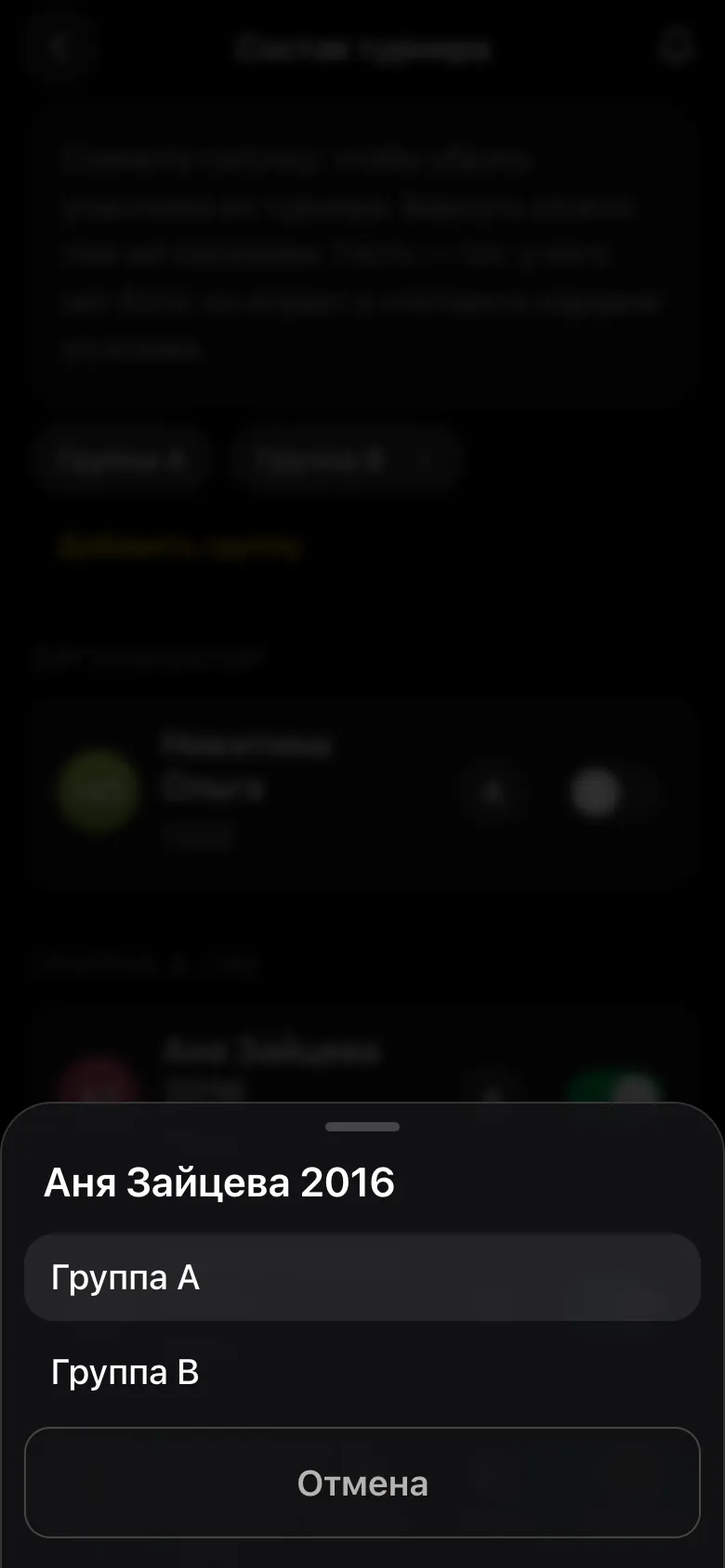
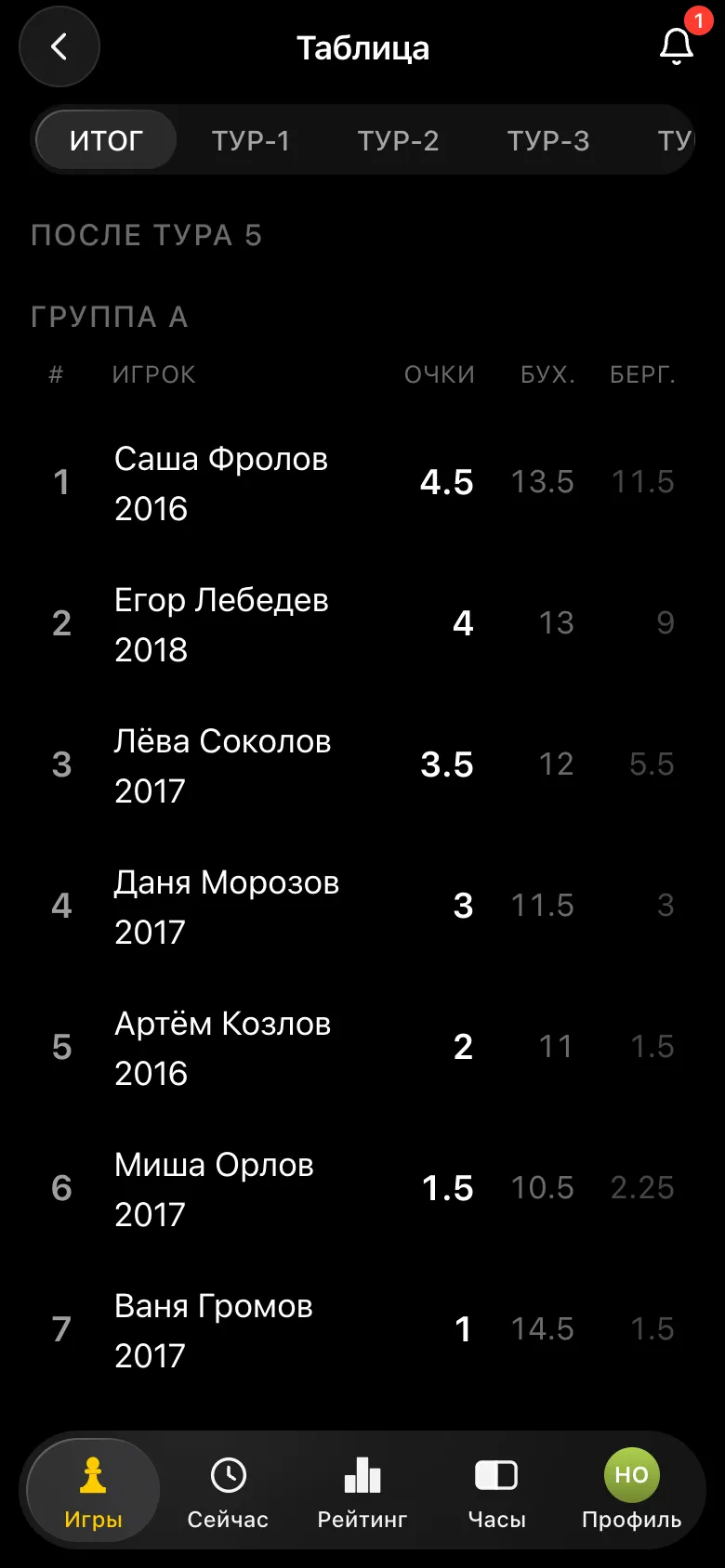
Under 8, 10, 12, 14, 16 and 18 for youths and girls, under 20 for juniors, school groups from under 7 to under 17, and seniors 50+ and 65+.
At FIDE - on 1 January of the tournament year: the under-10 group is for those who had not turned 10 by 1 January. In Russian competitions the rule is set by the regulations, and groups are often written as birth years.
Those who turn 50 or older in 2026, that is, born in 1976 or earlier. For 65+ - born in 1961 or earlier.
Under 9, 11, 13 for boys and girls and under 15, 17, 19 for youths and girls. The exact birth years are in the regulations of each championship.
Usually yes, unless the regulations forbid it. An older player cannot play in a younger group.
No. The organiser creates groups and moves players into them; each group has its own pairings, table and places.
Everything people usually keep in a spreadsheet is already in the app: pairings, points, tie-breaks, round order. Free, with no subscriptions and no cap on the number of players.
The bot is constantly improved based on real tournaments. If you need a feature that isn't there yet, message the developers right inside the bot with the /support command. Many features appeared exactly because organizers asked for them, and useful ideas get added quickly.
More about junior tournaments: a children's chess tournament, parents at a junior chess tournament, parental consent for photos and what age to start chess.

At the board since childhood: hazy about his rating, precise about every rook he has blundered. Counts an evening as a good one if the opponent stayed to talk afterwards instead of rushing off to check with an engine. Message →