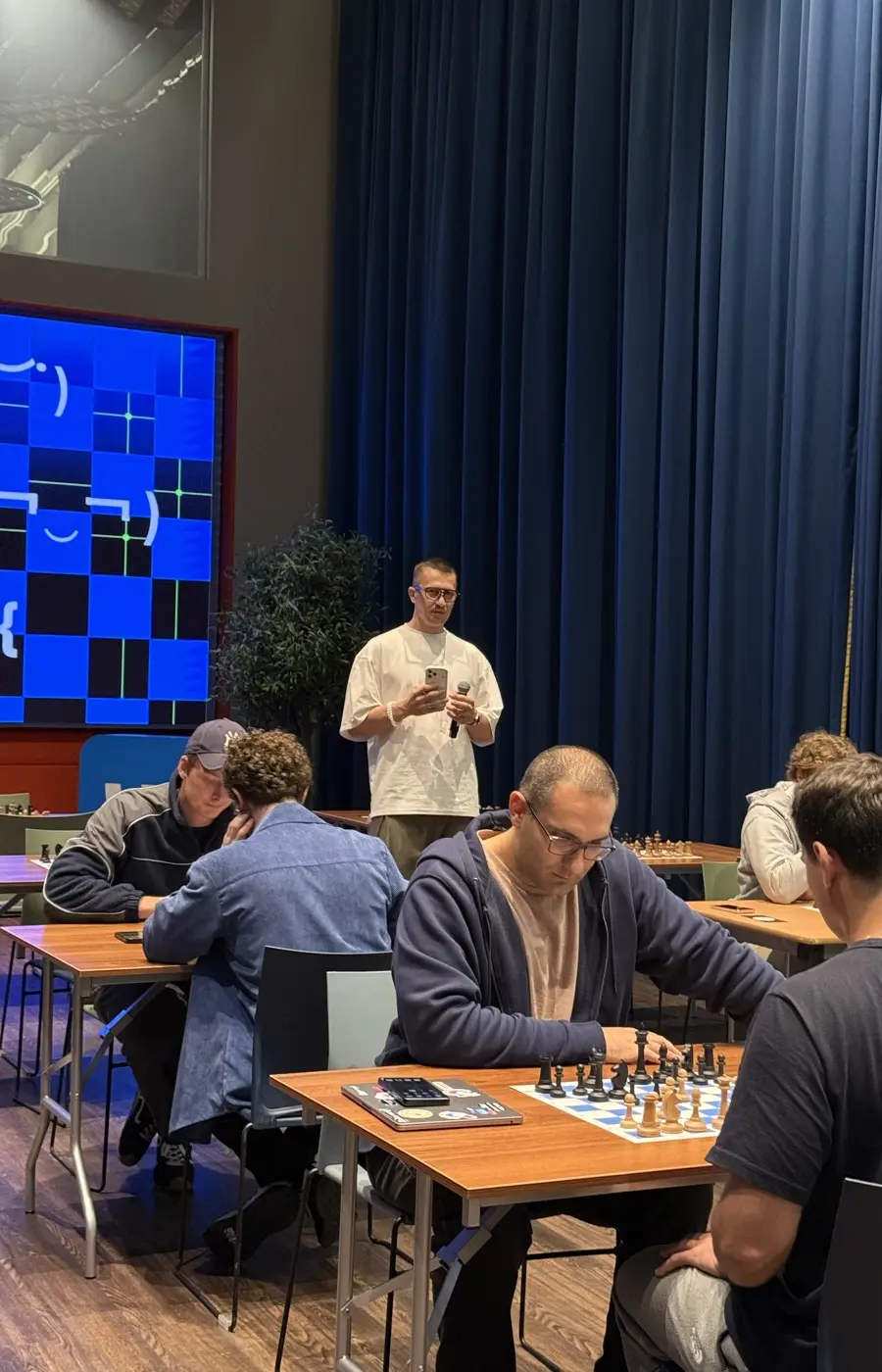
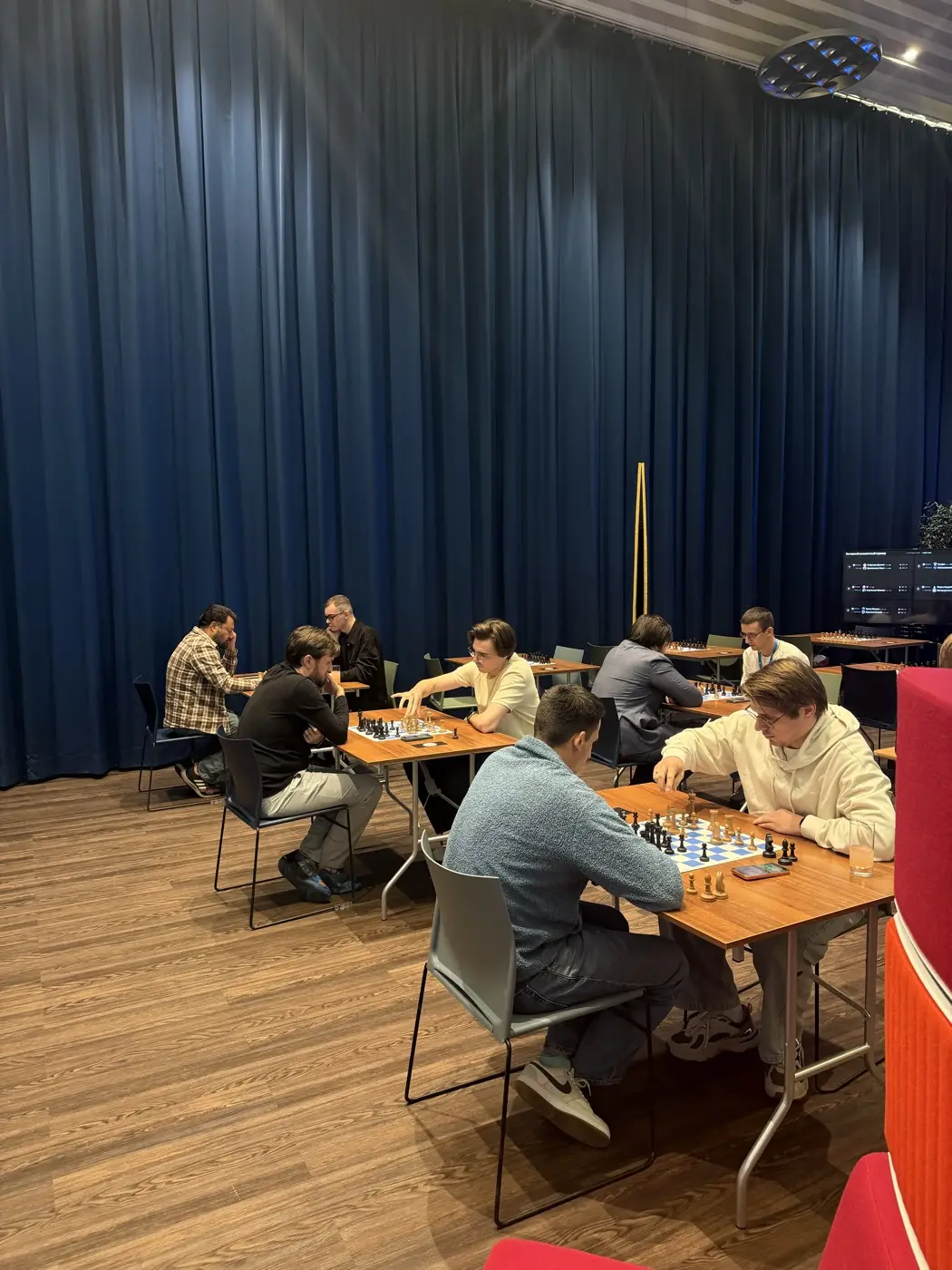
The format looks the same from outside, but almost every decision is made differently.
| For staff | For clients | |
|---|---|---|
| Who orders it | HR | Marketing or sales |
| The goal | Bring people together, engage them | Let the right people talk |
| Who wins | Does not matter | Better not the host |
| Pairings | Random, by the system | Partly set by hand |
| Length | 1.5-3 hours | An hour to an hour and a half, within the programme |
| The main risk | Nobody turns up | Looking pushy |
On “better not the host”.If a tournament for clients is won by an employee of the host company, the evening leaves an odd aftertaste. The usual move: the host's people play outside the standings or do not play at all, and instead run the event and help out.
A few tables away from the buffet. No standings, short games, people come over and swap. It works as an excuse: walking up to a table is easier than walking up to a group of strangers with glasses in hand. The manager only has to sit down opposite the right person - the conversation starts by itself.
A real tournament with pairings, standings and a prizegiving. It gives what an area does not: a shared storyline that everyone follows, and a final that people remember afterwards. Suits an intimate event where the guests already know one another.
An invited master plays against everyone at once. A spectacle format: the guest takes home the story "I played against a master", and the company takes home photos. Guests do not need to know how to play: there is no shame in losing to a master.
The simul is covered in detail - how it works, how many boards and whom to invite - simultaneous exhibition. If the event takes place inside a conference - chess at a conference.
This is the main question the format is chosen for. There are two honest ways and one that is best avoided.
How the pairings work and why after the first round they sort themselves out - running a tournament and the pairing engine.
The value of a client event is that you can remind people of it. Chess gives more reasons to do so than a banquet.
How to collect material from the tournament - photos and content from a tournament, the ceremony - prizegiving. If the evening is repeated - a league with stages.
So that particular people talk to each other. At a buffet this is left to chance: guests huddle in groups they already know. A game seats two people opposite each other for twenty minutes and gives them something to do together instead of having to invent a conversation.
Yes, if you pick the right one. A chess area and a simultaneous exhibition need no skill at all - in a simul there is no shame in losing to a master, that is the whole point of the format. A tournament needs a five-minute explanation of the rules before the start, after which the Swiss system separates the beginners from the players by itself.
Yes, and there is one honest way: the organiser sets the first-round pairings, and after that the system works by itself, by points. One game is enough to get acquainted, and it looks like ordinary pairings. Rigging every round is not worth it - people see the standings and realise they are being steered round in circles.
Better outside the standings or not at all. If a tournament for clients is won by the host, the evening leaves an odd aftertaste. Usually the organiser's people run the event, help out and sit down with guests in the free area.
An area within a reception runs for two to three hours in the background, a tournament takes an hour and a half as a separate block, and a simultaneous exhibition about an hour. Client events rarely give chess the whole evening: the format usually fits into the programme rather than replacing it.
Standings with names and results - a legitimate and informal reason to write to each player the next day. Plus photos at the boards, which, unlike shots from the buffet, look meaningful. If the evening is repeated every year, a challenge trophy that lives in the client's office works well.
The Vibe Chess app is built for an evening over the board, not for online play: it keeps the sign-up list, the pairings and the table while you deal with people and the venue. All of it free.
The bot is constantly improved based on real tournaments. If you need a feature that isn't there yet, message the developers right inside the bot with the /support command. Many features appeared exactly because organizers asked for them, and useful ideas get added quickly.
Nearby - chess at a conference, simultaneous exhibition, a tournament in a hotel, corporate tournaments. An evening for the marketing team itself - chess team building.
At the board since childhood: hazy about his rating, precise about every rook he has blundered. Counts an evening as a good one if the opponent stayed to talk afterwards instead of rushing off to check with an engine. Message →